


Tampilan:1 创始人: Site Editor Publish Time: 2026-01-21 Origin: Site


Panoramic analysis of China's GPU
industry chain in 2025
GPUs, or graphics processing units, have
long gone beyond the traditional definition of "graphics
accelerators" as the core components of processing image and graphics
computing tasks. From high-definition image rendering on personal computers, to
complex data visualization on workstations, to smooth interactive experiences
on mobile devices such as smartphones and tablets, its application scenarios
have penetrated into all aspects of digital life. In our country, the GPU
industry is undergoing a transformation stage from technology to gradual
independent innovation, and domestic manufacturers have emerged with policy
support and R&D investment, but compared with international leaders such as
NVIDIA and AMD, there is still a significant gap in high-end chip performance,
ecosystem construction, etc.
1. Panorama of the industrial chain: a
complete link from basic materials to terminal applications
The GPU industry chain is like a
precision-meshed gear belt, and the upstream is the "cornerstone
layer" that supports chip manufacturing, covering the two core sectors of
materials and equipment. The midstream is the "core layer" that
determines the technical level, focusing on the R&D, design, and
manufacturing of GPU chips. the downstream is the "application layer"
that releases industrial value, widely radiating cutting-edge fields such as
data centers and artificial intelligence.
Upstream link: materials include key raw materials such as silicon wafers,photoresists, sputtering targets, electronic special gases and packaging
materials, the purity and performance of these materials directly determine the
basic quality of the chip; In terms of equipment, it is represented by
lithography machines, etching machines, and thin film deposition equipment,
which are the guarantee of accuracy and efficiency in the chip manufacturing
process.
Midstream link: According to the difference in application scenarios, GPU chips
can be subdivided into PC GPUs for personal computers, server GPUs serving data
centers, and mobile GPUs adapted to mobile terminals.
Downstream link: With the vigorous development of the digital economy, the
application boundaries of GPUs continue to expand, extending from traditional
graphics processing to diversified fields such as data center computing power
support, artificial intelligence model training, cloud computing resource
scheduling, and intelligent interaction of Internet of Things devices, becoming
the "computing power engine" of digital infrastructure.
2. Upstream analysis: the "road to
breakthrough" of materials and equipment
1. Silicon wafers: the
"cornerstone" of chip manufacturing
(1) Market size: continuous expansion
driven by demand
Although the world's core semiconductor
silicon wafer companies have launched capacity expansion plans, the long-term
supply and demand imbalance pattern has not changed in the context of the rapid
growth of the chip industry. In particular, driven by our country's independent
and controllable strategy of semiconductors, silicon wafers, as the core
material of chip manufacturing, have shown explosive growth in market demand.
According to data from the China Business Industry Research Institute, from 2019
to 2023, our country's semiconductor silicon wafer market size has steadily
climbed from 7.710 billion yuan to 12.330 billion yuan, with an average annual
compound growth rate of 12.45%, which far exceeds the global average. Looking
ahead, analysts predict that the market size will further increase to 13.1
billion yuan in 2024, and the growth momentum of the silicon wafer market will
be more abundant as domestic fab production capacity continues to be released.
(2) Enterprise pattern: local forces in
catching up
Compared with international giants such as Shin-Etsu Chemical and SUMCO, there is still a gap in market share and technology maturity among our country's mainland silicon wafer companies, especially in the field of 12-inch large-size silicon wafers, and the yield rate control ability needs to be improved. However, local companies such as Shanghai Silicon Industry, Leon Micro, TCL Zhonghuan, and Zhongjing Technology have gained a firm foothold in the 8-inch and below silicon wafer market and are accelerating their breakthrough to the large-size field. For example, through years of technology accumulation, the Shanghai silicon industry has achieved batch supply of 12-inch silicon wafers, breaking the long-term monopoly of foreign enterprises; Leon Micro relies on its vertical integration advantages to form synergies in the field of silicon materials and device manufacturing, and these companies together constitute the "main force" of our country's silicon wafer industry.
2. Photoresist: The "precision
brush" of chip manufacturing
(1) Market size: technological
breakthroughs drive growth
As the core material of the
photolithography process, the quality of photoresist directly affects the
process accuracy of the chip. The global photoresist market has reached 10
billion US dollars, and although our country market started late, it has shown
a rapid growth trend with the acceleration of the localization process of the
semiconductor industry. The market size of our country's photoresist is
expected to reach 10.92 billion yuan in 2023, increase to 11.44 billion yuan in
2024, and is expected to exceed 12.3 billion yuan in 2025. This growth is not
only due to the capacity expansion of downstream fabs, but also due to
technological breakthroughs and import substitution by local companies in the
field of low-end photoresists.
(2) Competitive landscape: local
opportunities under international leadership
The photoresist market presents a highly
monopolistic pattern, with international companies such as JSR, Tokyo Yinghua,
Shin-Etsu, DuPont, Fuji and other international companies occupying a major
share of the global market with decades of technology accumulation, especially
in the field of semiconductor photoresists, almost monopolizing the supply of
high-end products. At present, our country enterprises are mainly concentrated
in the low-end market such as PCB photoresist, Jingrui Electric Materials, Nanda
Optoelectronics, Shanghai Xinyang and other enterprises are gradually
penetrating into the semiconductor photoresist field through R&D
investment, among which Nanda Optoelectronics' ArF photoresist has passed
customer verification, achieving zero breakthrough in the high-end field of
domestic photoresist.
3. Electronic special energy: the
"invisible cornerstone" of chip manufacturing
(1) Market size: a stable engine for
demand growth
Electronic special gas is an indispensable
key material in chip manufacturing, widely used in ion implantation, etching,
deposition and other processes. In 2023, our country's electronic special gas
market size has reached 24.9 billion yuan, which is expected to increase to
26.25 billion yuan in 2024 and exceed 27.9 billion yuan in 2025. This steady
growth trend is mainly due to the continuous expansion of integrated circuits,
display panels and other industries, especially in the production of advanced
process chips, the demand for high-purity electronic special gas is growing at
a faster rate.
(2) Market pattern: the rise of the
local market under the leadership of foreign capital
our country's electronic special gas market
has been monopolized by international giants for a long time, with Air Chemical
ranking first with a market share of 25%, followed by Linde Group, Air Liquide,
and Taiyori Acid, accounting for a total of 61% of the market share. In recent
years, local enterprises such as Jinhong Gas, Walter Gas, and Nanda
Optoelectronics have achieved the localization of some high-end electronic
special gases through technical research, such as Walter Gas' photoresist gas
products have passed ASML certification, breaking the supply monopoly of
foreign companies and gradually occupying a place in the market.
4. Packaging Materials: The "Last
Barrier" to Chip Performance
(1) Packaging substrate: the core
carrier of high-density connection
As a "bridge" between chips and
PCBs, packaging substrates are much more difficult to process and have higher
investment thresholds than ordinary PCB products, making them one of the most
technologically advanced fields in packaging materials. Benefiting from the
promotion of domestic substitution strategies, our country's packaging
substrate market size will reach 20.7 billion yuan in 2023, a year-on-year
increase of 2.99%, and is expected to increase to 21.3 billion yuan in 2024 and
22 billion yuan in 2025. The packaging substrate not only undertakes the power
supply connection and protective support functions of the chip, but also plays
a key role in reducing the package size, improving heat dissipation
performance, and achieving high-density integration, and is the core support
material for advanced packaging technology. Local enterprises such as Shennan
Circuit and Xingsen Technology have achieved breakthroughs in the field of
packaging substrates, and their product performance is gradually approaching the
international level.
(2) Bonding wire: the "conductive
nerve" inside the chip
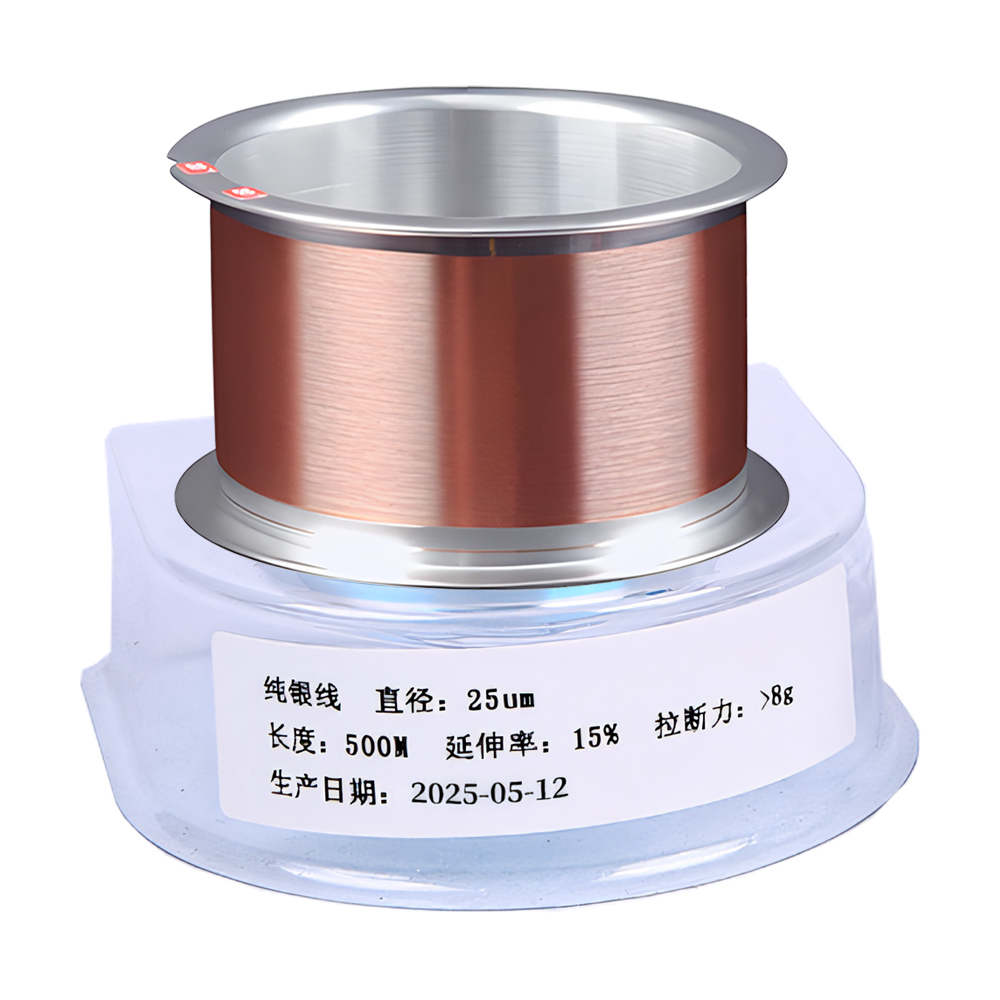
The bonding wire is a tiny metal wire that
connects the internal circuit of the chip with the lead frame, with a diameter
of only ten to tens of microns, which can be called the "capillaries"
of the chip. According to the material, it can be divided into non-alloy wire
(gold wire, silver wire, copper wire, aluminum wire) and alloy wire
(gold-plated silver wire, copper-plated bonding wire, etc.). In this field,
international companies such as Heraeus and Japan's Tanaka Precious Metals
occupy a dominant position, but local companies such as Yantai Yinuo Electronic
Materials have achieved batch substitution in the field of low-end products
such as copper wire and aluminum wire through technological innovation,
gradually breaking the international monopoly.
(3) Lead frame: the "skeleton
support" of the chip
As the carrier of the chip, the lead frame
undertakes the dual functions of signal transmission and mechanical support,
and the world's major manufacturers are concentrated in Asia. The Dutch Baishi
Electronics Group is the only leading enterprise in Europe, and Ningbo
Kangqiang Electronics, Ningbo Hualong Electronics and other enterprises in our
country have formed large-scale production capacity in the field of lead frames
through years of development, and their products are widely used in consumer
electronics, automotive electronics and other fields, becoming an important
player in the global supply chain.
5. Etching machines: the "precision
engraving knife" of chip manufacturing
(1) Market size: technology iteration
drives growth
Etching machines are one of the core
equipment in semiconductor manufacturing, and their precision requirements
continue to improve in the process of breaking through the chip process from
micron to nanometer. The global etching machine market size reached USD 14.82
billion in 2023, a year-on-year increase of 5.93%, and is expected to increase
to USD 15.65 billion in 2024 and USD 16.48 billion by 2025. This growth is
mainly due to the expansion of advanced process chip production capacity and
the proliferation of new storage technologies such as 3D NAND, which has led to
an increase in the demand for etching steps and equipment.
(2) Enterprise competition:
international monopoly and local breakthrough
The global etching machine market is highly
concentrated, with the three international giants LAM Research, AMAT, and TEL
occupying the vast majority of the market share with their technical advantages
and complete product lines. Through independent research and development, our
country's enterprises China Micro Company and North Huachuang have achieved
breakthroughs in the fields of dielectric etching and silicon etching, and the
5nm etching machine of China Micro Company has entered TSMC's supply chain and
has become one of the few enterprises in the world that can provide advanced
process etching equipment, marking our country's major progress in the field of
high-end semiconductor equipment.
3. Midstream analysis: the
"innovation battlefield" of GPU chips
1. Global Market: AI-driven scale
expansion
With the explosive growth of artificial
intelligence, supercomputing and other technologies, the market demand for
GPUs, as the core hardware of parallel computing, has increased exponentially.
The global GPU market size reached $59.5 billion in 2023, is expected to
increase to $71.9 billion in 2024, and will exceed $80 billion by 2025. This
growth not only comes from the traditional PC and mobile device fields, but
also from the explosion of demand for emerging scenarios such as data center AI
training and autonomous driving, and NVIDIA's H100, A100 and other data center
GPUs have become "hits" in the market, driving the rapid expansion of
the industry.
2. Chinese market: Local substitution is
accelerating
our country's GPU market is in a period of
rapid growth, with a market size of 80.7 billion yuan in 2023, a year-on-year
increase of 32.78%, and is expected to exceed 107.3 billion yuan in 2024 and
increase to 120 billion yuan in 2025. This growth rate far exceeds the global
average, mainly due to the vigorous development of the domestic AI industry and
the drive of independent and controllable demand. Although the high-end market
is still dominated by international giants, local companies such as Biren Technology,
Muxi Integrated Circuit, and Moore Thread have launched a number of
self-developed GPU products and emerged in the wave of domestic substitution.
3. Competitive landscape: international
giants dominate and local breakthroughs
In the independent GPU market, NVIDIA
occupies 81% of the market share with its strong computing power performance
and CUDA ecosystem, forming an absolute leading position; AMD came in second
with a 19% share, mainly in the gaming and data center segments. Although our
country's local companies started late, they have achieved breakthroughs in
specific scenarios, such as Biren Technology's BR100 GPU is close to the
international advanced level in computing power indicators, and Muxi Integrated
Circuit's MX1 series products perform well in AI inference scenarios.
4. Enterprise layout: The regional
agglomeration effect is significant
From the perspective of the distribution of
A-share listed companies, our country's GPU enterprises show obvious regional agglomeration
characteristics. Guangdong Province ranks first with 14 listed companies,
relying on the perfect electronic information industry ecology in the Pearl
River Delta, forming a complete chain from chip design to terminal application;
Beijing and Jiangsu provinces each have 8 listed companies, which have become
important agglomeration areas for the GPU industry with their innovative
resources in Zhongguancun and the manufacturing foundation of the Yangtze River
Delta. This regional agglomeration effect is conducive to technical cooperation
and resource sharing among enterprises, and accelerates the pace of industrial
innovation.
4. Downstream analysis: the
"application blue ocean" of computing power demand
1. Data center: the core support of
computing power infrastructure
our country basic telecom operators
continue to increase the construction of computing power infrastructure, and by
the end of 2024, the number of Internet data center racks open to the public
has reached 830,000. This large-scale infrastructure network not only improves
the collaborative scheduling capabilities of computing power and network, but
also provides solid hardware support for AI training, cloud computing and other
scenarios, becoming one of the largest application markets for GPU chips. With
the advancement of the "East Data and West Computing" project, the
computing power demand of data centers will be further released, driving the
continuous growth of the GPU market.
2. AI Computing Power: The core engine
of explosive growth
In 2024, our country's total intelligent
computing power will reach 725.3 trillion times per second (EFLOPS), a
year-on-year increase of 74.1%, more than three times the increase in general
computing power (20.6%) in the same period, and is expected to jump to 1037.3
EFLOPS in 2025. This explosive growth is mainly due to the rapid iteration of
large language models, generative AI and other technologies, and the demand for
GPU computing power has increased exponentially, and NVIDIA's GPU products have
become the "standard" for AI training, while also providing a broad
alternative space for domestic GPUs.
3. Cloud computing: GPU-enabled service
upgrades
our country's cloud computing market has
maintained rapid growth, with a scale of more than 616.5 billion yuan in 2023,
a year-on-year surge of 35.5%, far exceeding the global average, and is
expected to reach 837.8 billion yuan in 2024. With the popularization of AI
native technology and the implementation of large model applications, cloud
computing is transforming from traditional computing power rental to
intelligent services, and the demand for GPUs, as the core hardware of cloud
intelligent computing, continues to rise. It is expected that by 2027, our
country's cloud computing market will exceed 2.1 trillion yuan, and the
penetration rate of GPUs in it will further increase, becoming a key driving
force for industry growth.
Overall, China's GPU industry chain in 2025
is in a critical development period of "coexistence of opportunities and
challenges". the localization rate of upstream materials and equipment has
gradually increased, but the high-end field still relies on imports; Midstream
chip design companies have accelerated their catch-up and achieved
breakthroughs in specific scenarios, but ecological construction has lagged
behind. The downstream application market demand is strong, providing strong
impetus for industrial development. With the continuous increase in policy
support and the increase in enterprise R&D investment, our country's GPU
industry chain is expected to occupy a more important position in global
competition and inject core computing power into the development of the digital
economy.
 Su Gongwang Security 32058302004438