


Tampilan:1 创始人: Site Editor Publish Time: 2026-02-14 Origin: Site


Chip bonding process: a panoramic analysis
from basic processes to technological innovations
1. Key hubs in the packaging process: the
positioning and value of chip bonding
As a bridge between chips and application
terminals, semiconductor packaging is like the gear set of a precision clock,
and every link needs to be tightly seamed. After the dicing process divides the
wafer into individual chips, the chip bonding process takes over the
"baton" and takes on the key mission of accurately placing these tiny
chips (the smallest size is only 0.3mm×0.3mm) on the packaging substrate.
Whether it's traditional lead frames, general-purpose printed circuit boards
(PCBs), or advanced ceramic substrates, the bonding process requires a secure
connection to the chip.
The essence of bonding technology is to
establish a trinity system of "physical fixation-electrical
connection-thermal management": physical fixation requires a bonding
strength of 10-50g (varies depending on the chip size), can withstand the mechanical
shock of the post-packaging process (such as injection molding pressure during
molding), and the electrical connection needs to ensure a contact resistance of
< 50mΩ, and maintain stability in the temperature cycle of
-55°C~125°CThermal management requires a thermal conductivity of > 1W/m・K of the bonding layer to ensure that
the heat generated during the operation of the chip is effectively transferred
to the substrate
With the development of advanced processes
such as FinFET and GAA, the power density of chips has exceeded 300W/cm², and
the heat dissipation performance of the bonding process has become a key
bottleneck restricting the release of chip performance. One test data shows
that for every 0.1°C/W reduction in thermal resistance of the bonding layer,
the chip can increase the overclocking headroom by 5-8%, highlighting the
strategic position of bonding technology in modern semiconductor manufacturing.
2. The genealogy and evolution of bonding
technology: a leap from tradition to modernity
Semiconductor bonding technology has been
developed for more than 70 years, forming a clear technical context, each
optimized for specific application scenarios:
2.1 Traditional bonding technology system
Traditional bonding technology is
characterized by "step-by-step connection", where the chip is fixed
before the electrical interconnection is realized: Die Bonding:
Also known as chip placement, the core is
to fix the chip to the substrate through adhesives. According to the type of
adhesive, it can be divided into organic adhesive bonding: using polymer
materials such as epoxy resin and polyimide, suitable for medium and low power
chips (<10W), and eutectic bonding: using eutectic reactions of gold-tin
(AuSn), copper-tin (CuSn) and other alloys (such as Au80Sn20 eutectic point
280°C), thermal conductivity can reach 50W/m·K or
more, suitable for high-power devices
Wire bonding: After the chip is fixed, the
chip pad is connected to the substrate pins through a bonded alloy wire
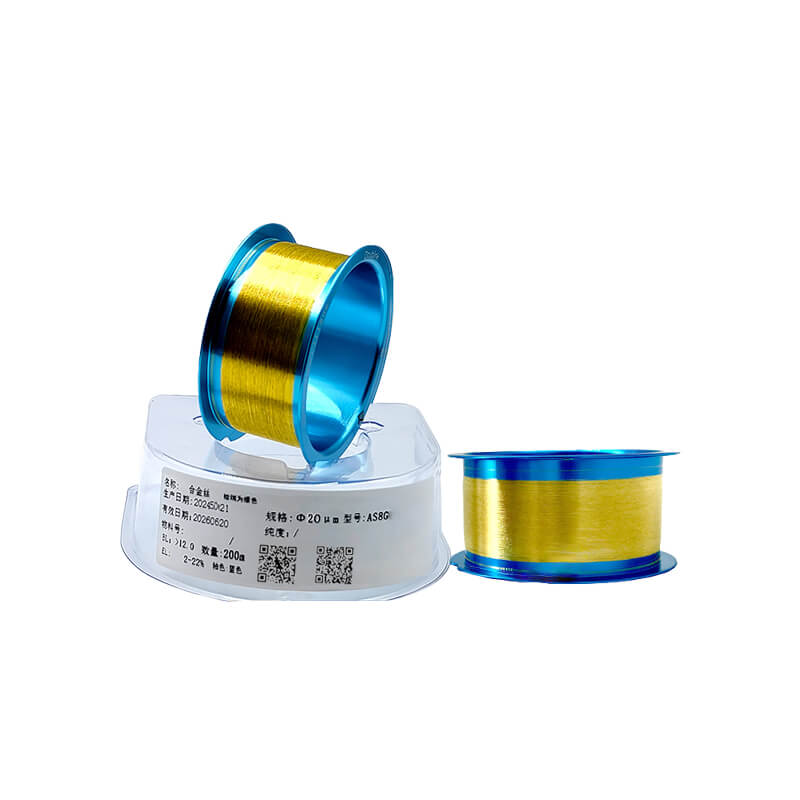
(diameter 15-50μm). According to the bonding method, it is divided into
spherical bonding (mainly gold wire) and wedge bonding (mainly aluminum wire),
which is still the mainstream solution for low-end packaging (about 65% of the
market).
2.2 Breakthroughs in modern bonding
technology
Modern technology, represented by flip
chips, has achieved a "one-step" connection revolution:
Flip Chip Bonding: Invented by IBM in the
late 1960s, it is directly connected to the substrate by prefabricating bumps
on the chip pads, flipping them over. This technology increases bond point
density to more than 10 times that of traditional wire bonding, and is now 80%
penetrated in high-end chips such as smartphone APs and GPUs.
Its technical features include:
Bump material: From traditional solder
(SnPb, SnAgCu) to copper pillar bump (Cu Pillar), the diameter is reduced from
200μm to 15μm, and the connection method: no wires are required, and the
intermetallic compound (IMC) is formed by reflow soldering to achieve ohmic
contact
Reliability: Underfill materials are
required to alleviate thermal mismatch stress, so that the temperature cycle
life can reach more than 1000 times
The driving force behind technological
evolution has always revolved around three core metrics: bond density (number
of bond points per unit area), signal transmission speed, and manufacturing
cost. From 10 bond points per square millimeter in the 1980s to more than
10,000 today achieved with hybrid bonding technology, density has increased by
three orders of magnitude, supporting the continued growth of chip integration.
3. The complete process chain of chip
bonding: precision control from preparation to completion
The chip bonding process is like a
"surgical operation" in the microscopic world, requiring precise
cooperation through multiple processes:
3.1 Preliminary preparation: precise
deployment of materials and equipment
Adhesive coating process:
Choose the appropriate coating method based
on chip size and power: Key parameters: The viscosity of epoxy adhesives is
usually controlled at 1000-5000cP (25°C) to ensure stable shape after coating.
Dispensing: Suitable for large-size chips (>5mm²), the diameter of the dot
is controlled at 1/3-1/2 of the chip size, the accuracy is ±50μm, and the
printing (Stencil Printing): suitable for mass production of small-size chips,
with a uniformity of adhesive thickness of up to ±10μm Thin film (DAF):
pre-affixed on the back of the wafer, directly bonded after scribing, with a
thickness control accuracy of ±2μm
Substrate pretreatment: The substrate
surface needs to be cleaned (to remove oxidation and contaminants) and activate
(to increase surface energy):
Cleaning method: plasma cleaning (Ar/O₂ gas mixture) or
ultrasonic cleaning (megasonic frequency 1MHz), activation
standard: contact angle < 30° to ensure good wetting of the adhesive.
3.2 Core Operation: Micron-level control of
pick-and-place
Pick & Place is the core of the bonding
process, testing the positioning accuracy and operational stability of the
equipment:
Separating chips from dicing tape faces two
major challenges: The solution uses "push-up + suction" composite
technology: chip sticking: adjacent chips are only 50-100μm apart, which is
prone to adhesion, and mechanical damage: when the chip thickness is <
100μm, direct suction can easily lead to chipping (strength <
10MPa).Ejector: Apply a force of 0.1-1N through the thimble to raise the edge
of the chip by 5-10μm, and Collet: Use a vacuum nozzle (0.3-2mm diameter), and
the suction force is controlled at 5-50mN to avoid chip deformation
Place process: Accurately position the chip
to the target position of the substrate, key indicators include: Positioning
accuracy: ±1μm (high-end equipment), ensure bond point alignment deviation <
25% pad size, placement pressure: 5-50cN, dynamically adjust according to chip
thickness (thin chip < 20cN), placement speed: 0.5-2 seconds/piece,
Balancing efficiency and precision, statistics from an advanced packaging
factory show that for every 1 μm improvement in placement accuracy, bond yield
can increase by 3-5%, highlighting the decisive impact of equipment accuracy on
process quality.
3.3 Curing and Joining: Precise control of
temperature field
The curing/reflow process after bonding is
key to forming a stable connection:
Typical temperature profile quality
determination: > 95% cure (DSC), shear strength > 15MPa. Preheating
Section: 80-120°C/30-60 seconds (solvent removal), Curing Section:
150-200°C/60-120 seconds (Crosslinking Reaction), Cooling Section: Natural
cooling to < 50°C (avoiding thermal shock).Typical curves for lead-free
solder (e.g., SAC305) for connection of flip chip bumps: Key quality
indicators: IMC layer thickness 1-3μm, void rate < 10% (X-ray inspection).
Preheat: 150-180°C/60-90 sec, Reflow: 240-260°C/30-60 sec (to ensure complete solder
melting) Cooling: Rate < 4°C/s (to inhibit abnormal IMC growth).
4. Material technology innovation: the
material basis of bonding quality
The performance of bonding materials
directly determines the connection reliability, and in recent years, it has
shown a diversified development trend:
4.1 Optimization of traditional adhesives
Performance is enhanced by adding
functional fillers: Operating characteristics: Pot Life > 8 hours to meet
mass production needs.
Thermally conductive fillers: alumina (Al₂O₃), boron nitride (BN), etc., the filling amount of 50-70% can
increase the thermal conductivity from 0.2W/m·K to
1-5W/m・K, and the conductive filler: silver powder
(Ag), copper powder (Cu), and the volume resistivity can reach 10⁻⁴ Ω・cm or less, toughener: rubber particles or nanofibers to improve
impact resistance (elongation at break increased from 5% to 15%)
4.2 The rise of chip-bonded films (DAFs).
DAF technology solves the thickness control
challenge of liquid adhesives with preformed films:
It typically has a three-layer structure: substrate layer: polyimide or epoxy resin (5-20μm thickness), bonding layer: modified epoxy resin (10-50μm thickness), release layer: silicone oil-treated PET film (peeled off when used). Thickness accuracy: ±2μm, much higher than the ±20μm of liquid dispensing, simplified process: eliminating dispensing and partial curing steps, increasing production efficiency by 30%, multi-chip support: suitable for stacked die for reliable connection between chipsAir residue: bubbles may form (diameter > 50μm is considered a defect), the vacuum level of the lamination equipment is required to be < 10Pa, equipment investment: special laminator and hot pressing equipment are required, the initial investment is increased by about 20%, and the application rate of DAF in multi-chip packaging (MCP) has reached 45%, especially in the field of memory packaging (such as DDR4/ DDR5) has become the mainstream solution.
4.3 Emerging material systems
Nano solder: Tin-based solder with a
particle size of < 100nm with a melting point reduced by 30-50°C compared to
traditional solder, suitable for thermal device bonding.
Metal matrix composites: such as
silver-graphene composites, the thermal conductivity can reach more than 400W/m·K, which is close to the level of pure silver, and the cost is
reduced by 30%.
The direction of material innovation is to
find the best balance between "thermal conductivity - electrical
conductivity - cost - processability", and the current industry research
hotspots are focused on lead-free, low-temperature and high thermal
conductivity.
5. Process challenges and solutions:
practical paths to improve yield
During the chip bonding process, various
factors can lead to defects that need to be addressed in a targeted manner:
5.1 Analysis of common process defects
|
Defect type |
Causes |
Incidence |
Degree of harm |
|
Chip warping |
Uneven adhesive thickness (variable >
10μm) |
8-12% |
High (causing difficulty in subsequent
wire bonding) |
|
empty |
No air bubbles are expelled from the
adhesive |
5-8% |
Medium (affects heat dissipation and
strength) |
|
offset |
Placement positioning error > 5 μm |
3-5% |
High (may cause a short circuit) |
|
Adhesive spillage |
Too much application or too much pressure |
6-9% |
Medium (contaminated pads) |
5.2 Key process optimization measures
Using a "gradient cure" process:
initial curing at 120°C (30 minutes) to release some of the stress, then
heating up to 180°C for full curing, which reduces the amount of warpage from
50μm to less than 15μm. Combined with vacuum assistance: Applied at the initial
curing stage - 0.09MPa vacuum for 10 minutes can reduce the voiding rate from
8% to less than 1%. Combined alignment with "vision + laser": on the
basis of visual positioning (±3μm), laser ranging corrects the Z-axis height (±1μm)
to ensure uniform placement pressure. Establish a mathematical model of
"chip size - adhesive dosage": for a square chip with a side length
L, the dispensing amount V=k×L² (k is the coefficient, usually
0.0015-0.002mm³/mm²).
One case shows that through the
comprehensive implementation of the above measures, the bonding yield rate of a
packaging plant has increased from 82% to 97.5%, saving more than 3 million
yuan per year.
6. Technology development trend: the future
of ultra-thin and integration
As the semiconductor industry moves towards
the More than Moore era, bonding technology is moving in three directions:
Ultra-thin chip bonding:
For ultra-thin chips below 50μm, develop
flexible nozzles (with silicone or polyimide materials) and low-stress
adhesives (modulus of elasticity <1GPa) to avoid chip fragmentation. Stable
bonding of 20μm thick chips has been achieved with a yield of > 95%.
Heterogeneous Integrated Bonding:
It supports hybrid bonding of chips of
different materials and processes, such as the bonding of Si chips with
compound semiconductors such as GaN and SiC, with a temperature control
accuracy of up to ±1°C to ensure that the stress caused by the difference in
thermal expansion between the two materials is minimized.
Intelligent Process:
Introducing machine vision and AI
algorithms to detect adhesive coating quality in real-time (> 99% accuracy),
predict bond strength (error < 5%), and adaptively adjust process parameters
(response time < 100ms).
The development of these technologies will
promote the transformation of bonding processes from
"experience-driven" to "data-driven", providing core
support for advanced packaging forms such as chiplets and 3D ICs.
epilogue
The chip bonding process may seem like a
simple "paste" action, but it is actually a combination of materials
science, precision mechanics, thermals and control engineering. From
millimeter-level to micron-level to nanometer-level precision leap, from single
chip to multi-chip integration, bonding technology has always been the key
fulcrum of semiconductor packaging innovation.
In the future, as the demand for chip
performance continues to improve, bonding technology will face higher
challenges: it must not only achieve ultra-fine bonding below 1μm, but also
meet the high-temperature reliability above 1000°C; It is necessary to reduce
manufacturing costs and increase integration density. This requires
collaborative innovation in the upstream and downstream of the industrial chain
to form a complete technical ecology from materials, equipment to processes.
For industry practitioners, grasping the
development trend of bonding technology can not only enhance product
competitiveness, but also occupy a favorable position in the new round of
transformation of the semiconductor industry. Just as packaging technology has
changed from a "supporting role" to a "protagonist", the
bonding process is also jumping from a "back-end process" to a
"core technology", writing a new chapter in semiconductor
manufacturing.
 Su Gongwang Security 32058302004438