


Tampilan:1 创始人: Site Editor Publish Time: 2026-02-18 Origin: Site


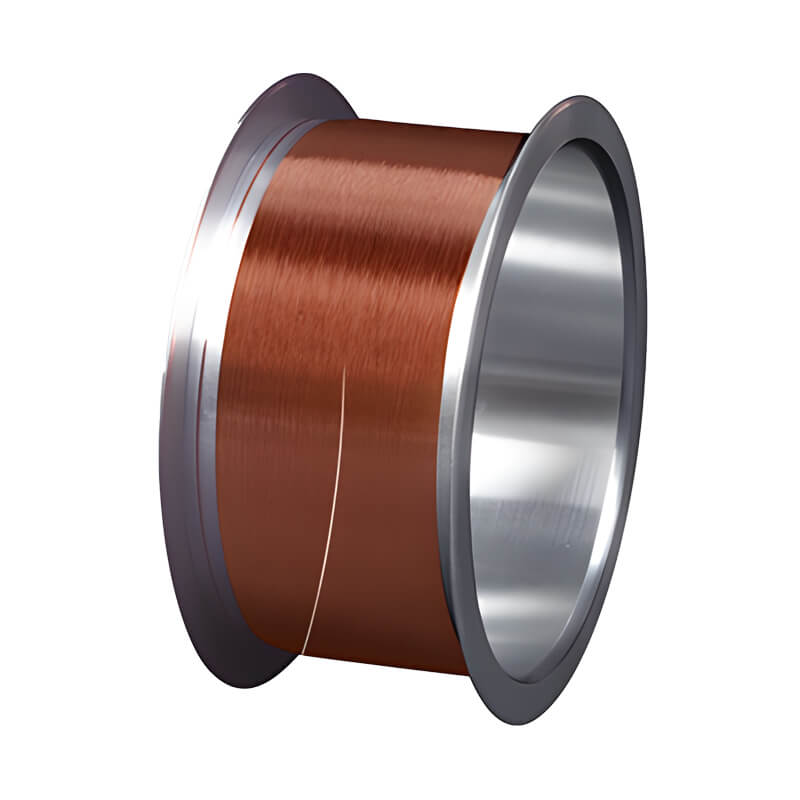
Insulating Coating Bonded Copper Wire SSB
Interconnect Technology: Process Challenges and System Solutions
Introduction: Copper Wire Bonding
Revolution in the Era of High-Density Packaging
In the process of evolving integrated
circuit packaging technology to multi-chip integration and 3D stacking, the
wire bonding process is undergoing a historic transformation from gold wire to
copper wire. Insulating coating bonded copper wire has become a new favorite in
the industry with three core advantages: the material cost is only 1/8-1/5 of
that of gold wire, the conductivity (58MS/m) is 29% higher than that of gold
(45MS/m), and the mechanical strength (tensile strength > 300MPa) is more
suitable for fine-pitch bonding needs. Among them, the SSB (Stand-off Stitch
Bond) process, as a key technology to achieve multi-chip interconnection,
completes two bonding operations on the same pad through the two-step method of
"ball planting-soldering", increasing the chip interconnection
density in the package by more than 40%, providing a feasible integration
solution for complex devices such as 5G RF modules and automotive-grade MCUs.
However, the inherent properties of
insulating coating-bonded copper wires pose significant challenges to the SSB
process: the CuO oxide layer (hardness > 3GPa) formed on the surface of the
copper wire is much higher than that of pure copper (hardness 1.5GPa),
resulting in a 3-fold increase in the damage rate of aluminum pads during the
bonding process. The impact of the two bonds causes the occurrence of
"aluminum extrusion" phenomenon up to 15%; Improper control of the
shielding gas can result in a FAB (airless ball) dimensional deviation of >
5 μm, which directly affects bond consistency. Xi'an Taifengrui Electronics'
production data shows that the yield of the unoptimized SSB process is only
68%, but with systematic process improvements, the yield can be increased to
more than 97%. Based on actual production experience, this paper
comprehensively analyzes the difficulties and solutions of insulating coating
bonded copper wire SSB technology from three dimensions: material
characteristics, equipment parameters, and process control.
1. SSB process principle and technical
bottleneck
1.1 The unique implementation path of
multi-chip interconnection
The SSB process uses an innovative two-step
operation of "ball planting + bonding" to build a flexible inter-chip
connection network, and its technical characteristics are reflected in three
typical application scenarios: to realize the signal transmission of chips with
different functions, such as connecting the control chip and the power chip
through φ18μm copper wire in the power management module, and the bonding
spacing can be reduced to 50μm, which reduces the space occupation by 30% compared
with traditional wire bondingSolving the connection needs of non-adjacent pads
on a single chip, it can achieve signal winding in the range of 1mm in the RF
chip, reduce signal delay by more than 20%, and reverse connection from the pin
in the lead frame to the chip ball planting point, shortening the heat
dissipation path of the power device by 50%, and reducing the thermal
resistance to less than 0.8°C/W
A stacked image sensor packaging case showed that the SSB process increased the number of chip stacks from 2 to 4 layers while maintaining a bond yield of 85%, which is difficult to achieve with traditional bonding techniques.
1.2 Process challenges caused by inherent
contradictions
There are three core sets of contradictions
between the physicochemical properties of insulating coating-bonded copper
wires and the demands of the SSB process: 0.5 seconds of exposure to air can
form a 2-3 nm thick CuO layer, resulting in irregular bulges (height difference
of > 2 μm) during FAB molding, extending the bond strength fluctuation range
to ±25%. Experimental data show that for every 1% increase in CuO content, the
bonding shear strength decreases by 3-5%, and when the oxide layer thickness
exceeds 5nm, a completely non-stick failure mode occurs. The Vickers hardness
of insulating coated copper wire (HV 120-150) is 1.5 times higher than that of
gold wire (HV 80-100), and the aluminum pad (HV 30-40) is prone to plastic
deformation under the two impacts of the SSB process. Microscopic observations
have shown that pad depressions of unoptimized processes can reach 1-2μm, more
than 30% of the thickness of the aluminum layer, directly threatening the
electrical integrity of the underlying circuitry. SSB process parameters
involve 12 key variables (including pressure, power, time, etc. of two bonds),
and a 10% deviation from the parameter matching can lead to bond failure. A
production statistic shows that defects caused by parameter drift account for
62% of total SSB defects, which is much higher than the 35% of traditional
bonding processes.
These contradictions are particularly
pronounced in high-density packages, where bond yields cliff-drop when pad
sizes shrink to less than 50×50 μm².
2. Systematic analysis of key influencing
factors
2.1 The decisive role of chip surface
quality
The surface state of the chip directly
determines the initial conditions of bonding, and three typical defects can
lead to significant process problems:
Organic residues (> 5 nm thick) can
cause microbubbles (> 1 μm in diameter) to form at the bonding interface,
triggering interfacial delamination during temperature cycling. XPS analysis
showed that bond strength decreased by more than 40% when the C content
exceeded 15% in the contaminated area.
Excessive probe prints (> 30μm in
diameter) can disrupt the continuity of the aluminum layer, resulting in stress
concentration during bonding, and the risk of failure of such defects is 8
times higher than that of normal chips in -55°C~125°C thermal cycling tests.
There is a strict window for matching aluminum layer thickness to copper wire
diameter (Table 1), and when the aluminum layer thickness matched by 18μm
copper wire is reduced from 1.2μm to 0.8μm, the "lost aluminum"
defect rate rises from 2% to 18%. The verification data of an automotive-grade
chip shows that the first-time pass rate of SSB bonding can be increased to
more than 95% by strictly controlling the surface roughness of the chip
(Ra<5nm) and the purity of the aluminum layer (>99.5%).
2.2 Optimization space for the protective
gas system
Gas protection is the core means to control
the oxidation of copper wires, and its effect is reflected in the dimensional
stability and shape consistency of FAB: N₂/H₂ mixture (5% H₂+95% N₂)
effectively removes CuO through the reducing properties of H₂ (standard
electrode potential - 0.828V), and the experiment shows that the CPK value of
its FAB size (1.34-1.57) is significantly higher than that of pure N₂ protection
(1.13-1.19). More importantly, the gas mixture can control the roundness error
of the FAB to less than 3%, which is often more than 8% with pure N₂
protection. Low flow rate (<0.4L/min) will lead to inadequate protection and
oxidation spots on the surface of the FAB (> 5% of the area); Excessive flow
rates (>0.8L/min) can cause airflow disturbances, increasing the standard
deviation of FAB size from 0.3μm to 0.8μm. The optimized flow control accuracy
should reach ±0.05L/min, and the response time should be < 100ms. The
annular blowing structure provides uniform air supply at 360°, so that the shielding
gas forms a stable positive pressure environment
(pressure > 5Pa) in the bonding zone, and the FAB pass rate (96.63-99.90%)
is much higher than that of the unilateral blowing structure (68.68-82.38%).
Simulation analysis shows that the airflow uniformity index (deviation <5%)
of the annular structure is more than 5 times higher than that of the
unilateral structure (deviation > 25%). The transformation case of a
packaging plant proves that after changing from single-sided blowing to annular
blowing, the FAB defect rate of the SSB process is reduced from 12% to 0.5%,
saving more than 2 million yuan per year.
2.3 Synergy of bonding parameters
The two bonding operations of the SSB
process require precise parameter matching, and the optimization directions
determined by DOE experiments include:
The 65mA/320μs ignition condition results
in a copper ball with a lower hardness (HV 80-90) and a 30% increase in exposed
copper area compared to 45mA/380μs, effectively reducing aluminum pad damage.
Lower ultrasonic power (80-100mW) and longer bonding time (25-30ms) were used
to control the deformation of the aluminum layer at the ball implantation point
within 0.5μm. The optimized combination of pressure (15-20gf) and power
(100-120mW) allows the amount of "aluminum extrusion" to drop from 5μm
to less than 2μm without compromising the bond strength (>15g). In actual
production, these parameters need to be dynamically adjusted according to the
thickness of the chip aluminum layer to form multiple sets of parameter
matrices to ensure that different products can obtain the best bonding effect.
3. Construction of process control system
3.1 Customized design of special fixtures
and splitting knives
The SSB process puts forward special
requirements for auxiliary tools and forms a series of customized solutions:
the zonal temperature control design is adopted, so that the temperature
difference at each point of the heating block is <±3°C, and the difference
in bond strength caused by uneven temperature (<5%) is avoided. The vacuum
adsorption force needs to be stabilized above -80kPa to ensure that the lead
frame is not loose (displacement < 1μm). Head roughening (Ra 0.5-1μm)
increases the copper wire grip and increases the tensile strength of the second
solder joint by 15-20%. The match between the guide corner diameter (CD) and
the pad size should be met: CD = 0.8× Minimum pad side length - 4μm to prevent
both eccentric balls and crushing of the aluminum pad.
One test data showed that the shedding rate
of the SSB second solder joint decreased from 3.2% to 0.6% after using a custom
splitter, while the splitting life was extended from 500,000 to 800,000 cycles.
3.2 Material selection and management
specifications
The characteristics of the wire have a
direct impact on the SSB process, and the proven preferred solution includes:
the surface gold plating (0.1-0.3μm thickness) provides additional oxidation
protection, and the FAB maintains good bondability after 3 seconds of exposure
to air, which is much better than pure copper wire (<1 second). The
temperature in the nitrogen cabinet is maintained at 20-25°C (fluctuating
<±2°C) and the relative humidity is < 50%, which can stabilize the shelf
life of the wire at 6 months and change the bonding performance rate of < 3%
within 9 days after opening.
After implementing strict material control
processes, the wire-related defect rate of a company decreased from 8% to 1.5%,
significantly improving process stability.
3.3 Whole-process quality monitoring
strategy
Establish a three-level control system
covering pre-production, production, and post-production: use automatic optical
inspection (AOI) to inspect the chip surface to identify defects such as
contamination and scratches, with a resolution of 2μm, to ensure that defective
chips do not flow into the bonding process. Real-time acquisition of bonding
parameters (pressure, power, temperature, etc.), setting a 3σ control limit,
automatic shutdown alarm when the range is exceeded, and a response time of
< 1 second.
Each batch of samples was sampled: tensile
test (n=50): minimum tensile force ≥ 10g (18μm line), shear test (n=30):
minimum shear force ≥8g, profiling (n=5): IMC thickness 1-3μm, no obvious voids
Through this system, a factory increased
the Process Capability Index (CPK) of the SSB process from 1.0 to 1.6, meeting
the stringent requirements of automotive electronics.
4. Technological innovation and future
prospects
Insulating coating-bonded copper wire SSB
technology is evolving towards finer and more reliable technology, with three
major innovation trends:
Introducing machine learning algorithms,
the model trained based on 5000+ sets of process data can predict bond quality
(accuracy > 95%), and automatically adjust parameters to compensate for
material differences, so that the standard deviation of bond strength of
different batches of wires is controlled within 5%. Developed graphene
composite coated copper wire, which uses graphene's high conductivity (10⁶S/m) and oxidation resistance to extend the stabilization time of
FAB in air to 10 seconds, while at the same timeReduces
bond resistance by 10-15%. Effective bonding below 150°C is achieved through
ultrasonic energy focusing (power density increased to 5W/mm²), reducing
thermal damage to the aluminum layer by 60%, which is especially suitable for
the integration of heat-sensitive devices. These technological innovations will
drive the SSB process from the current 50μm pitch to 30μm or even 20μm,
providing critical interconnection support for advanced packaging forms such as
chiplets.
conclusion
The proven application of insulating
coating bonded copper wire SSB technology is the result of synergistic
optimization of material properties, equipment performance and process control.
By systematically solving the three core problems of oxidation control, pad
protection, and parameter matching, this technology has achieved a stable yield
of more than 97%, showing significant advantages in the field of multi-chip
integration. Practice shows that the successful implementation of the SSB
process requires the establishment of a full-chain control system of
"material-equipment-process-testing": strictly control the quality of
wires and the storage environment on the material side; Customized fixtures and
splitting knives are used on the equipment side; Optimize gas protection and
bonding parameters at the process end; Implement whole-process quality
monitoring at the testing end. This systematic approach transforms the SSB
process from laboratory technology to large-scale production capabilities,
meeting the demands of mass production for high-density packaging. As
integrated circuits develop towards higher integration and higher reliability,
insulating coating bonded copper wire SSB technology will continue to innovate,
achieve new breakthroughs in bonding density, reliability and cost control, and
become a key supporting technology in the field of advanced packaging.
 Su Gongwang Security 32058302004438