


Tampilan:1 创始人: Site Editor Publish Time: 2026-02-20 Origin: Site


Full analysis of wire bonding technology:
from principle to industrial application
Introduction: Cornerstone technologies for
microelectronic interconnects
In the "last mile" connection of
integrated circuit packaging, wire bonding technology has always occupied an
irreplaceable position with its unique flexibility and cost advantages. This
process of synergizing heat, pressure and ultrasonic energy to form an atomic
bond between the metal leads and the substrate pad is like a "bridge
project" in the microscopic world, building a stable electrical path
between the chip and the external circuit. When metal leads (only 18-50μm in
diameter) reach atomic spacing from the pad surface, electron sharing or atomic
diffusion triggers an interfacial metallurgical reaction that results in a bond
point with ohmic contact characteristics with contact resistance as low as 10⁻⁴Ω which is sufficient for
high-frequency signal transmission.
Despite the rapid development of advanced
interconnect technologies such as flip soldering and automatic carrier belt
soldering, wire bonding is still the mainstream choice in the packaging
industry with a market share of more than 90%. This technological dominance
stems from a triple advantage: equipment investment is only 1/5-1/10 of flip
soldering, material cost is controllable, and can accommodate diverse packaging
needs from 0.3mm×0.3mm microchips to high-power devices. According to data from
a consumer electronics foundry, the cost of low- and mid-end chip packaging
using wire bonding can be controlled at $0.05-0.5 per piece, while the cost of
flip soldering solutions of the same scale is as high as $1-5 per piece. This
article will systematically analyze this seemingly simple but precision
engineering interconnection technology, from material selection to process
optimization, and comprehensively present its technical characteristics and
industrial value.
1. Technical principles and process flow:
precise control of microscopic connections
At its core, wire bonding lies in enabling
reliable metal-to-metal connections through energy input, a process that breaks
down into a series of precisely controlled physicochemical changes.
1.1 The Nature of Bonding: From Mechanical
Contact to Atomic Bonding
The microscopic mechanism of bond formation
consists of three key stages:
Contact stage: The lead is in close contact
with the surface of the pad under pressure, and the contact area increases
nonlinearly with the increase of pressure, and when the pressure reaches
0.5-1.5N, the actual contact area can reach 30-50% of the apparent area
Oxide layer breaking: The tangential force
generated by ultrasonic vibration (usually 60-120kHz) causes plastic
deformation of the contact surface, breaking the oxide layer with a thickness
of about 2-5nm, exposing the fresh metal surface
Atomic Diffusion: Under the synergistic
action of temperature (125-350°C) and pressure, atoms at the interface obtain
sufficient activation energy to form a diffusion layer about 10-50nm thick
through lattice diffusion, and finally achieve metallurgical bonding
High-resolution transmission electron
microscopy (HRTEM) observations show continuous gradient changes in the
interface transition zone of high-quality bond points with no visible holes or
cracks, a microscopic feature that guarantees bond strength (typically
0.05-0.1N) and long-term reliability.
1.2 Complete process chain: precise
operation from ball planting to wire breaking
The bonding process of a single lead is
like a miniature precision surgery, involving six key steps:
1. Metal wire leading: A metal wire with a
diameter of 18-50μm is led from the reel and passes through the capillary tube
of the bonding machine (the inner diameter is usually 1.5-2 times the wire
diameter), with the end protruding 1-2mm of the capillary
2. Airless ball (FAB) formation: The wire
end is melted into a ball under the protection of inert gas by electron flame
(EFO), and the ball diameter is controlled to 1.5-2.5 times the wire diameter
(such as a 25μm line forms a 40-60μm ball).
3. First solder joint formation: The gold
ball is press-soldered on the chip pad, and through the combination of pressure
(0.5-1.5N), temperature (125-350°C) and ultrasonic energy, a solder joint with
a diameter of 1.2-1.5 times the diameter of the ball is formed
4. Lead arc control: The bonding machine
pulls up the lead wire according to the preset trajectory to form an arc with a
height of 10-50μm, and the curvature needs to ensure that the lead wire is not
plastically deformed and the stress is uniform
5. Second solder joint formation:
Wedge-shaped solder joints are formed at the pins in the lead frame to achieve
intermetallic connection through ultrasonic vibration
6. Wire break and next cycle: Apply
appropriate tension and ultrasonic energy at the end of the second solder joint
to break the lead at the predetermined position, and prepare the gold ball
formation of the next solder joint. The entire
process can be completed in 0.1-0.3 seconds on a high-speed bonding machine,
and the advanced equipment can achieve bonding efficiency of 50,000-100,000
points per hour, with positional accuracy controlled within ±1μm, ensuring
accurate operation on pads with a pitch of 0.1mm.
2. Comparison of material system and
performance: the material basis of connecting quality
The reliability of wire bonding is
essentially a comprehensive embodiment of material properties, and the
differences in conductivity, chemical stability, and process adaptability of
different metal wires directly determine their application scenarios and cost
structure.
2.1 Characteristic map of core lead
materials
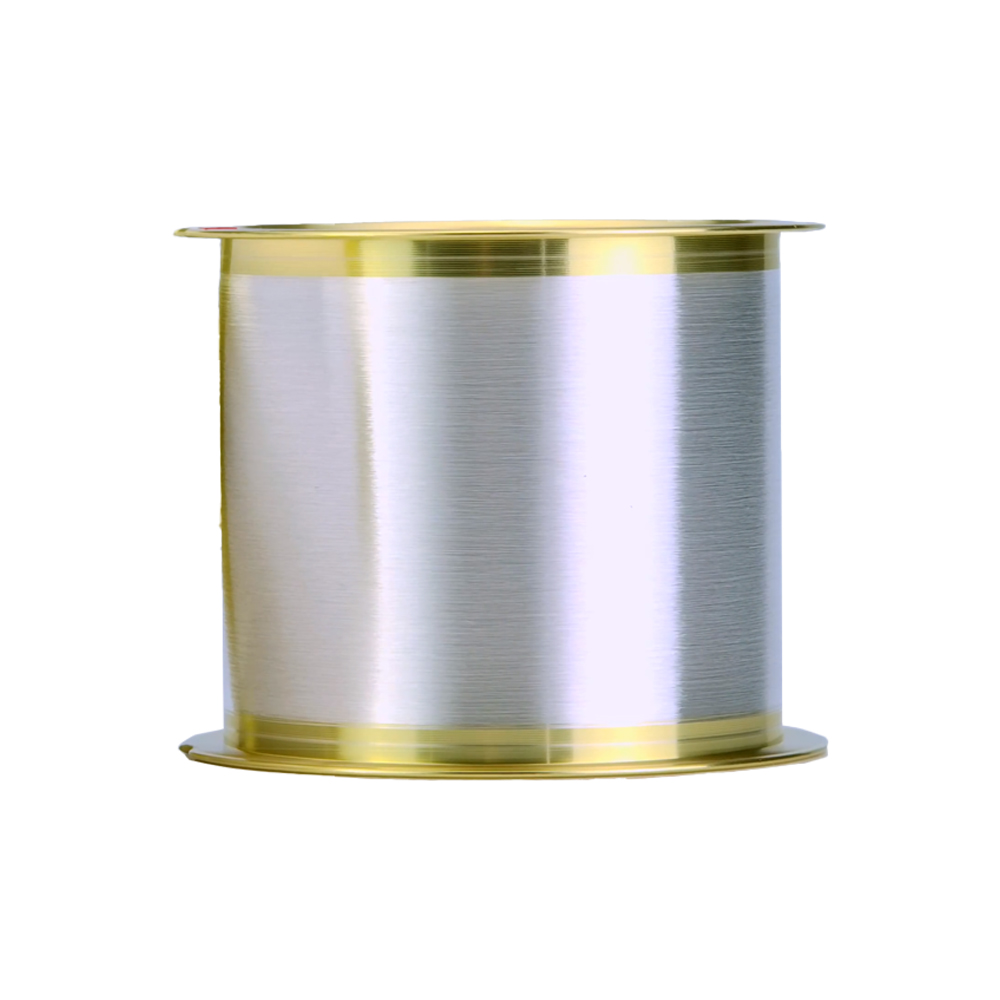
At present, the mainstream bonded wires
have formed a clear division of application, and their performance parameters
and applicable scenarios are as follows: Golden wire:
As the "gold standard" for
bonding materials, gold wire (99.99% purity) has unmatched comprehensive
properties: conductivity: 45MS/m, ensuring signal transmission loss of < 5%,
chemical stability: no oxidation in the range of -55°C~150°C, annual change
rate of contact resistance < 10%, bonding yield: more than 99.9% under
mature processes However, its high cost (about 500 yuan/gram) has become a
constraint and is gradually being replaced in cost-sensitive fields such as
consumer electronics. According to a statistic, the cost of gold wire accounts
for 15-20% of the total cost of low-end chip packaging.
Aluminum wire: (99.5% purity) occupies a
place in the field of power devices with low cost (about 2 yuan/gram); Mechanical
strength: Tensile strength 120-150MPa, suitable for bonding thick wires with a
diameter of 50-100μm. Heat dissipation performance: thermal conductivity of
237W/m·K, which is better than gold wire (slightly
lower than 317W/m·K), but its main defects are easy
oxidation (formation of Al₂O₃ layer) and low bonding yield (usually 95-97%). This limits its
application in high-density packages.
Copper wire: (99.99% purity) As the main
subsylmer of gold wire, it has obvious advantages in balancing performance and
cost: the conductivity is 58MS/m, which is 29% higher than that of gold wire,
suitable for high-frequency signal transmission, and the cost is only 1/20-1/30
of that of gold wire, which can reduce material costs by more than 80%. However,
the process is demanding: it must be bonded in a nitrogen-protected environment
(oxygen content < 50ppm) and the high rigidity (elastic modulus 110GPa, gold
wire 78GPa) makes it difficult to control the lead arc, which is currently
about 10-15% permeability in low-to-mid-range products.
Silver Alloy Wire: Silver alloy wire (containing
92-96% silver, with palladium, gold, and other elements) is an emerging choice
in the mid-to-high-end segment: 90% reflectivity, 10-15% higher light
efficiency in LED packaging, 10⁴A/cm² current density, 1.5
times that of gold wire, 1/3-1/5 cost of gold wire, and storage period of up to
6-12 months (without sealing) 。 Its technical
bottleneck lies in patent barriers and process maturity, and the current
application rate in domestic packaging factories is about 5%, but it is growing
rapidly.
Lead frame and auxiliary materials
The choice of material for the lead frame
as the "landing field" for bonding is also crucial: Copper alloy:
accounts for more than 70% of the market share, with high conductivity
(35-50MS/m) and good solderability, typical grades such as C194
(copper-iron-phosphorus alloy) nickel-iron alloy: widely used in the military
industry due to its low coefficient of expansion (CTE 4-6ppm/K) suitable for
matching ceramic packaging; Composite metals: such as nickel gold (Ni/Au)
plating on copper, taking into account both electrical conductivity and
oxidation resistance, the thickness of the coating in the bonding area should
be controlled at 0.5-2μm. Another key element in the bonding process is the
capillary tube (microtubule), the tip design of which directly affects the
energy transfer efficiency: the surface roughness Ra 0.5-1μm, the ultrasonic
energy transfer efficiency is increased by 20%, but the contaminant adhesion
rate is 3 times that of smooth surfaces, the surface roughness is Ra<0.1μm,
and the cleanliness retention time is extended to 48 hours, but the ultrasonic
energy loss is increased by 15%
In practical applications, the selection
depends on the bonding material: copper wire bonding mostly uses GM type to
enhance energy transfer, while gold wire bonding can choose P type to extend
service life.
3. Bonding method and process
characteristics: optimal combination of energy input
Depending on the energy input method, wire
bonding forms three mainstream processes, each with significant differences in
temperature, pressure, and energy control.
Hot compression welding: reliable
connection at high temperature and pressure
Hot press soldering (T/C) is the most traditional bonding method, which relies on plastic deformation at high temperature to achieve connection: temperature: 200-350°C (chip temperature), pressure: 0.5-1.5N/point (proportional to the diameter of the lead), time: 50-200msThe high temperature softens the metal wire (the yield strength of the gold wire drops to 50% of room temperature at 300°C), and the plastic flow occurs under the action of pressure, and finally forms a mechanical-metallurgical bond with the pad, and the bonding of thick aluminum wire (diameter 50-200μm) of high-power devices can reach 0.05-0.09NThe main limitation is that high temperatures can cause chip damage – experiments have shown that 350°C for 10 seconds drifts the threshold voltage of CMOS devices by 5-10%. As a result, this technology is gradually being replaced by thermoacoustic welding, and its market share has now dropped to less than 15%.
Ultrasonic welding: the miracle of energy at room temperature
Ultrasonic welding relies entirely on
mechanical vibration energy to achieve connection, opening up the possibility
of low-temperature bonding: temperature: room temperature (25±5°C), pressure:
0.1-0.5N/point, ultrasonic power: 50-200mW (frequency 60-120kHz); The alternating shear force generated by
ultrasonic vibration causes plastic deformation and local temperature rise (up
to 150°C) on the contact surface, breaks the oxide layer and promotes atomic
diffusion, stabilizes the bond strength at 0.07N, and minimizes the risk of
thermal damage to the chip. This technology is particularly suitable for
bonding thermal-sensitive devices such as MEMS sensors, but it places extremely
high requirements on pad surface quality – bond yields can plummet from 99% to
less than 80% when the oxide layer thickness exceeds 3nm. At present, the
application in the field of low-temperature packaging accounts for about 25%.
3.3 Thermoacoustic welding: the optimal
solution for synergy
Thermal acoustic welding (U/S&T/S)
combines the synergistic effects of temperature and ultrasonic energy to become
the current mainstream process:
Process window: Chip temperature: 125-300°C,
splitting temperature: 125-165°C, pressure: 0.5N/point, ultrasonic power:
100-300mW. Core advantages: The temperature reduction reduces the growth rate
of gold-aluminum intermetallic compounds (IMCs) by 50%, controls the annual
growth rate of interfacial resistance within 5%, and increases the bonding
strength to 0.09-0.1N, which is 10-20% higher than that of hot compression
weldingPads that tolerate slight oxidation (oxide layer < 5nm) with yields
above 99% Typical Applications: More than 90% of gold wire bonding and 60% of
copper wire bonding are used in this process, covering a wide range of fields
from consumer electronics to automotive electronics, and a comparative
experiment at a packaging factory showed significant differences in bonding
results between the three processes on the same chip: IMC thickness of 1.2μm
for hot press soldering and ± fluctuations in bond strength for ultrasonic
soldering 15%, and thermoacoustic welding strikes a perfect balance between the
two, becoming the first choice for mass production.
4. Technology comparison and development
trend: market-driven innovation direction
The evolution of wire bonding technology
has always revolved around the triangle of "performance improvement, cost
reduction, and process simplification", constantly pushing its own
limitations in competition with other interconnect technologies.
4.1 Competitive landscape with advanced
interconnection technologies
The comparison of the technical parameters
of wire bonding, flip soldering, and automatic carrier belt soldering (TAB)
clearly shows their respective applicable scenarios:
|
Technical indicators |
Wire bonding |
Reverse welding |
TAB |
|
Minimum spacing |
50μm |
10μm |
25μm |
|
Interconnect density |
Low (<100 dots/mm²) |
Height (>1000 points/mm²) |
Medium (100-500 dots/mm²) |
|
Parasitic inductance |
1-5nH |
<0.1nH |
0.5-2nH |
|
Equipment investment |
Low ($10-$500,000) |
High ($500-20 million) |
Medium ($100-5 million) |
|
Mass production yield |
99.9% |
99.5% |
99.7% |
|
Applicable chip sizes |
Unlimited |
<20mm×20mm |
<50mm×50mm |
This difference has led to a clear market
differentiation: wire bonding dominates low-end consumer electronics (95%),
power devices (80%), and automotive electronics (70%), while flip soldering
monopolizes high-end processors and RF chips.
4.2 Cost-benefit analysis of material
substitution
The economics of replacing gold wire with
copper wire have been well demonstrated: an annual material cost dropped from
$50 million to $2.5 million after a packaging plant with an annual output of 1
billion chips switched to copper wire, and the payback period was controlled
within one year despite the addition of a nitrogen protection system (about
$500,000 per line). Silver alloy wires show potential in the mid-to-high-end
segment: in LED packaging, their 90% reflectivity improves light efficiency by 12%,
which translates to an 8% reduction in cost per watt, completely offsetting the
increase in material costs. According to data from an LED company, flip-chip
LEDs using silver alloy wires reduce the combined cost by 5% for the same light
output.
The frontier of technological innovation
The future development of wire bonding
technology presents three major directions: 1Ultra-fine gold wire bonding:
Develop gold wire bonding technology with a diameter of less than 15 μm, with a
new capillary design, to achieve high-density interconnects with a 30 μm pitch,
targeted for 5G RF modules
2. Copper wire without protective gas
process: Through wire surface modification (such as nickel plating 0.1μm),
copper wire bonding in an air environment is realized, which is expected to
reduce equipment costs by 30%. 3. Intelligent bonding system: Bonding machines
with integrated machine learning algorithms can adjust parameters in real time,
reducing the standard deviation of bond strength from ±8% to ±3% for different
batches of chips. These innovations will enable wire bonding technology to
maintain its dominant position in the market for the next 5-10 years,
especially in emerging packaging formats such as chiplets, where its flexible
interconnect capabilities are expected to open up new application spaces.
epilogue
Wire bonding technology seems to be a
simple "two points and one line", but in fact it embodies the wisdom
of materials science, precision mechanics and control engineering. From 18μm
ultra-fine gold wire to 100μm power aluminum wire, from room temperature
ultrasonic to high-temperature hot pressing, this technology adapts to the
development needs of the microelectronics industry through continuous
innovation. In the foreseeable future, wire bonding will remain the mainstream
choice for integrated circuit packaging due to its irreplaceable cost
advantages and process flexibility, despite the challenges of advanced
interconnect technologies.
For industry practitioners, an in-depth
understanding of the characteristics and differences of different bonding
materials and mastering the optimization methods of various process parameters
are the keys to enhancing product competitiveness. With the increasing
reliability requirements of 5G, automotive electronics and other applications,
wire bonding technology will continue to evolve in the direction of higher
strength, lower loss, and more intelligence, writing a new chapter in the
microscopic world of connection engineering.
 Su Gongwang Security 32058302004438