


Tampilan:1 创始人: Site Editor Publish Time: 2026-02-21 Origin: Site


Full analysis of IGBT chip interconnect
bonding wire materials: performance comparison and technology evolution
Introduction: Material Selection for Power
Device Interconnect
As IGBT power modules expand from 600V
low-voltage applications to 6500V high-voltage applications, bonding wires
serve as the "current highway" between chips and external circuits,
and their material selection directly determines the module's current-carrying
capacity, reliability, and cost structure. This metal wire, typically with a
diameter of 25-500μm, requires a triple core requirement: stable conductivity
at long-term operating temperatures of 125-175°C (resistance change rate <
10%), alternating thermal stress generated by power cycling (typically tested
at -40°C~150°C/1000 cycles), and material costs controlled within 5-15% of the
total module cost.
At present, the industry has formed four
major technical routes: aluminum wire, copper wire, composite wire and precious
metal wire, each of which occupies advantages in different application
scenarios: aluminum wire dominates the low-end market with its mature
technology, copper wire penetrates rapidly in the field of new energy with high
performance, aluminum-clad copper wire as a compromise solution gradually
expands its share, and gold wire/silver wire adheres to the high-reliability
position. Test data from an electric drive system for a new energy vehicle
showed that different choices of bonding wire materials could vary the life of
IGBT modules by 3-5 times, while the cost fluctuated by 20-30%. This paper
systematically analyzes the characteristics of various bond wire materials, and
provides a full-dimensional reference for power device design from performance
parameters to practical applications.
1. Bonding of aluminum wire and aluminum
strip: a mature and reliable mainstream solution
Since its large-scale application in the
70s of the 20th century, aluminum wire bonding technology has formed a complete
industrial ecology from material preparation to process control, and its
dominance in the field of power devices stems from its unparalleled process
maturity and cost advantages.
1.1 Graded application and performance
limitations of aluminum wire
Industry divides aluminum wires into clear
application intervals based on diameter:
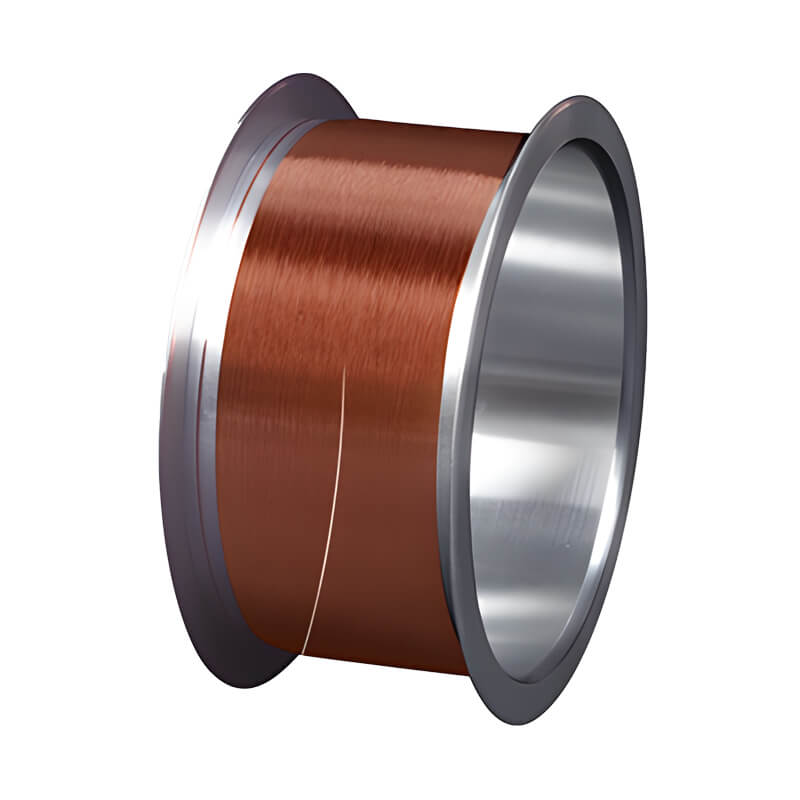
Fine aluminum wire: diameter < 100μm (common specifications are 25μm, 50μm, 75μm), mainly used for signal transmission of small and medium-power IGBT modules, a single 50μm aluminum wire can carry 3-5A DC current, and the resistance temperature coefficient at 150°C operating temperature is about 0.004°C⁻¹; Coarse aluminum wire: diameter 100-500μm (typically 150μm, 200μm, 300μm, 500μm), undertake the current transmission of the main power loop, The current carrying capacity of 500μm diameter coarse aluminum wire can reach 23A (DC), which is 5-8 times that of fine aluminum wire of the same specification. Behind this grading application is the inherent properties of aluminum: a conductivity of 377S/m (about 61% of copper) limits the current carrying density, while a high coefficient of thermal expansion of 23×10⁻⁶K⁻¹ (7 times that of silicon chips) poses a reliability risk. In the power cycle test, the thermal stress accumulation rate of the coarse aluminum wire bond point reached 15MPa/cycle, and after 500 cycles, about 12% of the samples showed cracks at the root of the bonding wire, and the failure rate rose to 35% after 1000 cycles. The failure analysis of a photovoltaic inverter manufacturer shows that the bonding failure of aluminum wires mainly manifests itself in two modes: the stripping of the interface between the lead and the pad (accounting for 65% of the total number of failures) and the fatigue fracture of the lead itself (accounting for 35%), both of which are directly related to the low fatigue strength of aluminum (about 60MPa).
Technological breakthroughs and process challenges in aluminum strip bonding
In order to break through the performance
bottleneck of aluminum wire, aluminum strip bonding technology has achieved a
qualitative leap through cross-sectional form innovation: Structural
advantages: 0.1mm×0.5mm rectangular aluminum strip cross-sectional area is 1.5
times that of round aluminum wire with the same circumference, the current
carrying capacity is increased by 40-50%, and the DC current carrying current
of 500μm wide aluminum strip can reach 32A, which is equivalent to copper wire
of the same specification; High frequency characteristics: The flat
cross-section reduces the effect of skin collection by 30%, and the AC
resistance at 100kHz high frequency is only 75% of that of aluminum wire; Improved
Thermal Dissipation: The increased surface area increases the heat dissipation
efficiency by 25% and reduces the module's operating temperature by 8-10°C. These
advantages have enabled aluminum strip bonding to be widely used in
high-frequency and high-power applications, such as electric vehicle inverters,
where data from one model shows that the power density of IGBT modules bonded
with aluminum strip bonding has increased from 20kW/L to 28kW/L. However, the
rigid nature of aluminum strips presents new process challenges: limited
bending angles (typically < 45°) and the need for larger wiring space; The
bonding pressure needs to be precisely controlled at 1.2-1.8N, insufficient
pressure can lead to virtual soldering, and too much may crush the aluminum
layer on the chip surface (usually only 1-3μm thick). Production practices have
shown that the process yield of aluminum strip bonding (about 97%) is slightly
lower than that of aluminum wire (99%), and the equipment investment is
increased by about 20%.
2. Copper wire bonding: an inevitable
choice for high-performance applications
As power modules evolve towards high power
density (>30kW/L) and high efficiency (>99%), copper wire bonding has
become a key technology to break through performance bottlenecks due to its
excellent electrical and thermal conductivity.
Performance advantages and process barriers
of copper wire
The performance comparison between copper
and aluminum wire presents overwhelming advantages: Electrical properties:
resistivity of 1.72×10⁻⁸Ω m (only 61% of aluminum),
and the DC current carrying capacity of 500μm diameter copper wire reaches 38A,
which is 65% higher than that of aluminum wire of the same specification. Thermal
properties: The thermal conductivity of 401W/m·K (1.7
times that of aluminum) reduces the junction temperature of the chip by 15-20°C.
Mechanical properties: Tensile strength 320MPa (2.5 times that of aluminum),
fatigue life increased by 2-3 times. These characteristics make copper wire
bonding modules show significant advantages in new energy vehicles, rail
transit and other fields. Tests of a high-speed rail traction converter showed
that the copper wire-bonded IGBT module had a power cycle life of 3,000 times,
which is 2.5 times that of the aluminum wire scheme, and the temperature
fluctuation range could be extended to -55°C~175°C.
But the application of copper wire faces a
double hurdle:
1. Interface compatibility: The direct
contact between copper and the aluminum layer on the surface of the chip will
form Cu-Al intermetallic compounds (IMCs), at 150°C, the IMC growth rate
reaches 0.1μm/day, and the brittle phase (Cu₉Al₄) formed after 100 days will
increase the contact resistance by more than 50%. This problem requires
pre-plating a nickel/silver layer (0.5-1μm thickness) on the chip surface,
which increases the process cost by 15-20%.
2. Oxidation sensitivity: Copper can form a
5nm thick oxide layer (CuO/Cu₂O)
after 1 second exposure to air ), resulting in a 40%
decrease in bond strength. It must be bonded under a nitrogen protection
environment (oxygen content < 50ppm), and the cost of equipment
transformation is about 500,000 yuan/line. The cost analysis of a packaging
plant shows that although the cost of copper wire material is only 1.5 times
that of aluminum wire, the total cost of copper wire bonding modules is 30-40%
higher than that of aluminum wire solutions after comprehensive process costs,
which limits its application in low-end products to a certain extent.
Large-scale application and optimization
direction of copper strip bonding
Copper strip bonding continues the
structural advantages of aluminum strips and further amplifies the performance
gap: 0.1mm×0.5mm copper strips carry 45A DC, which is 40% higher than that of
aluminum strips of the same specification; Reliability: In 1000 cycles of
-40°C~175°C, the bond strength retention rate reaches 90%, which is much higher
than the 75% of aluminum strips; These features make it standard in electric
vehicles on 800V high-voltage platforms, where the inverter is 25% smaller and
3kg lighter when bonded with copper belt.
The current optimization of copper ribbon
bonding focuses on three directions:
1. Surface treatment: Palladium plating
(0.1μm) or coated with organic protective layer is used to improve oxidation
resistance, reducing nitrogen purity requirements from 99.999% to 99.99%,
reducing gas costs
2. Process optimization: Develop a
low-temperature bonding process (150°C) to reduce the IMC growth rate by 50%
compared to the traditional process (200°C).
3. Equipment innovation: Adopt a
vision-guided adaptive bonding system to control the position accuracy to ±1μm,
and the yield rate is increased to 98.5%
These improvements have resulted in a 15%
reduction in the combined cost of copper strip bonding, accelerating its
penetration in the industrial sector.
3. Composite wire bonding: an innovative
solution that balances performance and cost
As a hybrid variety of aluminum wire and
copper wire, aluminum-clad copper wire achieves strengths and avoids weaknesses
through material compounding, showing unique competitiveness in the mid-range
market.
Structural design and performance of
aluminum-clad copper wire
The design philosophy of this "copper
core aluminum skin" structure (copper core diameter accounts for 70-80%
and aluminum layer thickness 25-35μm) is reflected in three levels: the outer
layer of aluminum is directly bonded to the chip aluminum pad, which avoids the
problem of Cu-Al reaction, eliminates the electroplating process, and reduces
the cost by 20% compared to copper wire;
The conductivity is between aluminum and copper (conductivity 45MS/m),
and the current carrying capacity of 500μm diameter is up to 28A, which is 20%
higher than that of aluminum wire. The coefficient of thermal expansion is
reduced to 18×10⁻⁶K⁻¹, which is 20% lower than that of pure copper wire, and
the accumulation rate of thermal stress is slowed down to 10MPa/cycle. Test
data from an IGBT module for white goods shows that the failure rate of
aluminum-clad copper bonded products after 1000 power cycles (12%) is
significantly lower than that of aluminum wire (35%), while costing only 70% of
copper wire solutions.
Development trends and potential problems
of composite wires
The further optimization of aluminum-clad
copper wire presents two directions: the development of a copper-aluminum
gradient structure eliminates the stress concentration caused by sudden
interfacial changes, and increases the fatigue life by another 30% Add 0.5%
magnesium to the aluminum layer to improve the corrosion resistance, and after
passing the 1000-hour salt spray test (5% NaCl), the contact resistance change
rate is < 5%; However, there are still potential risks associated with this
technology: under high temperature and humidity (85°C/85% RH), the galvanic
corrosion rate between the aluminum layer and the copper core can reach
0.02μm/day, which may lead to an increase in interfacial resistance with
long-term use. One reliability study showed that approximately 8% of samples
showed signs of interfacial delamination after 5,000 hours of aging, which
requires special attention in applications.
4. Precious metal bonding wires: a niche
choice in the field of high reliability
With their unique physical and chemical
properties, gold and silver wires maintain an irreplaceable position in
situations where reliability is extremely demanding, such as aerospace and
military equipment.
4.1 Gold Wire Bonding: The "Gold
Standard" for Balanced Performance
Gold Wire (99.99% Purity) exhibits
exceptional comprehensive properties:
The coefficient of thermal expansion of
14.2×10⁻⁶K⁻¹ is the lowest among all bonding materials, and the best match with
silicon chips is achieved, with a bond strength retention rate of 95% after
1000 power cycles. Chemical stability: no oxidation in the range of
-55°C~200°C, the annual change rate of contact resistance is < 3%; Bond
yield can reach 99.9%, the highest of any material; These features make it the
only choice for extreme environment applications such as satellite power
supplies, where IGBT modules of certain satellites have an in-orbit operating
life of up to 15 years when bonded with gold wire, far exceeding the 5-8 years
of aluminum wire solutions. However, the high cost of 450 yuan/gram (100 times
that of copper wire) limits its application in the civilian field, and it is
currently only visible in special occasions such as high-end medical equipment,
with a market share of less than 1%.
Silver wire bonding: a more cost-effective
solution for precious metals
Silver wire strikes a better balance
between performance and cost: electrical conductivity of 62MS/m (higher than
copper), thermal conductivity of 429W/m·K (highest of all metals),
and current carrying capacity 10-15% higher than copper wire; The price is
about 8 yuan/gram, which is only 1/56 of the gold wire, suitable for
applications with high performance requirements but cost sensitive; The main challenge is silver migration -
silver ion migration rates of 0.1 μm/h at high humidity and high voltage can lead
to short circuits between adjacent leads. The formation of silver alloy wires
by adding 0.5-1% palladium reduces migration rates by 90% but increases costs
by about 30%. Silver alloy wire has been successfully used in servo drives for
industrial robots, and data from one product shows that the power density of
its IGBT module has been increased from 30kW/L to 38kW/L, while the lifespan
has been increased by 2 times.
5. Systematic decision-making and future
trend of material selection
The selection of IGBT bonding wire
materials requires the construction of a multi-dimensional evaluation system,
comprehensively considering performance requirements, cost constraints, and
reliability goals.
Differentiated selection strategy for
application scenarios
The optimal material selection in different
fields is clearly differentiated: aluminum wire bonding is still the mainstream
(accounting for about 70%), and the balance point is the low cost of 0.05
yuan/A and the design life of 5 years; Copper/copper strip bonding dominates
(about 80%), with 3000 power cycle life and 30kW/L power density as the core
driver; Gold wire bonding dominates the market, and the ultra-long life of more
than 15 years requires overriding cost considerations; Rapid penetration of
aluminum-clad copper wires (up to 30%) to achieve the best balance of
performance and cost in the power segment below 100A; A cost-benefit analysis
by a third-party organization showed that copper wire bonding solutions had a
15-20% lower total cost of ownership (TCO) than aluminum wire over a 10-year
life cycle, mainly due to longer lifespan and lower energy consumption.
Three frontier directions of technological
development
The innovation of bonding wire technology
shows a clear trend: the development of copper-aluminum-nickel three-layer
composite structure, the inner layer of copper ensures conductivity, the middle
nickel layer prevents diffusion, and the outer layer of aluminum achieves good
bonding, which is expected to improve the reliability by another 50%; The
real-time quality monitoring system based on machine vision can detect 99% of
bonding defects online and increase the process yield to more than 99.5% 3D
bonding technology increases the interconnect density by 2 times through
multi-layer wiring, and with special-section wires, it further reduces
parasitic inductance to less than 1nH
These innovations will drive IGBT bonding
technology from pure current transfer to "power-signal-thermal"
multiphysics synergy; Manage the evolution to provide stronger interconnect
support for the next generation of power electronics systems.
epilogue
The development process of IGBT bonding
wire materials is essentially a continuous optimization process of the
"performance-cost-reliability" triangle relationship of power
electronics technology. From the maturity and reliability of aluminum wire to
the high-performance breakthrough of copper wire, from the balanced innovation
of composite wire to the ultimate stability of precious metals, each material
finds its own value in specific application scenarios. The future competition
is not only the performance competition of a single material, but also the
system integration innovation of materials, processes and structures. For
industry practitioners, there is a need to establish an assessment framework
based on the full life cycle, rather than simply comparing material costs or
initial performance. With the widespread adoption of wide bandgap
semiconductors (SiC/GaN), bonded wire technology will face the challenges of
higher temperatures (>200°C) and faster switching speeds (>1MHz), which
will bring new technical bottlenecks and major opportunities for material
innovation.
In this never-ending pursuit of
performance, bonding wires, although seemingly small, have always been one of
the key factors that determine the performance boundaries of power modules.
 Su Gongwang Security 32058302004438