


Tampilan:1 创始人: Site Editor Publish Time: 2026-02-25 Origin: Site


Solder wire: the invisible link that
connects the world at the microscopic level
Inside the smartphone that we slide at our
fingertips, in the battery module driving new energy vehicles, and between the
server chips that support cloud computing, a metal wire with a diameter of only
0.1 mm is silently undertaking the dual mission of current transmission and
structural fixation. This material, known as Kabel prajurit, acts as a
"bridge engineer" in the microscopic world, weaving billions of electronic
components into fully functional electronic systems. Li Ruixuan, sales director
of the market operation center of Nophiel New Materials Co., Ltd., accurately
stated its value: "Small tin ions are not only essential industrial raw
materials for the production of various home appliances and electronic
products, but also widely used in emerging industries such as photovoltaics and
new energy vehicles, and are known as 'industrial monosodium glutamate', which
truly realizes 'the needs of the people are everywhere, and the country's use
is irreplaceable'." "
Walking into the production workshop of
Nofil Technology Co., Ltd., this grand picture of micro-manufacturing slowly
unfolds: precision equipment continues to spit out ultra-fine tin filaments
thinner than a hair, and containers the size of seasoning bottles contain
millions of solder balls - these tin deep processing products are not only
based on the domestic market, but also successfully penetrated the global
supply chain. Behind these products are the technological breakthroughs of
"new product development", the efficiency revolution of "new
process optimization" and the intellectual support of "new talent
training", which jointly cultivate and enrich the new quality productivity
of the manufacturing industry.
1. Ultra-fine tin wire: micron-level
precision quenching
In the relatively enclosed clean space of
the tin wire shop, a faint metallic sheen extends from the constantly turning
equipment – this is an ultra-fine solder wire with a diameter of only 0.1 mm,
which is only one-third the thickness of an ordinary hair. If it were not for
the trajectory formed by the reflection of light, it would be almost difficult
for the naked eye to capture the existence of this wire, and the words
"φ0.1mm" on the glass window indicate the current technical height of
deep processing of tin wire.
This slender metal wire has to go through
ten processes: starting from the precise ratio of the solder alloy, the ratio
of tin to silver, copper, nickel and other elements is adjusted according to
the needs of the application scenario (for example, 0.3% silver needs to be
added to the photovoltaic tin wire to improve conductivity); Subsequently, it
is formed by ingot forming, and the alloy melt is cast into a billet with a
diameter of 8 mm under the protection of inert gas to ensure that there are no
pore defects inside. and then through the gradient drawing process, 12 sets of
dies reduce the billet from 8 mm to 0.5 mm (rough drawing) and 0.15 mm (fine
drawing), and finally reach an ultra-fine specification of 0.1 mm. Each meter
of tin wire also goes through laser diameter measurement at 32 detection
points, and the diameter deviation is strictly controlled within ±0.002 mm.
This precision manufacturing allows it to
meet the welding needs of different sectors: conventional welding of consumer
electronics such as switches, mobile phones, and remote controls for everyday
use; High-reliability connectivity in aerospace; and micro solder joint molding
for high-precision electronic products such as 5G base stations and quantum
computers. Test data from an aerospace research institute shows that the sensor
leads welded with this ultra-fine tin wire maintain zero failure in the temperature
cycle of -55°C~125°C, which is much higher than the industry standard of 500
cycles.
In order to keep up with the changes in
market demand, the scientific research commando team set up by Nofil R&D
Center has achieved a series of results: aluminum-based Kabel prajurit uses flux
to solve the problem of easy oxidation of aluminum soldering, so that the
welding yield of aluminum lugs in new energy vehicle batteries has increased
from 82% to 99.5%; The low-temperature solder for photovoltaic soldering tape
reduces the soldering temperature from 220°C to 180°C, reducing thermal damage
to solar cells and increasing module power generation efficiency by 1.2%.
Dioctyl tin dichloride, as a key raw material for PVC heat stabilizers, has a
purity of 99.99%, meeting the environmental requirements of medical-grade
plastics. In 2023, the company's R&D investment increased by 28.2%
year-on-year, implemented 130 scientific and technological projects, and
received more than 4,000 yuan of policy fund support; More than 3,700 tons of
new products were sold, and the new sales revenue was 480 million yuan, demonstrating
the market competitiveness of high-end tin-based materials.
2. Fine solder balls: the efficiency
revolution of intelligent production
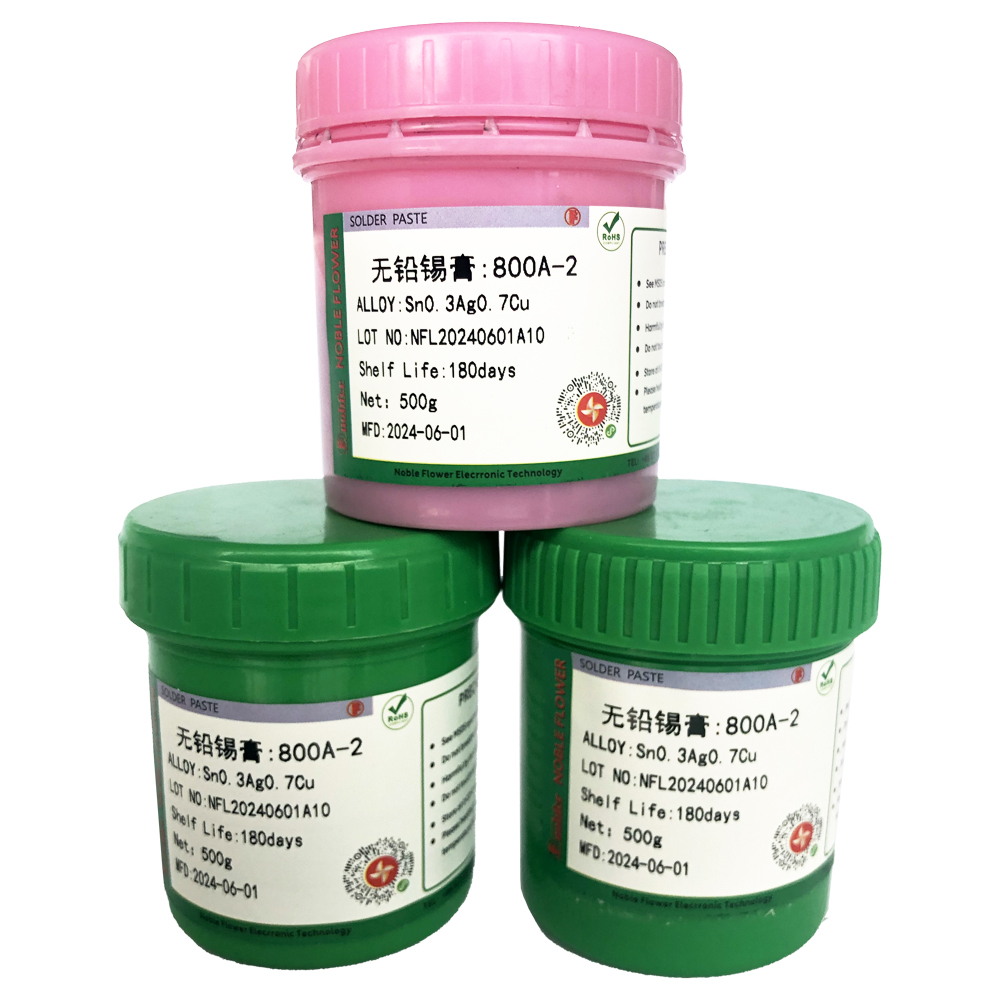
In the field of integrated circuit packaging, Bola prajurit BGA are gradually replacing traditional pins and becoming the core components that realize the electrical interconnection and mechanical connection between the chip and the substrate. In a glass jar the size of a household condiment bottle, about 5 million solder balls with a diameter of 0.3 mm carry an astonishing amount of technology – each sphere requires a roundness error of < 0.001 mm to ensure reliable connection of billions of solder joints on the chip.
"There is no mature experience to
learn from in China, and we have to explore by ourselves from equipment
parameters to process curves." Zhang Xianli, equipment leader of the
solder ball production line, introduced. The core challenge of solder ball
production is to use ultrasonic atomization technology to break the alloy melt
into droplets, and the cooling speed needs to be accurately controlled at
120°C/ms to avoid crystallization defects. Separating spheroids of different
diameters through a 5-stage screening system, 99.9% of the solder balls of
0.3mm size need to be in the range of 0.298mm~0.302mm; Plasma cleaning in an
argon atmosphere removes a 0.1 nanometer thick oxide layer from the surface of
the spheres, ensuring wettability during welding.
Through the comprehensive optimization of
the production process, the solder ball manufacturing has achieved a
qualitative leap: the development of intelligent preparation process of solder
balls for chip packaging, the automation of the whole process from raw material
input to finished product packaging, and the real-time upload of production
data to the MES system; Design of automatic roundness screening machine for
solder balls, using machine vision technology (accuracy of 0.5 microns), the
detection speed reaches 300 pieces/second, which is 200 times higher than
manual inspection efficiency; Replacing high-cost imported ultrasonic power
supplies, the cost of self-developed high-frequency power supplies is reduced
by 60%, and the stability index is increased by 15%.
These improvements resulted in significant
capacity gains – with a 332% increase in solder ball capacity, a 42% reduction
in unit energy consumption, and a reduced product defect rate from 1.2% to 0.3%
for the same staffing. At present, the company has formed a matrix of tin
products with 9 series and more than 1,000 specifications such as strips,
silks, powders, pastes, etc., as well as 2 series of chemical products such as
inorganic tin and organotin, with an annual production capacity of 66,000 tons,
and users all over the country and exported to the European and American
markets.
3. New talent training: the intellectual
engine of innovation ecology
"Increase the market development of
flame retardants, low-temperature photovoltaic special solders and solderpastes, ultra-high activity halogen-free solder wires, preformed solder lugs,
octyl tin series and other products, and realize the transformation of
scientific and technological achievements into new quality productivity 'from 1
to infinity' extension." In the lab, the flame retardant team is
discussing key projects in the genetic engineering of materials, and these
conversations contain the code for tin-based material innovation.
Flame retardants and flame retardant
polymer materials play an important role in reducing the loss of life and
property caused by fire, and are widely used in various fields such as
electronic appliances, transportation, aerospace, and daily furniture. Yuan
Yingjie, the team leader, introduced that they are formulating a flame
retardant achievement transformation project in view of the
"bottleneck" problem of market application, combined with the
previous sample test data, through the scientific and technological cooperation
between tin-based flame retardants and downstream leading enterprises, to open
up the information flow between customers, R&D and production, and continue
to promote the construction of a collaborative innovation system of "government,
industry, academia, research and application".
Lu Jinmei, director of the R&D center,
introduced that the company has a professional R&D institution with 109
employees with doctoral and master's degrees, divided into two major sectors:
tin material and tin chemical industry. Among them, the tin sector has a
professional R&D team for alloys, tin chemicals, solder chemicals, flame
retardants, and high-purity materials; The tin chemical sector has a
professional R&D team for octyl tin products, calcium-zinc stabilizers, new
butyl tin products, new inorganic tin products, methyl tin products, and
analysis and testing. This matrix layout ensures the precise connection between
R&D strength and market demand.
In the next step, the company will
accelerate the introduction of high-level innovative talents and the
cultivation of internal R&D teams from the aspects of improving the talent
training mechanism, deepening the reform of the talent development system and
mechanism, and docking with the "Xingdian Talent Support Plan",
focusing on building a group of scientific and technological leading talents
and innovation teams, cultivating a group of outstanding engineers, craftsmen
and high-skilled talents, so as to accelerate the realization of high-level
scientific and technological self-reliance and self-improvement and promote the
high-quality development of enterprises to lay a solid foundation for talents.
4. Application prospects: the era of
"tin gravity" of tin-based materials
From smartphones to photovoltaic power
plants, from new energy vehicles to space stations, this "industrial
monosodium glutamate" is releasing an amazing "tin gravity".
With the explosion of demand for miniaturized components in a new generation of
6G communication and artificial intelligence equipment, new tin-based materials
may usher in a broader application stage.
In the field of 6G communication, φ0.1 mm
ultra-fine tin wire can meet the micro-welding needs of millimeter-wave
antennas, ensuring the stability of signal transmission. In the new energy
vehicle industry, laser welding special solder balls increase the energy
density of battery PACKs by 5%, helping to break through the cruising range. In
the aerospace field, high-purity tin-based solder has passed the 10⁴ thermal
cycle test to meet the requirements of spacecraft for long life. The expansion
of these application scenarios continues to refresh people's cognitive
boundaries of tin-based materials.
As the Nofil R&D team adheres to: every
tin wire and every sin ball is the carrier of technological innovation. In the
world of microscopic connections, these seemingly tiny materials are closely
connecting industries such as electronic information, new energy, and aerospace
with their unique "stickiness", becoming the invisible skeleton that
supports the modern industrial system. With the continuous breakthrough of
material technology, tin-based materials will play an important role in more
"invisible" fields.
 Su Gongwang Security 32058302004438