


Tampilan:1 创始人: Site Editor Publish Time: 2026-02-28 Origin: Site


How to choose a die-cast aluminum
ultrasonic cleaner?
In the field of precision manufacturing,
the surface cleanliness of die-cast aluminum parts directly determines the
assembly accuracy and service life of the product. Ultrasonic cleaning technology
can remove contaminants deep into micron-level crevices due to its unique
cavitation effect, but the final effect of this process largely depends on the
scientific selection of cleaning agents. The wrong cleaning agent will not only
lead to incomplete cleaning, but may also cause quality problems such as
corrosion of the aluminum matrix and surface discoloration, laying hidden
dangers for subsequent processing. This article will systematically explain the
technical points and practical schemes of cleaning agent selection in
die-casting aluminum ultrasonic cleaning from six dimensions, including
material protection, pollution removal, and process adaptation.
1. Aluminum-based protection: the art of
chemical balance for corrosion control
As a chemically active metal (standard
electrode potential - 1.66V), the oxide film (Al₂O₃)
on the surface of aluminum has a certain protective
effect, but it is very easy to be damaged in extreme chemical environments.
Corrosion control of cleaning agents needs to be based on precise chemical
equilibrium.
1.1 Critical control interval for pH
Corrosion test data from ASTM G31 shows
that aluminum with a purity of 99.5% shows significantly different corrosion
behavior in different pH environments: at pH <4, hydrogen ions quickly
dissolve the oxide film and form a uniform corrosion rate of up to 0.12mm/year;
In the pH range of 4-10.5, the oxide film is in a stable state, and the
corrosion rate can be controlled below 0.01mm/year. Once pH > 10.5,
hydroxide ions react with aluminum (2Al + 2OH⁻ + 2H₂O = 2AlO₂⁻ + 3H₂↑), causing
intergranular corrosion; Based on this, the cleaning of die-cast aluminum
should strictly limit the pH of the cleaning agent in the buffer range of 7-9.
This buffer system resists pH fluctuations during cleaning (typically ±0.5),
ensuring that the protection of the aluminum matrix is maintained even under
local extreme conditions resulting from ultrasonic cavitation. A comparative
experiment by an auto parts company showed that buffered cleaners using pH 8.5
reduced the risk of corrosion by 80% compared to non-buffered products (pH
fluctuations of up to ±1.2).
1.2 Synergistic effect of composite corrosion inhibition system
Simple pH control is not enough to
completely prevent corrosion, and it is necessary to build a triple protection
system of "organophosphosphonates + amines + heterocyclic compounds":
organophosphosphonates (such as HEDP) form a dense protective film on the
surface by complexing metal ions, and the corrosion rate can be reduced by 60%
by adding 0.3-0.5%; Triethanolamine (0.5-0.8%) was used as an adsorption
corrosion inhibitor, which binded to the aluminum surface through the lone pair
of electrons of nitrogen atoms to hinder the penetration of corrosive media. Benzotriazole
(BTA, 0.05-0.1%) specifically inhibits galvanic corrosion caused by copper
impurities, especially suitable for copper-containing 6061 aluminum alloys; This
composite formulation performed well in the cleaning of aluminum housings of a
telecommunications equipment, and after 72 hours of salt spray testing (ISO
9227), no white rust appeared on the surface, which was far superior to a
single corrosion inhibitor solution.
1.3 Strict control of halogen ions
Chloride ions (Cl⁻) and fluoride ions (F⁻) are special to aluminum corrosion – they do not cause full-scale
corrosion, but they can penetrate the oxide film to form pitting cores, which
are often the root cause of sudden failure. The ISO 9223 standard clearly
states that the pitting risk of 6061 aluminum alloy increases exponentially
(more than 300%) when Cl⁻ concentrations exceed 50ppm; Fluoride ions, even at
20ppm concentrations, react with alumina to form soluble AlF₆³⁻, disrupting oxide film integrity
Therefore, the cleaning agent must strictly
ban chloride, hydrofluoric acid and other components, and establish a regular
testing mechanism: use an ion chromatograph to determine the Cl⁻ content in the
cleaning solution every week, and replace it as soon as it exceeds 30ppm. An
aerospace company has shown that this control measure can reduce the leakage
rate of aluminum hydraulic components from 0.5% to 0.03%.
2. Targeted removal of pollutants:
precise treatment from grease to oxide layer
The contaminant composition on the surface
of die-cast aluminum is complex, covering various types such as release agent
residue, cutting fluid emulsion layer, and natural oxide film, which requires a
targeted removal mechanism for cleaning agents.
2.1 Emulsification and dispersion technology for composite oil stains
The compound oil stains formed by the
silicon-based release agent (viscosity 300-500cSt) and lubricating oil used in
the die casting process are difficult to completely remove with just one
surfactant. Efficient solutions require the construction of a multi-component
synergistic system: nonionic surfactant AEO-9 (5%): emulsification of non-polar
oils and fats through precise regulation of hydrophilic lipophilic equilibrium
value (HLB=10.5); Sodium lauryl benzene sulfonate (3%): acts as an anionic
surfactant, enhancing the solution's ability to wett metal surfaces, reducing
the contact angle from 65° to 25°; Glycol butyl ether (2-3%): As an auxiliary
solvent, it reduces the interfacial tension between oil and aluminum surface,
promotes oil peeling with ultrasonic power density ≥ cavitation effect of
0.5W/cm², this formulation can achieve more than 98% degreasing rate in 5
minutes. The application data of a new energy vehicle motor housing production
line shows that after adopting this scheme, the adhesion (grid test) of
subsequent coatings has been increased from level 3 to level 0.
2.2 Gentle removal process of oxide layer
The oxide layer (Al₂O₃) on
the surface of aluminum needs to be differentiated
according to different thicknesses: for the natural oxide layer of < 5μm: a
composite system of 0.5% disodium EDTA and 1% citric acid is used, which is
gently removed through complexation, and the treatment time is strictly controlled
at 3-5 minutes (temperature 50±2°C) to avoid excessive corrosion; For severe
oxidation > 10 μm: a combination of "mechanical pretreatment + chemical
treatment" must be implemented – the thick oxide layer is first removed
with 120 mesh corundum blasting, then chemically polished with a solution
containing 5% phosphoric acid, and finally passivated
Electron microscopy shows that the surface
roughness (Ra) of mildly treated aluminum can be maintained below 0.8 μm,
meeting the requirements of precision assembly. Over-treatment can lead to
corrosion pits on the surface, increasing the Ra value above 2.5μm and
affecting sealing performance.
3. Surface treatment adaptation:
seamless connection from cleaning to subsequent processes
The selection of cleaning agent must take
into account the subsequent processing requirements to avoid affecting the
quality of coating, electroplating and other processes due to residual
substances.
3.1 Cleanliness control before painting
For die-cast aluminum parts that need to be
painted or anodized, the residue of the cleaning agent can directly affect the
adhesion of the coating. Key control points include: selecting water-based
environmentally friendly cleaning agents with a solid content of ≤5% to ensure
easy rinsing; After cleaning, it must be washed by three stages, and the last
stage uses deionized water with a conductivity ≤ 10μS/cm; The surface tension
after rinsing should be ≤ 35mN/m (determined by the hanging piece method) to ensure
that the coating is spread evenly
Tests by an appliance company showed that
strict enforcement of these standards increased the paint pass rate of aluminum
panels from 82% to 99.5% and significantly reduced the risk of coating
blistering.
3.2 Aging control to prevent secondary oxidation
Exposed to air for more than 30 minutes on
the cleaned aluminum surface, a new oxide layer (about 2-3nm thick) can form,
affecting the quality of subsequent welding or bonding. Preventive measures
include: adding 0.1-0.2% benzotriazole derivatives to the cleaning agent to
form a short-term anti-rust film (valid for 8 hours); Immediately after the
cleaning is completed, the combined drying process of "high-pressure air
knife (0.3MPa) + infrared drying (80°C×3min)" is used to make the
thickness of the surface water film < 1μm; For high-demand parts, nitrogen
protection (dew point ≤-40°C) is immediately passed on after drying until it
enters the next process; These measures were applied in the production of a
high-precision sensor aluminum housing, which maintained a weld yield rate of
more than 99%.
4. Ultrasonic process adaptation:
synergy between energy transfer and chemical action
The unique mechanism of ultrasonic cleaning
requires special properties of cleaning agents to maximize energy efficiency
and cleaning effectiveness.
4.1 The key role of low-foam formulations
The ultrasonic cavitation effect will cause
ordinary cleaning agents to produce a large amount of foam, which will absorb
cavitation energy and reduce cleaning efficiency. The ideal ultrasonic cleaning
agent should meet: foaming height ≤ 20mm (Roche foam meter measurement, after 5
minutes); Add 0.05-0.1% polyether-modified siloxane defoamer, which does not
affect the surface activity and can quickly break the foam. At 40kHz, the
half-life of the foam ≤ 30 seconds
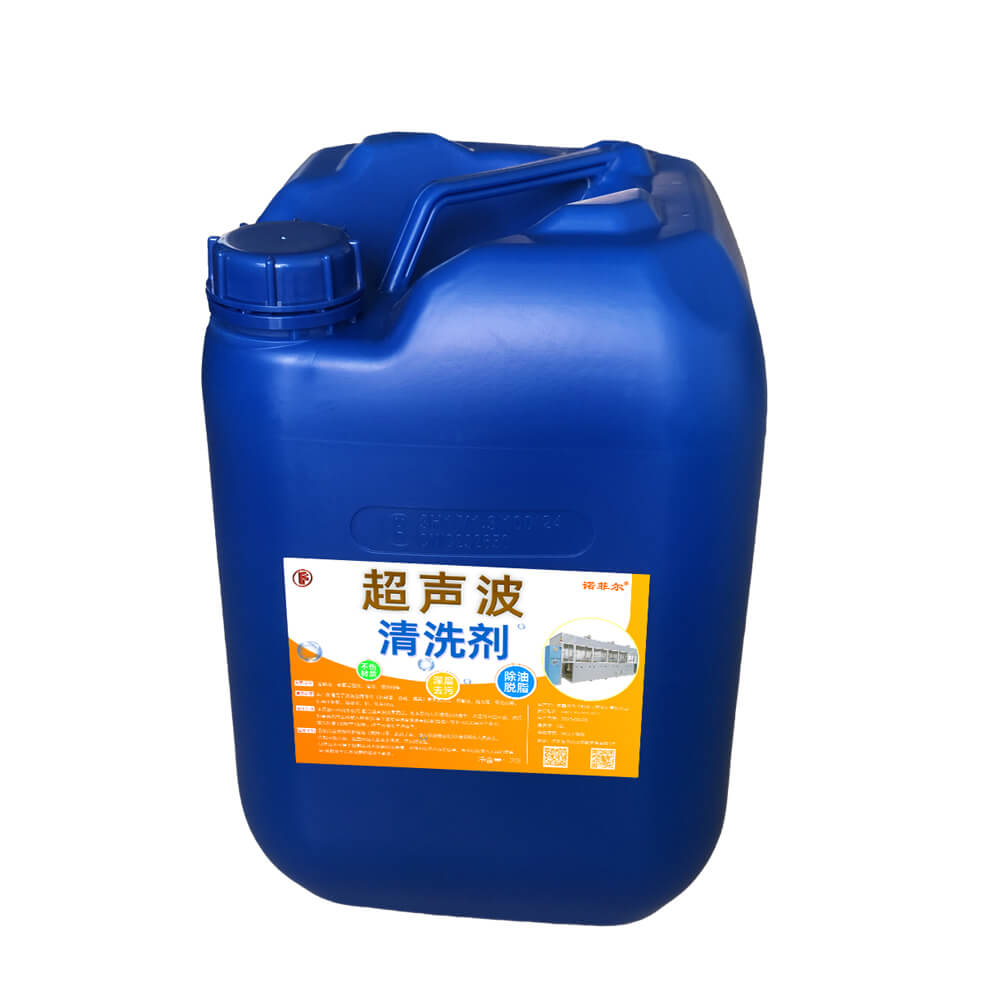
A comparative experiment of a precision instrument factory showed that the cleaning efficiency of low-foam cleaningagent was 40% higher than that of ordinary high-foam products, especially for 0.1-1mm microporous structures.
4.2 Optimal combination of temperature
and frequency
The performance of the cleaning agent is
closely related to the ultrasonic process parameters:
Temperature window: 50-60°C is the optimal
range, below 40°C, surfactant activity decreases, and the oil removal rate is
reduced by 40%; Above 65°C may lead to the decomposition of surfactants and
accelerate the oxidation of aluminum; Frequency selection: For the common
0.1-1mm pores of die-cast aluminum, a frequency of 40±5kHz can produce the best
cavitation effect, and the cavitation bubble diameter is about 50-100μm, which
can effectively enter the gap; Time control: Set 5-8 minutes according to the
degree of pollution, too long will cause the corrosion inhibitor to be
exhausted, increasing the risk of corrosion; By establishing a 3D process
matrix of "temperature-frequency-time", an automotive turbocharger
company achieved thorough cleaning of complex runners, increasing the yield
rate from 76% to 99.2%.
5. Environmental protection and safety:
from regulatory compliance to health protection
The modern manufacturing industry has put
forward higher and higher requirements for the environmental protection and
safety performance of cleaning agents, which has become one of the core
indicators of selection.
5.1 Rigid constraints of environmental regulations
Cleaning agents must comply with the
requirements of major global environmental regulations: Prohibited substances:
nonylphenol polyoxylatene ether (NPEO), phosphates, heavy metal compounds,
etc., which can interfere with the endocrine system of aquatic organisms and
are difficult to biodegrade; Certification System: Priority is given to
products certified by EU Ecolabel, NSF A1, or China Environmental Label to
ensure environmental friendliness throughout the entire life cycle. Emission
indicators: COD value ≤ 300mg/L, biodegradation rate ≥ 90% (OECD 301 standard),
reducing wastewater treatment pressure; The case of an export-oriented company
that used NPEO-containing cleaning agents led to a recall of its products in
the EU market and a direct loss of more than 5 million yuan underscored the
importance of environmental compliance.
5.2 Operator health protection
The safety of cleaning agents is directly
related to occupational health: skin irritation: pH control of 7-9 can
significantly reduce irritation, and acute skin irritation index (Draize score)
should be ≤2; Volatile organic compounds (VOCs): The boiling point should be
> 150°C to avoid large volatilization at 50-60°C operating temperatures, and
the workplace concentration should be ≤ 50ppm (8-hour weighted average); Protective
Measures: Nitrile gloves (resistant to chemical penetration for > 4 hours)
and goggles must be equipped to avoid direct contact
A factory has reduced the number of skin
allergy complaints from 8 to 0 per month through the use of low-irritant
cleaning agents and comprehensive protective measures, and employee
satisfaction has been significantly improved.
6. Economy and process optimization:
cost control throughout the life cycle
Scientific cleaning agent selection should
not only consider the initial procurement cost, but also pay attention to the
comprehensive benefits of the whole life cycle, and achieve a balance between
cost and quality through process optimization.
6.1 Concentration control and life management
The concentration of cleaning agent
directly affects the cleaning effect and use cost: the optimal concentration
range: 5-10% (volume ratio), too low will lead to insufficient cleaning
capacity, too high will cause waste and increase the difficulty of rinsing; Concentration
monitoring: Weekly monitoring by conductivity meter (accuracy ±1%), timely
replenishment when the concentration drops by 15%; Life management: According
to the degree of pollution, replace the cleaning solution every 500-800
workpieces to avoid the accumulation of impurities affecting the effect. A
motorcycle parts company reduced the unit consumption of cleaning agent from
0.8kg per piece to 0.5kg per piece by accurately controlling the concentration,
saving 300,000 yuan per year.
6.2 Small test verification and standardization process
Before the use of the new cleaning agent,
it must be verified by strict small tests: sample preparation: select a
die-cast aluminum specimen with typical stains (area ≥ 50cm²); Test items:
appearance inspection (corrosion and discoloration), cleanliness testing (water
film continuity), residue analysis (infrared spectroscopy); Process simulation:
Fully replicate the production line parameters (temperature, time, ultrasonic
power).
For cleaning agents that have passed the
small test screening, it is also necessary to establish a standardized
operation process: Pretreatment: vibration grinding deburring (#400 alumina
media) → vapor phase degreasing (boiling point 80-120°C hydrocarbon solvent); Main
cleaning: 55±2°C, 5-8 minutes, power 0.8-1.2W/cm², concentration 8±0.5%; Post-treatment:
Rinse with deionized water→ neutralize dilute acetic acid (pH 6-7) → nitrogen
protection drying
An auto parts group has implemented
standardization to reduce the difference in cleaning quality between factories
from 15% to less than 3%, significantly improving product consistency.
epilogue
The selection of cleaning agent in
die-casting aluminum ultrasonic cleaning is a systematic project that requires
the best balance between multiple factors such as corrosion protection,
pollution removal, process adaptation, environmental safety, etc. From precise
pH control to the construction of composite corrosion inhibition systems, from
the synergistic pairing of surfactants to the optimal combination of ultrasonic
parameters, every detail can affect the final cleaning quality.
For manufacturing enterprises, establishing
scientific selection standards and standardized operating procedures can not
only improve product quality stability, but also create significant economic
benefits through efficiency improvement and cost optimization. With the
increasingly stringent environmental protection requirements and the continuous
improvement of manufacturing accuracy, the selection of cleaning agents will
pay more attention to greening, functionality and intelligence, providing key
support for the progress of die-casting aluminum processing technology. As
industry experts say: "In precision manufacturing, the value of cleaning
agents lies not in their own cost, but in the reliability of the products it
guarantees. "
 Su Gongwang Security 32058302004438