


Tampilan:1 创始人: Site Editor Publish Time: 2026-03-03 Origin: Site


Corrosion mechanism and safety selection
guide for metal cleaning agents
In the cleaning tank of the machining
workshop, an aluminum alloy part that has just been removed from the cutting
fluid is facing an invisible "chemical game" - the cleaning agent
must not only peel off the emulsified oil film attached to the surface, but
also cannot damage the oxidation protection layer that is only a few microns
thick. Behind this art of balance is the complex interplay between metal
material properties and chemical agen pembersihan. According to industry
statistics, metal corrosion caused by improper selection of cleaning agents
causes direct losses of more than 2 billion yuan to our country's manufacturing
industry every year. Based on 20 years of practical experience in industrial
cleaning, this paper systematically analyzes the corrosion mechanism of metalcleaning agents and provides solutions that take into account cleaning
efficiency and substrate protection.
1. Analysis of corrosion characteristics of
cleaning agents
The corrosion risk of metal cleaning agents
does not stem from a single factor, but is the result of the combined action of
chemical composition, concentration ratio and acting environment, and different
types of cleaning agents show differentiated corrosion characteristics.
1.1 Acid cleaners: a double-edged sword
between efficiency and risk
Acidic cleaning agents based on
hydrochloric acid and sulfuric acid show irreplaceable efficiency in the field
of rust and scaling, but they also come with significant corrosion risks: the
increase of H⁺ concentration reduces the metal electrode potential, and when
the pH value is lower than 4, the corrosion current density on the steel
surface can reach more than 100μA/cm², which is 100 times that of the neutral
environment. If the hydrogen atoms diffuse to the grain boundary after acid
cleaning, the fatigue strength will decrease by 30-50%, and may cause sudden
fracture under high stress conditions. At pH<3, the surface oxide film
dissolves (Al₂O₃ + 6H⁺ = 2Al³⁺ + 3H₂O), forming pitting pits with a diameter of 1-5
μm, and this microscopic damage reduces the adhesion of subsequent coatings by
40%; The case of an auto parts factory showed that after cleaning the spring
steel parts with a 10% hydrochloric acid solution, they were assembled without
neutralization, resulting in batch breakage of these parts after 3 months of
use, and the cause was traceable to the result of hydrogen embrittlement and
stress corrosion.
1.2 Alkaline cleaning agent: a typical
representative of targeted corrosion
Cleaning agents composed of sodium
hydroxide, sodium carbonate and other alkaline components show selective
corrosion characteristics for different metals: aluminum reacts in an
environment of pH>10 (2Al + 2OH⁻ + 2H₂O = 2AlO₂⁻ + 3H₂↑), and the experimental
data show that the corrosion rate of aluminum can reach 0.5mm/h at 80°C and 20%
sodium hydroxide solution. For every 10°C increase, the corrosion rate of zinc
in alkaline solution increases by 1.5 times, and when the temperature exceeds
60°C, the galvanized layer will show obvious corrosion within 30 minutes.
However, alkaline agen pembersihan are less corrosive to steel, but fatty acid
soaps (such as sodium stearate) produced by reacting with grease will form
flocculent precipitate, which adheres to the surface and affects the subsequent
processing accuracy. Practice in the electrical manufacturing industry shows
that cleaning aluminum heat sinks with 5% sodium carbonate solution (60°C) for
more than 15 minutes will lead to grayish-white corrosion products on the
surface, reducing heat dissipation efficiency by 15-20%.
1.3 Neutral cleaners: the technical balance
behind low risk
Neutral cleaning agent (pH 6-8) with
surfactant and corrosion inhibitor for low-corrosion cleaning through multiple
mechanisms:
Isolation of surfactants: Nonionic
surfactants, such as AEO-9, form a single-molecule adsorption layer on the
metal surface, reducing the contact angle from 75° to 30°, enhancing
wettability and blocking corrosive media
Precise protection of corrosion inhibitors:
Benzotriazole (BTA) has a significant protective effect on copper, reducing the
corrosion rate of copper from 0.1mm/year to 0.005mm/year by adding 0.1%
Auxiliary effects of organic solvents:
ethanol, isopropyl alcohol and other components (5-10% content) can reduce the
surface tension to less than 30mN/m, enhance the solubility of oil stains, and
reduce the dependence on the substrate
Comparative tests show that the corrosion
rate of high-quality neutral cleaning agent on 6061 aluminum alloy at 25°C is
< 0.001mm/year, which is much lower than that of acidic (0.1mm/year) and
alkaline (0.05mm/year) cleaning agents, especially suitable for cleaning
delicate parts.
Oxidizing Components: Invisible pushers of
localized corrosion
Although sodium hypochlorite and peroxide
and other oxidizing additives can enhance the decontamination ability, they may
also cause local corrosion: when the chloride ion concentration exceeds 200ppm,
the pitting potential of 304 stainless steel drops from 0.5V to 0.2V, and it
will develop into stress corrosion cracking under stress. Strong oxidizing
agents such as ammonium sulfate will form a CuO black oxide layer on the copper
surface, which will affect the conductivity, especially in the cleaning of electronic
connectors. Metals that have formed a passivated film (such as stainless steel
and aluminum) may have oxidizing components that may destroy the integrity of
the film and form corrosion channels; The lessons of the water treatment
equipment factory show that the use of cleaning agent containing 5% sodium
hypochlorite to clean the stainless steel water tank leads to intensive pitting
corrosion on the inner wall after 1 year of use, and the leakage accident
causes a direct loss of 800,000 yuan.
2. Corrosion susceptibility spectrum of
metal materials
The differences in chemical stability of
different metal materials determine their resistance to agen pembersihan,
forming a clear sensitivity spectrum.
Iron and steel: hidden risks in relative
tolerance
As the most widely used metal material,
steel presents complexity in its response to cleaning agents: relatively stable
in the pH4-10 range, but slight rust can occur even in neutral environments
after prolonged immersion (more than 24 hours); Hydrogen embrittlement is
unusually sensitive, any acidic cleaning can introduce risks, requiring tight
pH>5 control and dehydrogenation (180°C×2 hours); The hole structure makes
it easy to residue cleaning agent, and if not rinsed thoroughly, it will form
corrosive cells in the micropores, resulting in pockmarks on the surface.
Experience in the machine processing industry shows that 45# steel is safe to
soak in neutral cleaning agent for no more than 8 hours, and corrosion
inhibitors such as 0.2% sodium nitrite need to be added beyond this time limit.
Aluminium and aluminium alloys: special
requirements for sensitive materials
Aluminum's chemical activity makes it a
high-risk material in the cleaning process: the oxide film is thin (about 5nm),
sensitive to pH fluctuations, suitable for cleaning agents with pH 6-8, and the
temperature should not exceed 50°C; Magnesium, silicon and other elements have
a high risk of intergranular corrosion, and need to be passivated with chromate
solution (0.5%) after cleaning. high content (10-13%), large porosity, easy to
residue cleaning agent, need to strengthen the rinsing link (at least 3 times);
The standard in the aerospace field requires that aluminum alloy parts must be
tested for water film continuity after cleaning - the qualification standard is
that the surface water film is intact and free of rupture within 30 seconds,
otherwise it is considered that there is a risk of corrosion if the cleaning is
not thorough.
Copper and copper alloys: the dual
challenges of discoloration and corrosion
Copper and its alloys are extremely
sensitive to the chemical components in cleaning agents: they are susceptible
to corrosion by sulfides and ammonia, forming a CuS black film layer, which
affects thermal and electrical conductivity; High content (38%) leads to
selective corrosion and "dezinnification" in chlorine-containing
environments; enhance corrosion resistance, but it is still necessary to avoid
strong oxidizing cleaning agents; Sub-manufacturing practices have shown that
cleaning copper connectors with chlorine-containing cleaners can cause contact
resistance to rise from 5mΩ to over 50mΩ, severely affecting signal
transmission quality.
Stainless steel: not absolutely
"stainless steel" material
The corrosion resistance of stainless steel
depends on the integrity of the passivation film and can still be corroded
under certain conditions: pitting is prone to chlorine-containing environments,
and the risk increases significantly when Cl⁻ concentrations exceed 100ppm; The
corrosion is not as good as 304, and uniform corrosion occurs when the
concentration of organic acids (such as citric acid) exceeds 10%; However, the
corrosion resistance is excellent, but there may still be intergranular corrosion
risk in the welding area, and the sensitization temperature (450-850°C) should
be avoided when cleaning. Experience in the use of industrial equipment shows
that 316 stainless steel in neutral cleaning agents containing 1% sodium
chloride will cause pitting corrosion after half a year of use if the
temperature exceeds 60°C, which explains why the cleaning fluid needs to be
changed regularly in food processing equipment.
3. Whole process anti-corrosion control
strategy
Preventing cleaning agents from corroding
metals requires the whole process control from selection, use to post-treatment
to form a systematic protection system.
Technical basis for scientific selection
Accurate selection based on metal type and pollution characteristics is the primary link: amphoteric metals such as aluminum and zinc should prefer neutral cleaning agents with pH 6-8. Steel parts can be selected with weak alkaline (pH 8-9) products; Copper alloys need to be confirmed to contain copper corrosion inhibitors; For heavy oil stains, you can choose a cleaning agent with 5-10% organic solvents; Oxide scaling treatment can only use acidic cleaning agents for a short period of time and strictly control the time; For ultrasonic cleaning, choose a low-foam product (Roche foam meter test < 20mm); spray cleaning requires good wettability (surface tension < 35mN/m); The selection case of the precision instrument factory is quite representative: for the oil cleaning of copper gears, three cleaning agents were tested successively: acidic, alkaline and neutral, and finally a neutral cleaning agent containing 0.2% BTA was selected to ensure cleanliness and avoid copper discoloration, and the pass rate increased from 76% to 99%.
Strict control of operating parameters
The corrosion risk of cleaning agents is
positively correlated with operating conditions, and key parameter controls
include: acidic cleaning agent concentrations are usually controlled at 5-10%,
alkaline at 3-8%, neutral at 2-5%, and regular monitoring by refractometer
(accuracy ±0.1%); The cleaning temperature of parts does not exceed 50°C,
copper parts do not exceed 60°C, and steel parts can be relaxed to 80°C in
alkaline environment; The metal cleaning time is usually 5-10 minutes, with a
maximum of no more than 15 minutes, which is strictly controlled by an
automatic timer; The practice of car engine factories shows that after
adjusting the cleaning parameters of aluminum alloy cylinder blocks from
"80°C, 10% alkaline, 20 minutes" to "50°C, 5% neutral, 8
minutes", the corrosion scrap rate is reduced from 3% to 0.1%, and
although the cost of cleaning agent increases by 20%, the comprehensive benefit
is increased by 150%.
3.3 Standardized process for validation
testing
The standard process includes: specimen
with the same workpiece material (area 50×50mm), simulating the actual surface
state (such as oxidation and oil stains); After treatment under the proposed
process conditions, the corrosion rate is calculated by the gravimetric method
(accuracy 0.1mg), which requires < 0.01mm/year. surface condition
(discoloration, spots), adhesion test (grid method) and conductivity
measurement (for conductive parts); The strict standards of the aviation
industry require new cleaners to pass a 500-hour salt spray test (ISO 9227) and
a corrosion area rate of < 5% before they can be used in batches, a
cautionary approach that results in 99.9% cleaning reliability for aerospace
components.
3.4 Key protection of post-processing
Post-cleaning treatment is essential to
prevent residual corrosion: at least two stages of rinsing, the last stage
using deionized water (conductivity < 10μS/cm) to ensure a residual cleaning
agent concentration of < 0.01%; After cleaning, neutralize to pH 6-7 with
0.5-1% sodium carbonate solution; After alkaline cleaning, it can be treated
with 0.5% citric acid; Use hot air (60-80°C) or compressed air (dew point
≤-40°C) to dry quickly, and spray rust inhibitors (film thickness 5-10μm) for
long-term storage parts; The practice of the medical device industry shows that
stainless steel surgical instruments will rust after 72 hours of storage if
they are not thoroughly dried (surface residual water film > 30 seconds)
after cleaning with a neutral cleaning agent, affecting the sterilization
effect and service life.
4. Technical characteristics of
high-quality cleaning agent products
Metal cleaning agents with excellent
performance on the market usually have the following technical characteristics,
which can be used as a reference for selection.
4.1 Core indicators of aluminum alloy
special cleaning agents
For aluminum and aluminum alloy cleaning
agents, the technical parameters need to meet:
The pH value is strictly controlled at
6.5-7.5 (buffer system) to avoid pH fluctuations of more than ±0.5
Oxide film protection rate > 95% (by
drip test: corrosion time of 10% nitric acid solution > 30 seconds)
The change rate of surface resistance after
cleaning < 5%, ensuring that the conductivity is not affected
Nofil Electronic Technology's aluminum
alloy special ultrasonic cleaning agent achieves an oil removal rate of 99% and
a corrosion rate of 0.003mm/year in the cleaning of a new energy battery case
through the composite formula of "surfactant + silane coupling
agent", which meets the requirements of IP67 protection level.
Technological breakthrough in polymetallic
compatible cleaning agents
A universal cleaning agent that can handle
multiple metals at the same time, reflecting technical strength: the corrosion
rate difference of steel, aluminum and copper is < 0.005mm / year, which
solves the problem of contact corrosion of dissimilar metals; The corrosion inhibitor system is diverse:
including BTA (copper protection), sodium molybdate (steel protection), and
sodium silicate (aluminum protection); The biodegradation rate > 90% (OECD
301 standard), meeting environmental protection requirements
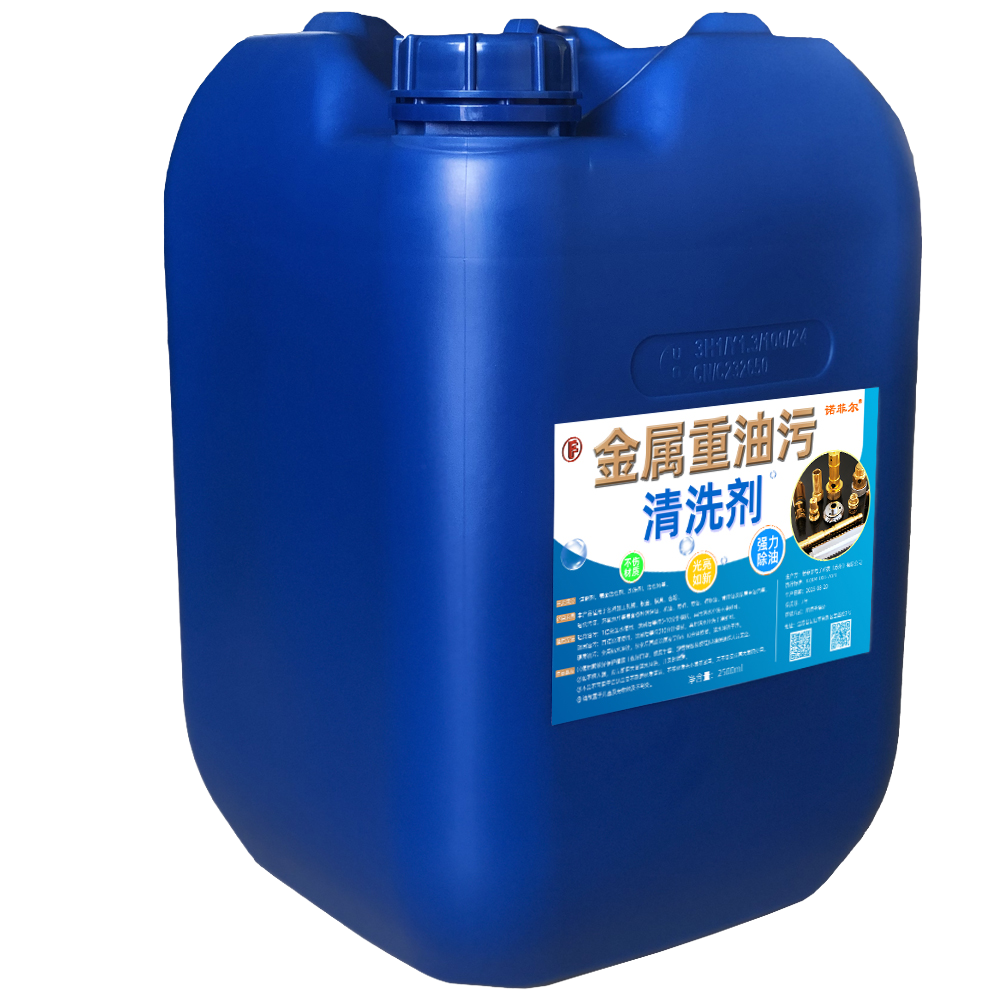
The application case of Nofil metal cleaner
shows that the product treated copper terminals, aluminum sheaths and steel
brackets at the same time in the cleaning of mixed automotive wiring harnesses,
and the salt spray test after cleaning was corrosion-free for 720 hours,
reducing the defect rate from 8% to 0.5%.
5. Summary of experience in industry
applications
Cleaning practices in different fields have
accumulated targeted experience and lessons, which are worth learning from and
promoting.
Precision cleaning experience in the
automotive manufacturing industry
Auto parts cleaning emphasizes reliability
and consistency: engine block: using neutral cleaning agent (pH 7.5) +
ultrasonic (40kHz) process to avoid corrosion caused by water residue; Galvanized
parts: Strictly control the pH of alkaline cleaning agent <9.5, temperature
< 50°C, cleaning time < 10 minutes; Stamping parts: Phosphating treatment
(film weight 2-3g/m²) immediately after cleaning to form conversion film
protection; Statistics from a joint venture car company show that after the
implementation of these measures, the number of rust complaints about parts has
dropped from 150 to 12 per year, and the after-sales cost has been reduced by 6
million yuan per year.
High cleanliness requirements in the
electronics manufacturing industry
Electronic component cleaning focuses on
surface condition and electrical properties Printed circuit boards: use
water-based neutral cleaning agents to avoid ionic residue (< 1μg/cm²
required); Connector: Cleaning agent containing copper corrosion inhibitor to
ensure the change rate of insertion and unplugging force < 10%; Chip lead
frame: cleaning agent particle size control < 0.5μm to prevent scratching
the leads; The practice of the semiconductor industry shows that the
resistivity of electronic-grade cleaning agents needs to be > 18MΩ・cm and the particle content (>0.3μm) < 10/ml to meet the
cleanliness requirements of chip packaging.
epilogue
Corrosion control of metal cleaners is the
art of balancing – efficiently removing contaminants while protecting the
substrate from damage. From the risk of hydrogen embrittlement in acidic
cleaning agents to amphoteric metal corrosion in alkaline solutions, and from
the relative resistance of steel to the high sensitivity of aluminum alloys,
each material and cleaning agent combination needs to be evaluated in a
targeted manner.
The selection of high-quality cleaning
agents (such as Nofil aluminum alloy special agents, Nofil polymetallic
compatibility agents) is the foundation, and more importantly, the
establishment of a full-process management system of "selection verification
- parameter control - post-treatment protection". For manufacturing
enterprises, instead of bearing losses after corrosion occurs, it is better to
eliminate risks at the source through scientific control. As the consensus in
the field of industrial cleaning is: the best anti-corrosion solution is to let
the cleaner only "recognize" the oil and not "harm" the
metal.
 Su Gongwang Security 32058302004438