


Tampilan:1 创始人: Site Editor Publish Time: 2026-03-10 Origin: Site


Overview of wire bonding technology
In the field of connecting chips to
external packages, wire bonding technology occupies an important position due
to its efficiency and ubiquity. Among them, the hot press bonding technology is
unique, which cleverly integrates the principles of low-temperature diffusion
and plastic flow, and plays an important role in gold wire bonding. Ultrasonic
bonding technology takes a different approach, achieving reliable connections
between gold or aluminum wires through the synergy of plastic flow and
friction.
The complete process of wire bonding
includes several key links, first of all, the cleaning of the pad and the
shell, which is the basis for ensuring the bonding quality; Then there is the
precise debugging of the wire bonding machine to ensure that the equipment is
in the best working condition; Then perform the wire bonding operation;
Finally, there is strict quality inspection to troubleshoot possible problems.
There are two main types of shell cleaning
technology, plasma cleaning technology uses a high-power radio frequency source
to convert gas into plasma, and uses the characteristics of plasma to remove
contaminants attached to the surface; UV ozone cleaning technology uses
specific wavelengths of ultraviolet light to decompose substances to achieve
the purpose of cleaning.
In terms of wire bonding technology, ball
bonding process and wedge bonding process are the two main methods. The ball
bonding process is suitable for fine wires, especially when the pad spacing is
greater than 100 microns; The wedge bonding process is suitable for the
combination of gold wire and aluminum wire, where the aluminum wire is
ultrasonically bonded at room temperature, and the gold wire is
hot-ultrasonically bonded at 150 degrees Celsius, which is widely used in
precision-sized connections.
The bonding method is divided into forward
bonding and reverse welding bonding, with the first bond point located on the
chip surface and the first bond point on the surface of the shell.
Detailed explanation of hot press bonding
and ultrasonic welding technology
The core principle of thermocompression
bonding is to combine low-temperature diffusion with plastic flow to facilitate
contact between atoms, resulting in a robust solid diffusion bond. During the
bonding process, the stressed parts need to undergo a series of carefully
designed temperature and pressure cycle treatments, during which the contact
surface will undergo plastic deformation and diffusion. Plastic deformation
plays a crucial role in destroying the oxide layer on the contact surface and
achieving the fusion of metal surfaces. In hot press bonding, the deformation
of the welding wire is mainly manifested as plastic flow, and this technology
is mainly used in the field of gold wire bonding.
Ultrasonic welding technology combines
plastic flow and friction to achieve effective welding of welding wires. The
mechanism of operation is to use quartz crystals or magnetic drives to transmit
frictional action to a metal sensor known as a "HORN". When the
quartz crystal is energized, the metal sensor stretches; After a power outage,
the sensor shrinks. These actions are produced by an ultrasonic generator and
are generally maintained at an amplitude of 4 to 5 microns. The end of the
sensor is equipped with a welding tool, and with the telescopic vibration of
the sensor, the welding wire causes friction at the bonding position and
plastic deformation under the action of top-down pressure. Most plastic
deformation occurs after the bonding point absorbs ultrasonic energy, while
pressure-induced plastic deformation is relatively rare. This is because the
action of ultrasonic waves on the bond point reduces its hardness, allowing the
wire to produce greater plastic deformation at the same pressure. This bonding
method is suitable for welding gold or aluminum wires.
In-depth analysis of the wire bonding
process
The wire bonding process mainly includes
the cleaning of the pad and shell, the commissioning of the wire bonding
equipment, the wire bonding operation and the subsequent inspection work. At
present, molecular-level cleaning techniques are commonly used for shell
cleaning, including plasma cleaning and ultraviolet ozone cleaning.
Plasma cleaning technology excites the gas
into a plasma state through a high-power RF source, and then the high-speed
moving gas ions hit the surface of the bonding area, and the pollutant is
sputtered removed by combining with pollutant molecules or physically
splitting. In this process, commonly used gases include oxygen (O₂), argon
(Ar), nitrogen (N₂), and a gas mixture consisting of 80% argon and 20% oxygen, or a
gas mixture consisting of 80% oxygen and 20% argon. In addition, the plasma
combination of oxygen and nitrogen is widely used, especially for the degassing
treatment of epoxy resins.
UV ozone cleaning technology uses specific
wavelengths of radiation to clean surfaces. The specific process is as follows:
UV light at a wavelength of 184.9 nanometers can break the chain of oxygen
molecules to form atomic oxygen (O + O), which then combines with other oxygen
molecules to form ozone (O₃). Under the action of ultraviolet light at a
wavelength of 253.7 nanometers, ozone is further broken down into atomic and
molecular oxygen. At the same time, water molecules are broken down into free
hydroxide ions (OH⁻). These substances can react with hydrocarbons to form
carbon dioxide (CO₂) and water (H₂O), which eventually detach from the attached
surface as gases. UV light at 253.7 nanometers also breaks the molecular bonds
of hydrocarbons, thereby accelerating the oxidation process.
Although these two cleaning methods are effective in removing organic contaminants from pad surfaces, their effectiveness is largely influenced by specific contaminant species. For example, oxygen plasma cleaning technology does not improve the weldability of gold thick films, while O₂+Ar plasma or solution cleaning methods are better options. In addition, certain contaminants, such as chloride ions (Cl⁻) and fluoride ions (F⁻), cannot be removed by the above methods due to the formation of chemical bonds. In this case, solution cleaning methods may be required, such as using vapor phase fluorocarbons or deionized water.
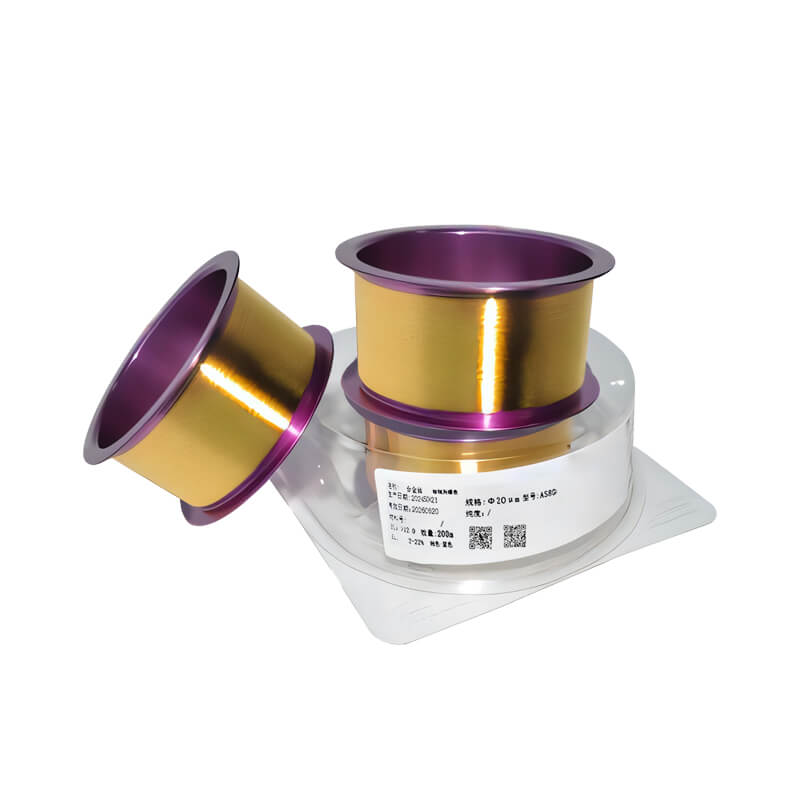
The wire bonding process is mainly divided
into two types: ball bonding and wedge bonding. Ball bonding usually uses fine
gold wire with a diameter of less than 75 microns, because fine gold wire is
easily deformed under high temperature and pressure conditions, has good
oxidation resistance and excellent ball formation. Ball bonding is suitable for
pad spacing greater than 100 microns, and has been used in cases with a 50
micron pitch.
The wedge bonding process is suitable for
both gold and aluminum wires, with the main difference being that aluminum
wires are ultrasonically bonded at room temperature, while gold wires are
thermally sonicly bonded at 150°C. The main advantage of wedge bonding is its
suitability for fine size soldering, such as pad spacing below 50 microns.
However, due to the rotational motion of the bonding tool, its overall speed is
usually lower than that of thermal ultrasonic ball bonding. The most common
wedge bonding process is aluminum wire ultrasonic bonding, which has a
relatively low cost and bonding temperature. The main advantage of gold wire
wedge bonding is that since the solder joints formed are smaller than ball
bonds, there is no need for hermetic packaging, which is especially suitable
for microwave devices.
There are two main methods of bonding
technology. Forward bonding, that is, the bonding is completed on the chip
first, followed by a second bonding on the packaging case; Back-soldering
bonding is first bonded on the shell and then completed on the chip. When
implementing forward bonding, the chip bond point is usually equipped with a
tailstock; In the process of reverse bonding, the chip is usually not equipped
with a tailstock. Which bonding method to choose for circuit connection needs
to be judged according to the specific situation.
Failure problems and analysis in the
bonding process
The phenomenon of pad pitting
Pad pitting is one of the most common
failure problems in the bonding process, and it can occur for a variety of
reasons. When the intensity of the ultrasonic energy exceeds the threshold, it
can cause misalignment of the Si lattice layer, which can lead to pad pitting.
In the wedge bonding process, if the bonding force is too large or too small,
this problem is also prone to occur. Normally, a bonding tool that hits the
substrate too quickly will not cause potholes in Si devices, but they can cause
potholes in GaAs devices. During ball bonding, if the ball size is too small,
it may cause the hard bonding tool to come into direct contact with the
metallized layer of the pad, resulting in pitfalls.
The thickness of the pad is also related to
the degree of damage to the pit, generally speaking, pads with a thickness of 1
to 3 microns have less damage, however, there may be potential problems when
the pad thickness drops below 0.6 microns. When the pad metal matches the
hardness of the lead metal, the bond quality is significantly improved and the
pitting phenomenon is effectively reduced. In the process of ultrasonic bonding
with Al wire, if the hardness of the wire is too high, it may cause depression
on the surface of the Si sheet.
Other common failure problems
In addition to pad pits, there are also a
variety of failure problems in the bonding process. Lead contamination can
affect the reliability of the bond, the wrong wire angle can lead to poor
connections, clogged wedge through-holes can hinder normal bonding operations,
dirty tools can affect the bonding accuracy, and improper fixture clearance and
improper fixture pressure can adversely affect the bonding effect.
If the length of the wire is too short, the
force applied to the first bonding point will be concentrated in a small area,
resulting in excessive deformation. Conversely, if the tail wire is too long,
it may lead to a short circuit between the pads.
Bond stripping phenomenon
When pulling off, the root of the bond
point may partially or completely separate from the bond surface, forming a
smooth fracture, a phenomenon known as bond stripping. This type of peeling
phenomenon usually stems from improper selection of process parameters or a
decline in the quality of the bonding tool, which is an early warning sign of
failure in the bonding process and needs to be paid enough attention.
Lead bending fatigue
Lead bending fatigue is mainly caused by
cracks at the root of the lead bonding point, which may be due to mechanical
fatigue during the bonding process or thermal stress fatigue caused by
temperature cycling. The existing experimental data show that the ultrasonic
bonding of Al filament shows higher reliability than that of Al filament in the
environment of temperature cycling. In the 0.1% mg content of aluminum wire,
its performance is significantly better than that of aluminum wire containing
1% silicon; To ensure effective mitigation of lead bending, the height of the
lead closed loop should be at least 25% of the bond point spacing.
Corrosion of bond joints and pads
Corrosion of the bond point to the pad can
cause one or both ends of the lead to break completely, causing the lead to
lose constraint inside the package, move freely, and cause a short circuit.
Moisture and dirt are the two main causes of corrosion. For example, when the
bond location contains chlorine (Cl) or bromine (Br), the corresponding
chloride or bromide is formed, which in turn corrodes the bond point. Corrosion
causes the resistance at the bond point to gradually increase until it
eventually leads to device failure. In most cases, the packaging material
exerts a certain amount of pressure on the chip surface and its adjacent bond
points, and only when the corrosion is severe enough to cause electrical
connection problems.
Corrosion of lead frames
Corrosion in lead frames is primarily
caused by excessive residual stress or excessive surface contamination
introduced during surface coating processes (e.g., nickel plating to protect 42
alloys or copper matrix metals). The most vulnerable area is often the
interface between the sealing compound material and the lead frame, which
requires attention.
Metal migration
Metal migration refers to the growth
process of metal dendrites starting from the position of the bonding pad, which
involves the electrolytic behavior of metal ions migration from the anode
region to the cathode region, and its occurrence is closely related to the
availability of metals, ion types, potential differences and other factors.
Metal migration can lead to an increase in leakage current in the bridge area,
and when the bridge area is fully formed, it is more likely to cause short
circuit problems. Among the various metal migration phenomena, silver (Ag)
migration is the most frequently reported, and such migration phenomena also
exist in metals such as lead (Pb), tin (Sn), nickel (Ni), gold (Au) and copper
(Cu). Given that metal migration is closely related to device failure, it is a
failure mechanism that gradually emerges.
Vibration fatigue
Vibration fatigue can cause structural
resonance, which in turn can cause damage to the bond point. Specifically, for
gold (Au) wire, this critical frequency is between 3 and 5kHz; The critical
frequency of aluminum (Al) wire is about 10kHz. Normally, the vibration fatigue
failure of wire bonding mostly occurs in the ultrasonic cleaning process.
Therefore, to ensure the reliability of the cleaning equipment, its resonant
frequency should be controlled in the range of 20 to 100kHz.
Inner lead breakage and disconnection
There are three main situations of internal
lead fracture and debonding: First, the lead breaks in the middle part, which
is closely related to the damage degree and triggering mechanism of the inner
lead, and does not only appear in the early failure stage. Damage to the
bonding wire can cause the area of the damaged lead to shrink, which in turn
increases the current density, which is more susceptible to burnout, and its
ability to resist mechanical stress is weakened, eventually causing the inner
lead to break at the damaged area. The main causes of damage include mechanical
damage and chemical corrosion of the bonding wire.
The second is that the lead breaks at the
root near the bonding point, which is mainly due to process defects, of which
thallium (Tl) contamination is a key factor. Thallium can combine with gold
(Au) to form eutectic phases with low melting points, which penetrate from the
gold-plated lead frame into the gold wire. During the bond point formation
stage, thallium can diffuse rapidly and accumulate in the grain boundary region
above the ball neck, forming a eutectic phase. When tested by plastic seals or
temperature cycling, the ball neck is prone to breakage, leading to device
performance failure.
Third, the lead is debonded, and its risk
is affected by a variety of factors. The formation of the interfacial
insulation layer is an important reason, if the photoresist or window
passivation film in the chip bonding area is not thoroughly cleaned, it will
lead to the formation of the insulating layer; In addition, the poor quality of
the gold plating layer of the tube shell often causes problems such as
looseness, redness, bubbling and peeling on the surface; In the process of
intermetallic bonding, if it comes into contact with an environment containing
oxygen, chlorine, sulfur or water vapor, the metal material will often react
with these gases, forming insulating layers such as oxides and sulfides, or
suffering from the corrosion of chlorine, which in turn increases the contact
resistance and reduces the reliability of the bonding.
Metallization layer defects also increase
the risk of debonding, which is mainly manifested by the thin metalization
layer of the chip, resulting in a lack of sufficient buffering during the
bonding process, resulting in defects. In addition, alloy dots appear in the
metallized layer, which are prone to defects at the bonding; There is also an
unstable adhesion of the metallized layer, which leads to the risk of shedding
pressure points.
Surface contamination can hinder the
diffusion between atoms, which can arise from various production processes such
as chips, tube shells, splitting knives, gold wires, tweezers, tungsten
needles, etc. If the purification of the external environment is insufficient,
it may lead to dust pollution; poor purification of the human body may cause
organic matter and sodium pollution; If the chip, tube shell, etc. are not
thoroughly cleaned in time, the remaining gold plating solution may cause
potassium and carbon pollution. This type of contamination is batch in nature
and can lead to the scrapping of entire batches of tube shells or lead to
corrosion of the bond points and thus failure. In addition, if gold wire and
tube shells are stored for a long time, they are not only easy to contaminate,
but also easy to age, and the hardness and ductility of gold wire will also
change.
The uneven stress distribution between the
contact materials is also one of the factors leading to debonding, and the
stresses generated during the bonding process are divided into thermal stress,
mechanical stress and ultrasonic stress. If the bonding stress is too low, the
bond will not be stable enough; However, excessive bonding stress can also
adversely affect the mechanical properties of the bond point. Excessive stress
may cause damage to the root of the bonding point, which in turn will cause the
root of the bonding point to break and lose its function. In addition,
excessive stress can damage the chip material below the bond point and even
cause cracks.
Intermetallic compounds cause failure and
response to Au-Al systems
Interdiffusion and the formation of
intermetallic compounds in Au-Al systems
In the early stages of bonding, a very thin
diffusion layer is gradually formed between gold and aluminum, which is mainly composed of AuAl₂ (purpura). Further heating will promote the continuation of Au-Al
diffusion, and as the gold atoms continue to penetrate into the aluminum film,
the originally pure aluminum layer will gradually melt. At the same time, on
one side of the golden ball, a compound film composed of Au₅Al₂ will form.
The thickness of the diffusion layer does
not increase indefinitely due to the upper limit of the supply of aluminum
elements and the significant difference in the rate of interdiffusion between
aluminum and gold. We note the diffusion rate as D, where the diffusion rate of
aluminum to gold (D Au→Al) is greater than the diffusion rate of gold to
aluminum (D Al→Au). If 1 micron is used as the initial aluminum film thickness,
the total thickness of the entire diffusion layer is roughly between 4 and 5
microns. During further heating, the gold will diffuse into the diffusion layer
and form an Au₄Al compound on the surface side of the gold ball, while
continuing to grow towards the semiconductor chip side.
As the temperature rises further, the
diffusion of gold (Au) in the diffusion layer continues until only Au₅Al₂ and
Au₄Al remain in the diffusion layer. In addition, due to the Kirkendall effect,
cavities will appear around the diffusion layer. If the heating continues, the
gold (Au) diffusion in the cavity-free region will be enhanced, which will
promote the formation of the Au₄Al
layer in the central region .
In molded integrated circuits, these
substances act
as catalysts for
the oxidation of aluminum in the Au₄Al layer, given the flame retardants
contained in the resin material. Bromide penetrates into the bonding point
through micropores, which in turn oxidizes the aluminum element in the Au₄Al
layer. Therefore, at the interface between the center of the gold ball and the
compound layer, a high-resistance barrier will be formed, which can lead to
disconnection failure.
Effects of impurities on the Au-Al system
In the early stages of lead development,
the focus was on improving mechanical strength, which included fine control of
the lead structure and size, so metal-to-metal fracture was not a major
consideration. However, as pad spacing shrinks and control windows narrow,
advances in wire bonding technology are increasingly constrained by
intermetallic phase issues. So far, the research on the doping effect of lead
is insufficient.
At present, the introduction of doped
impurities and the slowing down of the diffusion rate of the intermetallic
phase are considered to be an effective way to reduce intermetallic failure. In
fact, doping impurities does not effectively inhibit the growth of
intermetallic phases when doping concentrations reach 100ppm. As a result, the
doped impurities in some commonly used lead products have been increased to 1%,
where doped impurities are effective in preventing the spread of Au and Al.
However, the effect is not as expected, and the presence of adulterated
impurities can also lead to a decrease in lead conductivity. Therefore, there
is an urgent need to explore new solutions to address these issues more
efficiently while ensuring that conductivity performance is not adversely
affected.
Improve your strategy
There are many reasons why intermetallic
compounds fail, so it is difficult to minimize them simply by adjusting for a
single factor. We were able to do this by selecting the most suitable epoxy
molding compound to reduce encapsulation stress, selecting the appropriate
capillary splitter to create a tighter intermetallic phase structure, and
optimizing process parameters to minimize irregular grain growth and improve
initial intermetallic phase coverage.
The results show that the most critical
influencing factor is the type of lead. The type of capillary splitter also has
a significant impact on the formation of intermetallic phases. However, once
the intermetallic phase coverage exceeds 70%, coverage itself is no longer a
decisive factor. When we use 70μm soldering
 Su Gongwang Security 32058302004438