


Tampilan:1 创始人: Site Editor Publish Time: 2026-03-13 Origin: Site


Scientific selection of solder wire: from
composition to brand
At the moment when the electronics
manufacturing industry is booming, solder wire, as the core material of circuit
connection, has developed from an early single type to a multi-dimensional
system including washable, clean-free, lead-free, halogen-free, solid and other
multi-dimensional systems. In the face of a dazzling array of products, how to
accurately choose the right solder wire has become a problem for buyers and engineers.
This paper will systematically analyze the key considerations for selecting
solder wire from multiple dimensions such as composition composition, process
adaptation, and performance characteristics, and provide scientific reference
for practical applications.
1. Core components: the fundamental
elements that determine the performance of solder wires
The composition of solder wire directly
determines its soldering performance and applicable scenarios, which is the
primary consideration when selecting a model. Early mainstream products were
dominated by tin-lead alloys, but with the full implementation of RoHS
environmental standards, lead content was strictly limited (usually less than
0.1%), and tin-copper alloys have become the mainstream choice for
environmentally friendly lead-free solder wires. This type of alloy not only
meets environmental requirements, but also has good wettability and mechanical
strength, making it suitable for the welding needs of most electronic devices.
For scenarios with high reliability
requirements, silver-containing solder wires show unique advantages. The
addition of silver (usually 0.3%-3.0%) can significantly improve the
conductivity of solder joints (15%-20% higher conductivity than ordinary tin-copper
alloys) and thermal conductivity, while enhancing fatigue resistance,
especially suitable for high-end products such as high-frequency circuits and
precision sensors. Test data from an aerospace electronics component factory
shows that after using solder wire containing 3% silver, the life of solder
joints is extended by 2.3 times that of ordinary tin copper solder in a
temperature cycle test from -55°C to 125°C.
If it involves export or high-end
applications, the lead-free halogen-free type (halogen content <900ppm) will
be a necessary choice, which can effectively avoid the electrochemical
corrosion problems that may be caused by halogen compounds in traditional
solder.
2. Welding temperature: key parameters that
match the characteristics of the substrate
Solder wires can be divided into three
categories according to the soldering temperature: high temperature
(>260°C), medium temperature (200-260°C), and low temperature (<200°C).
FR-4 substrates in PCB boards are usually resistant to temperatures below
260°C, and if high-temperature solder wires are used, it may lead to problems
such as board delamination and discoloration of the substrate around the solder
joints.
Although low-temperature solder wires (such
as tin-bismuth alloys) can protect heat-sensitive components, it should be
noted that their solder joint strength is low (tensile strength of about 15MPa,
which is only 60% of that of medium-temperature tin copper solder) and is not
suitable for vibration environments. while high-temperature solder wires (such
as tin, silver, copper alloys) are suitable for products that have been in
high-temperature environments for a long time, such as automotive electronics
and industrial controls, and their melting point can reach more than 217°C,
which can resist the temperature fluctuations of the working environment.
In actual selection, it is recommended to determine the optimal temperature range through thermal simulation testing, taking into account the welding efficiency and substrate protection, and usually use the stepped temperature test method to record the appearance and mechanical properties of the solder joints at different temperatures.
3. Structure type: the performance game
between rosin core and solid core
The structural differences of solder wires
directly affect the ease of operation and soldering effect. Rosin-core solder
wires contain flux (about 2%-5%), which can be well wetted without additional
additions, making them particularly suitable for manual soldering and small
batch production. Its flux is usually compounded with rosin, activator, and
stabilizer, which can effectively remove the oxide layer on the metal surface
and reduce the welding defect rate.
Solid-core solder wires offer unique
advantages due to the absence of flux: storage life can be extended to more
than 3 years (typically 1 year for rosin cores), oxidation rate is reduced by
40%, and there is virtually no risk of tin frying (< tin fry rate 0.1%).
More importantly, fluxes can be flexibly matched according to different
soldering needs, such as using low-solids fluxes (<5% solids) in precision
electronics soldering and more active fluxes in power device soldering.
However, solid core solder wires require
higher operating techniques, and the amount of flux applied (usually 0.1-0.3mg
per square centimeter of solder joints) needs to be precisely controlled,
otherwise it is easy to cause false soldering or excessive residue. Comparative
data from a consumer electronics foundry showed that skilled workers using
solid-core solder wires had about 20% lower soldering efficiency than rosin
cores, but better solder joint consistency (from 1.2% to 0.5%).
4. Cleaning requirements: Adaptation of
no-cleaning and washing scenes
The no-clean solder wire uses a
low-activity flux (usually rosin-modified resin), which has a residual amount
of < 0.5mg/cm² after soldering and is neutral (pH 6.5-7.5), which will not
corrode the solder joint or affect the impedance performance. Its advantage is
that it eliminates the cleaning process and can reduce production costs by
about 15%, making it suitable for large-scale production of consumer
electronics products such as mobile phones and computers.
Although the washed solder wire requires an
additional cleaning process (usually ultrasonic cleaning with deionized water,
temperature 50-60°C, 3-5 minutes), it can achieve near-zero carryover (residue
< 0.01mg/cm²), which is indispensable in the field of high reliability.
Scenarios with strict cleanliness requirements, such as electricity meters,
military products, and high-frequency vibration cameras, must be washed with
water to avoid electrochemical migration caused by residual flux in long-term use.
When choosing, it is necessary to evaluate
the product life cycle and use environment: it is recommended to choose a
washable type for outdoor equipment and humid environments; For ambient indoor
environments and cost-effectiveness, a no-cleaning option can be selected, and
the ion mobility of the residual flux (typically required < 10⁻⁸ cm²/s) is
required.
5. Wire diameter specifications: precise
selection of suitable solder joint size
The diameter of the solder wire typically
ranges from 0.1mm to 3.0mm, and the wire diameter must be selected to
accurately match the solder joint size. The fine wire diameter below 0.3mm is
suitable for soldering SMD components below 0603 package, which can effectively
avoid solder bridging; thick wire diameters above 1.0mm are suitable for large
solder joints such as connectors and power supply pins, which can reduce the
number of soldering times and improve efficiency.
In automated welding, wire diameter
stability is particularly important. A diameter deviation of > 0.05mm can
lead to poor wire feeding, and data from an automotive electronics soldering
workshop shows that equipment downtime has dropped from 2.5% to 0.8% when using
solder wires with a tolerance of ±0.02mm. In addition, automatic soldering
machines are more suitable for wire diameters of 1.0-1.6mm, and their breakage
resistance is more than 3 times that of fine wire diameters, which can ensure
continuous welding stability.
In practical applications, the empirical
formula of "solder joint diameter ×0.7" can be used to preliminarily
determine the wire diameter, and then through test welding adjustment, ensure
that the ratio of the solder joint height to the pad diameter is between
0.3-0.5 to obtain the best mechanical properties.
6. Brand selection: the double guarantee of
quality and service
In the realm of solder wire, brands often
represent quality stability. Well-known brands such as Alpha, YT Yunxi, and
Senju have been verified by the market for decades, and their products have
passed multiple certifications such as ISO9001 and IPC-A-610, and the impurity
content can be controlled below 50ppm, which is far lower than the industry
average of 200ppm. These brands usually have a comprehensive quality
traceability system in place, providing component analysis reports and welding
performance test data for each batch of products.
In contrast, small workshop products have
many hidden pitfalls: insufficient tin purity (actual purity may be 2%-5% lower
than nominal), impurities exceeding the standard (harmful elements such as lead
and cadmium may exceed RoHS limits), and large diameter tolerances (up to
±0.1mm). More importantly, the lack of after-sales support for these products
makes it difficult to obtain technical solutions in the event of quality
problems, which can lead to the downtime of the entire production line.
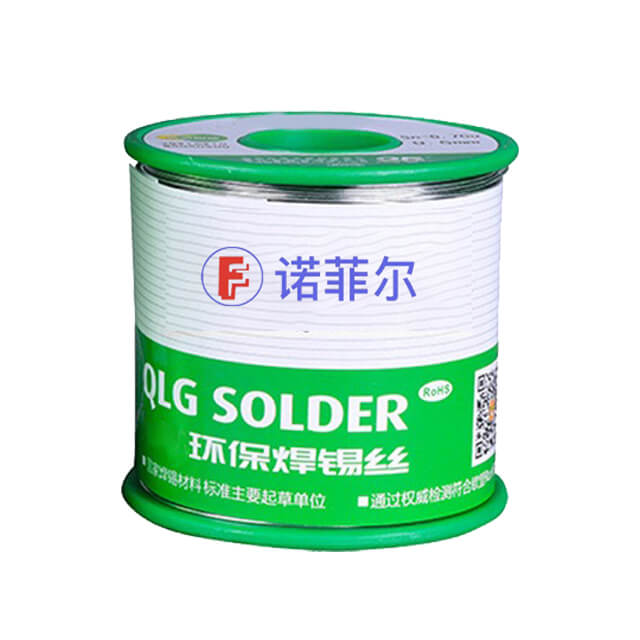
As a solder wire manufacturer with 15 years
of experience, Suzhou Nofil covers a full range of products and provides
customized services. Notably, it has a unique "technical escort"
model: with more than 5 senior engineers to provide pre-sales selection
guidance and after-sales process optimization, it has helped a medical device
factory reduce the weld defect rate from 3.8% to 0.3%. At present, its spot
inventory can be shipped within 48 hours, and the price is 10%-20% lower than
that of imported brands, which is quite advantageous in terms of cost
performance.
epilogue
The selection of solder wire is a
systematic project that requires comprehensive consideration of multiple
factors such as product characteristics, process conditions, and reliability
requirements. From ingredient compliance to structural adaptability, from
temperature matching to cleaning needs, precise control of each link directly
affects the final product quality. It is recommended to establish a "test
solder-test-verify" selection process, combining brand reputation and
technical services to find a truly suitable solder solution. Today, with the
increasing precision of electronic manufacturing, scientific selection of
solder wire has become a key link in improving product competitiveness.
 Su Gongwang Security 32058302004438