


Tampilan:1 创始人: Site Editor Publish Time: 2026-03-24 Origin: Site


From gold wire to copper wire: material
innovation and industrial transformation of bonding technology
In the microscopic world of semiconductor
packaging, wires with a diameter of just a few tens of microns shoulder the
critical mission of connecting chips to external circuits. These thin
conductors, known as "inner leads," have a direct impact on the
performance, cost, and reliability of electronic devices. For more than half a
century, gold wire has been the material of choice for high-end packaging due
to its excellent chemical stability and mature bonding process. However, with
the explosive growth of the electronics industry and the continuous rise in
precious metal prices, the cost bottleneck of gold wire bonding is becoming
increasingly prominent. In this context, copper wire bonding technology, with
its dual advantages of performance and cost, is triggering a material
revolution in the packaging industry, promoting the transformation of the whole
chain from the laboratory to the production line.
1. The energy code of bonding technology:
the co-evolution from hot pressing to ultrasound
The essence of bonding technology is to
achieve reliable connections between metals through energy input, and according
to different energy supply methods, three major technical systems have been
formed: thermocompression bonding, ultrasonic bonding and thermoultrasonic
bonding, each with its own unique applicable scenarios and process
characteristics.
Thermocompression bonding technology is
like a microscopic "forging process" in which the substrate is heated
to about 300°C and precise pressure is applied to the inner lead and electrode
aluminum layer through a special tool. This synergistic effect of "heat +
force" causes the metal wire to produce plastic deformation, break the
interface oxide layer, and when the atomic spacing between the two metals is
reduced to the nanometer, the gravitational force between the atoms forms a strong
bond. Experimental data from a packaging plant showed that when the pressure is
increased from 50mN to 150mN, the bond strength can be increased by 60%, but
more than 200mN can cause chip damage. However, this technology is highly
sensitive to temperature and pressure, making batch-to-batch consistency
difficult to control, limiting its application in precision device packaging.
Ultrasonic bonding technology demonstrates the wonderful use of "vibration
energy", which transmits ultrasonic energy from 20-60kHz to the bonding area
through a transducer. Under the action of continuous pressure, the
high-frequency vibration causes plastic deformation and local friction between
the metal wire and the surface of the electrode aluminum layer, which instantly
breaks the oxide layer at high temperature and realizes the metallurgical
combination between metals. This room-temperature operation process is
particularly suitable for temperature-sensitive devices, where a sensor
manufacturer used ultrasonic bonding to reduce the thermal damage rate of the
chip from 8% to 0.5%. However, aluminum wire (SiAl wire with 1% silicon), as
the main material for ultrasonic bonding, has a surface that is easy to oxidize
and has high resistivity, which limits its application in high-frequency and
high-power devices.
Thermal ultrasonic bonding (also known as
ball weld bonding) combines the synergistic effects of temperature, pressure
and ultrasonic energy to become the mainstream technology of gold wire bonding.
The process is like a precise "micro welding ceremony": first, the
end of the gold wire is melted into a gold ball with a diameter of about 2-3
times the wire diameter through electric spark (EFO), and then on a heating
table at about 170°C, pressure is applied through a splitting knife and ultrasonic
vibration is introduced, so that the gold ball and the aluminum layer interface
are tightly bonded. Under the protection of the nitrogen and hydrogen mixture,
the oxidation rate of the gold balls can be reduced by 90% and the bond
strength can be increased by 15%. This technique enables a shift from point to
face contact, with a single bond point with a contact area 3-5 times larger
than ultrasonic bonding, significantly reducing contact resistance.
2. Material game: the art of balancing the
performance of internal leads
The choice of inner lead material is a
critical decision in package design, requiring finding the optimal balance
between conductivity, mechanical strength, chemical stability, and cost. At
present, the mainstream internal lead materials - aluminum wire, gold wire and
copper wire - each form a unique application ecology. SiAl filament (aluminum
wire with 1% silicon) is the workhorse of cost-sensitive products, with a raw
material cost of only 1/50 of gold wire, accounting for more than 70% of the
market share in low-end packaging in consumer electronics. The addition of
silicon has increased the tensile strength of aluminum wire from 60MPa to
90MPa, improving wire drawing and bonding properties. However, the inherent
defects of aluminum are difficult to overcome: the surface is prone to the
formation of a dense oxide layer (Al₂O₃), which leads to a
decrease in bonding reliability; The resistivity (2.8μΩ・cm) is 1.6 times that of copper, which generates greater losses in
high-frequency signal transmission. The tensile strength of 110MPa is only half
that of copper, limiting its application in fine-pitch packages. Comparative
tests by an LED packaging factory showed that the probability of bond failure
of devices using SiAl wire after 1000 hours of storage at 85°C/85% RH was 5%,
which is much higher than the 0.5% probability of gold wire.
Gold wire bonding technology has been
perfected over half a century of development, and its resistivity of 2.4μΩ·cm and tensile strength of 120MPa have set a benchmark for
performance in the field of high-end packaging. The chemical inertness of gold
makes it difficult to form brittle intermetallic compounds after bonding, and
data from an automotive chip manufacturer shows that the resistance change rate
of gold wire bonded devices is still less than 3% after 3000 temperature cycles
from -55°C to 125°C. However, the price of nearly 400,000 yuan per kilogram
(market price in 2023) makes it a "devourer" of packaging costs, and
in fields with large wire consumption, such as high-power devices, the cost of
gold wire accounts for 30%-50% of the total packaging cost.
The rise of copper wire bonding is no
accident, with a resistivity of 1.7μΩ·cm (33% higher than gold),
a tensile strength of 200MPa (67% higher than gold), and a price of only 1/20
of gold, creating a combined advantage that is hard to resist. More
importantly, the thermal conductivity of copper (401 W/(m・K)) is higher than that of gold (317 W/(m・). K)) is 26% higher, which is conducive to device heat dissipation.
A power device test showed that the junction temperature of copper wire bonded
devices was 8°C lower than that of gold wire bonding under the same operating
conditions, and the life was extended by 30%. However, copper's reactive
chemistry presents new challenges: it oxidizes easily in air, and the formation
of a CuO layer can severely hinder bonding; Higher hardness (HV80, 25 for gold)
requires higher bonding energy, increasing the risk of chip damage. These
challenges drive collaborative innovation in protective atmospheres,
specialized splitting knives and process parameters.
3. Economic revolution: cost reconstruction
from laboratory to industry
The industrialization of copper wire
bonding technology has set off a cost revolution in the electronics
manufacturing industry, and its economic benefits are not only reflected in the
reduction of the cost of a single device, but also in promoting the improvement
of resource utilization efficiency and the reconstruction of industrial
competitiveness at the macro level.
In the field of high-power transistors for
green lighting, the impact of this change is particularly significant.
According to the production data of a packaging company, after replacing the
gold wire of the same specification with a single crystal copper wire with a
diameter of 38μm, the bonding material cost of each transistor decreased from
0.023 yuan to 0.0012 yuan, a decrease of 94.8%. Calculated on the annual output
of 10 million units, the cost can be directly saved by 2.3148 million yuan, and
the payback period is only 3 months. What is even more remarkable is that if
this substitution is fully promoted in the domestic market with an annual
output of 3 billion barrels, the annual savings will reach 6.944 billion yuan,
which is equivalent to the annual output value of a medium-sized gold mine. The
material utilization advantage of copper wire further amplifies the economic
benefits. Since the density of copper (8.96g/cm³) is only 46.4% of that of gold
(19.32g/cm³), 1 ton of copper wire can replace 2.16 tons of gold wire with the
same wire diameter and length. Based on the market price in 2023, the
procurement cost per ton of copper wire is about 80,000 yuan, while the
equivalent gold wire value is as high as 1.73 million yuan, reducing material
costs by 95.4%. This advantage is even more evident in the trend of shrinking
bond wire diameters – 0.01mm diameter ultra-fine copper wire costs only 1/25 of
the unit length of gold wire.
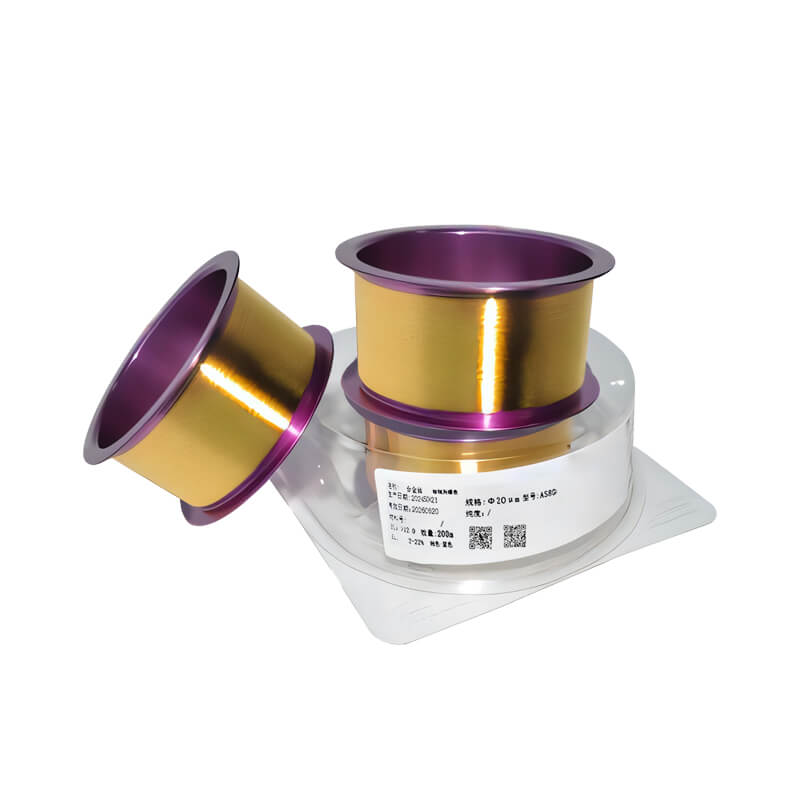
From the perspective of resource strategy, copper wire substitution has far-reaching significance. our country consumes more than 100 tons of gold wire for bonding every year, which is equivalent to 1.5% of the country's gold reserves. Copper wire subsistence can reduce the mining of rare precious metals, and every 1 ton of gold wire replaced is equivalent to saving 300 tons of ore mining and reducing associated pollutant emissions. An industry report shows that after the comprehensive promotion of copper wire bonding, the gold consumption of the electronics industry can be reduced by 60%, making an important contribution to the national gold strategic reserve.
4. The precision dance of equipment
transformation: innovation in inheritance
Transforming a mature gold wire bonding
equipment into a copper wire bonding system is a precision project that
balances cost and performance. Direct purchase of special equipment requires
tens of millions of yuan of investment, and eliminating existing equipment will
cause huge waste. Practice has proved that through targeted transformation,
mainstream models such as ASM Eagle 60 and TOSOK UBD 22210 can fully realize
the stable production of copper wire bonding, and the transformation cost is
only 1/5-1/10 of the new equipment. The gas protection system is at the heart
of the retrofit, like creating a "mini-cleanroom" for the bonding
area. Copper begins to oxidize above 200°C, while the local temperature of the
bonding process can reach more than 300°C and must be passed through a nitrogen
and hydrogen mixture (usually 95% N₂+5% H₂).) to form a
protective atmosphere. During the retrofit, a flow meter with an accuracy of
±0.05L/min was installed to stabilize the gas flow within the range of
0.6-1.2L/min - an experiment in a packaging plant showed that flow fluctuations
of more than ±0.2L/min led to a 40% increase in the standard deviation of bond
strength. The location design of the gas nozzle is also critical to ensure that
the airflow covers the bonding point in a laminar state to avoid the failure of
protection due to turbulence. The replacement of the splitting knife is another
key transformation. The high hardness of copper has reduced the lifespan of
traditional wire splitters from 500,000 to 50,000 times, and the dedicated
copper wire splitter solves this problem with three innovations: WC-Co alloy
material (hardness up to HRA90) to improve wear resistance; Optimized inner
hole geometry to reduce cable friction by changing the inlet angle from 60° to
45°; The surface is coated with a diamond-like coating (DLC) to reduce the
coefficient of friction from 0.6 to 0.15. Application data from a company shows
that dedicated splitting tools can extend service life to 800,000 cycles,
reducing equipment downtime and consumables costs.
The adjustment of process parameters
requires systematic optimization to form a new
"temperature-pressure-ultrasonic energy" matching relationship.
Copper wire bonding typically requires a 30%-50% increase in ultrasonic power
and a 20%-30% increase in bonding time to overcome the oxide layer and improve
bond strength compared to gold wire bonding. The optimized parameters of a
TOSOK UBD 22210 model show that the chip bonding power is adjusted from 50mA to
70mA, the time is increased from 20ms to 25ms, and the bond strength can reach
12g when the pressure remains unchanged at 80mN, which meets the reliability
requirements. At the same time, the thickness of the aluminum layer on the
surface of the chip needs to be increased by more than 1μm (from the conventional
1.5μm to 2.5μm) to prevent mechanical damage to the chip by the splitting
knife. The introduction of three new processes further ensures the quality of
copper wire bonding. The inert gas-filled EFO process passes nitrogen gas as
the gold ball forms, reducing the oxidation rate of the copper ball from 30% to
less than 1%; OP2 surface treatment technology extends the oxidation time of
copper wire in air from a few hours to 72 hours by forming a nanoscale
protective layer; The MRP (Modified Reflow Process) process increases the bond
strength of 10μm copper wire from 1-2g to 5-6g by precisely controlling the
heating curve, while improving the failure mode of fine-pitch bonding.
5. Dual verification of performance and
reliability
The industrialization of copper wire
bonding not only requires cost advantages but also needs to pass rigorous
performance testing and reliability verification to prove that it meets or
exceeds the gold wire bonding level in key indicators. A large number of
experimental data show that the optimized copper wire bonding technology has
achieved a double breakthrough in performance and reliability.
In terms of electrical properties, copper's
high conductivity translates into a significant advantage. The test of MJE13003
transistors of the same specification shows that when the collector current
Ic=200mA and the base current Ib=40mA, the saturation voltage Vces of the
copper wire bonded device is 0.10-0.11V, which is 8.3% lower than that of gold
wire bonding; At Ic=500mA and Ib=100mA, the Vces advantage of copper wire
bonding is extended to 5% (0.19-0.20V vs 0.20-0.21V). This difference is even
more pronounced in high-power devices, where an LED driver chip is bonded with
copper wire, resulting in a 12% reduction in power loss and a 15% reduction in
thermal resistance.
The improvement in mechanical properties is
also significant. The breaking load of 38μm diameter single crystal copper wire
can reach 8-10g, which is more than 40% higher than that of the same
specification gold wire (5-7g), and the elongation is maintained at more than
3%, meeting the flexibility requirements of fine-pitch bonding. Temperature
cycling tests (-55°C to 125°C, 1000 cycles) showed that copper wire bonds had a
strength retention rate of 85%, slightly less than 90% for gold wire, but well
above 65% for aluminum wire. What's more, copper and aluminum intermetallic
compounds grow 30% slower than gold-aluminum compounds, resulting in better
long-term reliability. Several indicators of reliability verification show that
copper wire bonded devices fully meet industrial-grade requirements. In the
humid and hot environment test at 85°C/85% RH, the probability of bond failure
after 1000 hours is only 0.3%; After vibration test (20-2000Hz, 10g
acceleration), the functional integrity rate reached 99.7%. A vehicle test by
an automotive electronics manufacturer showed that the failure rate of ECU
modules with copper wire bonding after 150,000 kilometers of driving was 0.8%,
which was basically the same as that of gold wire bonding at 0.7%. Of course,
there are still technical details that need to be improved in copper wire
bonding. Due to the high hardness of copper, the proportion of
"craters" (depressions in the aluminum layer of the chip) produced
during bonding is 10%-15% higher than that of gold wire bonding, which may
affect the reliability of ultra-thin chips. However, with the development of
low-stress bonding processes, this problem is gradually being alleviated - an
R&D team optimized the ultrasonic frequency and pressure curves to reduce
the crater depth from 300nm to less than 100nm, meeting the packaging
requirements of a 75μm ultra-thin chip.
The rise of copper wire bonding technology
is not only a simple subsistence for materials, but also a landmark event in
the transformation of the packaging industry from "precious metal
dependence" to "high performance and low cost". When the annual
output of 3 billion high-power transistors for green lighting is fully bonded
with copper wire, the annual cost savings of 6.9 billion yuan will be converted
into capital for industrial upgrading, promoting the progress of the whole
chain of equipment research and development, process innovation and material
modification.
The implications of this change extend far
beyond the packaging sector itself. In today's increasingly tight resource
constraints, copper wire bonding not only reduces the consumption of precious
metals, but also the practice of the concept of "resource-saving
society". Behind the replacement of 2 tons of gold wire for every 1 ton of
copper wire is the reduction of 300 tons of ore extraction and the
corresponding reduction in environmental impact. At the same time, the
transformation plan of copper wire bonding equipment with independent and
controllable technology has broken the technical monopoly of foreign equipment
manufacturers and improved the level of autonomy of our country's semiconductor
equipment.
With the explosive growth of 5G, new energy
vehicles and other industries, the demand for electronic devices will continue
to rise, and copper wire bonding technology will usher in a broader application
space. From smartphone processors to power modules for photovoltaic inverters,
from smart grid sensors to RF components for satellite communications, copper
wire bonding is reshaping the competitive landscape of electronics
manufacturing with its unique performance-cost advantages. This quiet material
revolution will eventually trigger profound changes in the packaging industry
and even the entire semiconductor industry, injecting new momentum into the
high-quality development of the industry.
 Su Gongwang Security 32058302004438