


Tampilan:1 创始人: Site Editor Publish Time: 2026-04-02 Origin: Site


Conductive silver paste: a liquid metal
neural network in the electronic world
When the fingertips draw a lightning-fast
trajectory on the mobile phone screen, when the photovoltaic panels convert
sunlight into surging currents under the scorching sun, a mysterious liquid
silver is fulfilling its mission - it uses micron-scale lines as a track to let
electrons run at high speed on the nanoscale "silver bridge". This is
the conductive silver paste, the "liquid nerve" of electronic
devices, and its performance directly determines the life and death of the
device: when the match is not good, the touch screen will lose consciousness
like a stroke patient, the efficiency of the solar cell may plummet by half,
and the LED lamp beads will go to premature aging in the flickering of light
and dark. The seemingly simple "silver paint application" is actually
a nanoscale precision deployment, and each silver powder is a conductive
soldier on standby, building a highway of current under the molecular-level
command system.
1. Miniaturization dilemma: the triple
shackles of traditional solutions
The continuous miniaturization of
electronic devices has led to the failure of traditional conductive solutions
one after another, and the emergence of conductive silver paste is timely and
has become the key to solving the dilemma.
The welding problem of fine structure is
the first to bear the brunt. The line width of the chip electrode has entered
the micron era, and the finest part is only 1/20 of the diameter of a hair, and
the traditional soldering process is like letting an elephant pick up an
embroidery needle - the heat of the soldering iron tip will damage the fragile
chip, and the fluidity of the solder cannot be accurately controlled. An
experiment by a chip manufacturer showed that when using the traditional
soldering process to process electrodes with a pitch of 0.1mm, the yield rate
is less than 50%, while conductive silver paste printing technology can
increase this indicator to more than 99%.
The resistance limit of flexible scenes
highlights the shortcomings of materials. The circuits of wearable devices need
to withstand more than 100,000 bends, and traditional metal foils are like
fragile eggshells, which are very easy to break in repeated deformation. The
test data of a smart bracelet manufacturer shows that products using copper
foil lines will break the circuit after 30,000 bends, while the circuits
prepared with conductive silver paste remain on after 100,000 bends, and the
resistance change rate is controlled within 5%. This stems from the synergy
between resin and silver powder in the silver paste - the resin provides
elastic cushioning, and the three-dimensional network formed by the silver
powder can maintain the connection during deformation, like putting on a
"body armor" for the circuit.
Conductive bottlenecks at high power
restrict energy conversion. The grid of photovoltaic cells needs to deliver
ampere-level current within a micron-level width, and materials such as copper
and aluminum are difficult to bear in this scenario: copper is easy to oxidize
to form an insulating layer, and insufficient conductivity of aluminum will
cause serious power loss. Comparative tests show that under the same 100μm wide
grid, the conductivity of silver paste lines is 1.5 times that of copper paste
and 2 times that of aluminum paste, which increases the conversion efficiency
of photovoltaic modules by 2-3 percentage points, which is equivalent to
hundreds of millions of kilowatts of additional power generation per year for
gigawatt power stations.
2. The triple core technology of silver
paste: from microstructure to macro performance
The excellent performance of conductive
silver paste stems from the exquisite synergy of silver powder form, sintering
mechanism and resin system, which mesh, like precision gears, and jointly
constructs an efficient conductive network.
(1) Silver powder form: the cornerstone
design of conductive networks
The microscopic form of silver powder
directly determines the efficiency of the conductive pathway, and a mature
"morphological tactical system" has been formed in the industry:
Spherical silver powder is like an array of
golf balls and is the first choice for high-precision printing due to its
excellent rollability. Its average particle size is controlled from 1-5μm, and
the standard deviation of particle size distribution is <10%, ensuring that
the mesh is not clogged when passing through the 325 mesh mesh. In electronic
pastes, spherical silver powders usually account for 60-70% to form a uniform
substrate structure, but the stacking voids of single spherical powders are as
high as 40%, and electrons need to "detour" between the particle
gaps, resulting in high resistance. A slurry manufacturer's test showed that
the line resistance of pure spherical silver powder was about 15mΩ/□, which was
difficult to meet the needs of high-power scenarios. The flaky silver powder
resembles layers of fish scales, building a "highway" by maximizing
the contact area. Its diameter-to-thickness ratio (diameter/thickness) is
typically between 50-200 and the thickness is only 0.1-0.5μm, and this flat
structure increases the lap area between particles by 3-5 times compared to
spherical powder, significantly reducing contact resistance. However, the
disadvantage of flake powder is also obvious - it is easy to clump into blocks
due to van der Waals forces, which can clog the mesh during printing, resulting
in line breakage. A display manufacturer was forced to stop production and
adjust due to the use of pure flake silver powder, resulting in a disconnection
rate of up to 8% of panel lines. The compound scheme achieves complementary
advantages and has become the standard configuration of high-end silver paste.
With the golden ratio of 60% spherical powder + 40% flake powder, it is
possible to ensure printing smoothness with spherical powder and build an efficient
conductive network with the help of flake powder. Experiments by a photovoltaic
silver paste company have confirmed that this compounding scheme can increase
the conductivity by 30% while controlling the printing defect rate below 0.5%,
perfectly balancing performance and workability.
(2) Low-temperature sintering: the
migration magic of silver atoms
Under mild conditions at 150°C, how does
silver powder bond as tightly as if it were welded? Behind this is the miracle
of "atomic migration" driven by glass powder, a revolution in cold
welding without high temperature. The dual mission of glass powder is the heart
of low-temperature sintering. When the temperature rises to 120-150°C,
low-temperature glass powders such as bismuth melt into a liquid state, like a
micro flux: on the one hand, it dissolves the oxide layer (Ag₂O) on the surface
of silver powder), exposing a clean metal surface; on the other hand, it forms
a capillary force that brings adjacent silver powder closer to the nanoscale.
High-resolution electron microscopy shows that under the action of glass
powder, a "nano-silver neck" with a diameter of 5-10nm will be formed
at the contact point of the silver powder, which is the beginning of atomic
diffusion. Precise control of sintering dynamics determines the final
performance. When the temperature is too low (<120°C), the glass powder
cannot be fully melted, and the growth of silver neck is slow; Too high a
temperature (>180°C) can cause the resin to decompose and disrupt its
structural integrity. Optimization data from a research institute shows that 30
minutes of insulation at 150°C is the optimal process – the diameter of the
silver neck can reach 30% of the particle size, the line density is up to 85%,
and the resistance is reduced to less than 5mΩ/□. The advantages of this
low-temperature process are particularly evident in flexible substrates,
avoiding high-temperature PI film shrinkage (typically > 1%) and ensuring
line dimensional accuracy.
(3) Resin system: the invisible hand that
balances conductivity and bonding
The resin plays a paradoxical dual role in
silver paste, both as a "binder" for silver powder and as a
"potential barrier" to electron conduction, and its content control
needs to be precise to one hundredth. The golden range of resin content needs
to be strictly controlled. When the resin accounts for more than 15%, the
silver powder will be wrapped into an "insulating mummy", and the
conductive pathway between the particles will be blocked, and the resistance
may soar by more than 10 times; When the resin ratio is less than 5%, the
adhesion of the silver paste drops sharply, and a large area of peeling occurs
in the tape test. The top formulation solves this contradiction through
molecular design - using a low molecular weight epoxy resin (molecular weight
<1000), which can not only form a dense network of fixed silver powder after
curing, but also provide a "tunneling" channel for electron
conduction through the π electron conjugation effect of the molecular chain, so
that at 8-10% resin content, the resistance of less than 10mΩ/□ and the
adhesion of more than 5N/cm can be achieved.
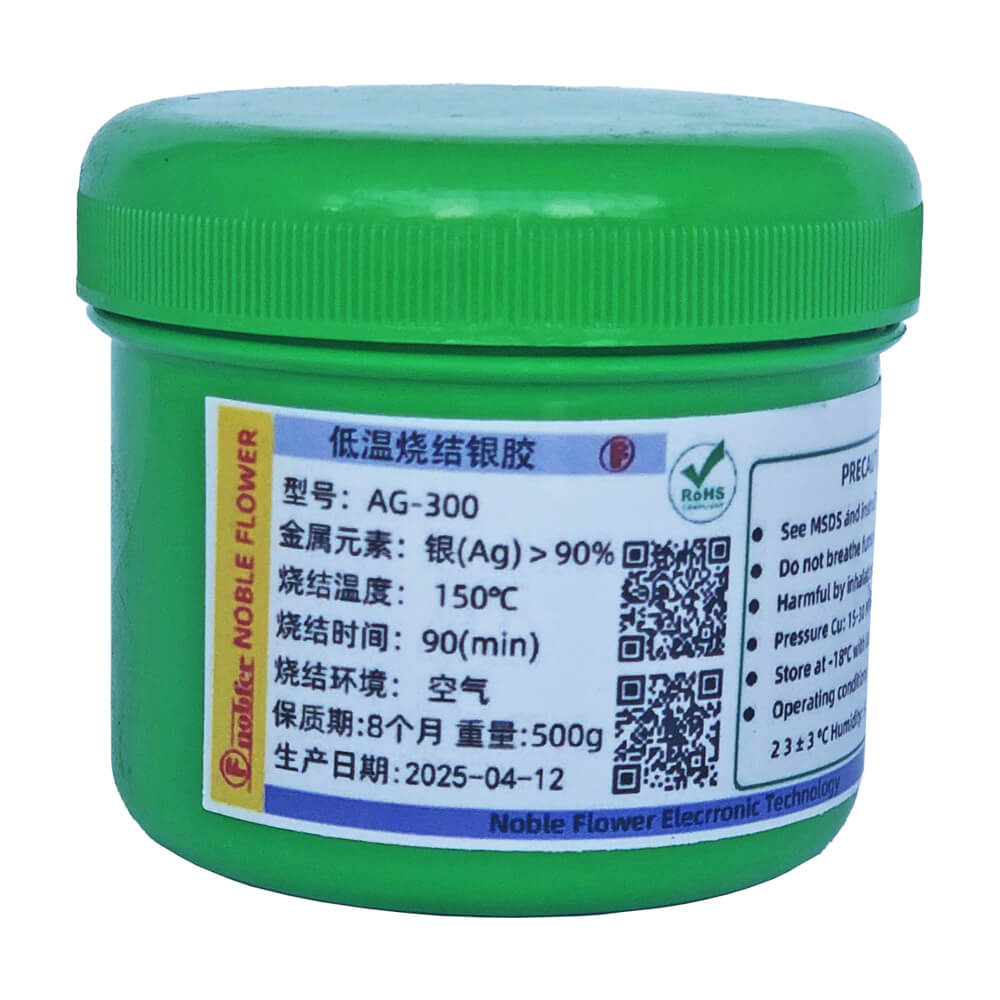
The synergy of functional additives is indispensable. Silane coupling agents such as KH550 can establish a chemical bridge between silver powder and resin, increasing interfacial adhesion by 30%; Defoamers (such as organosiloxanes) eliminate tiny air bubbles generated during printing and avoid the formation of conductive voids; Thixotropic agents (such as fumed silica) give the silver paste its "thixotropic properties" – it flows under squeegee pressure while printing, and sets quickly after leaving the pressure to ensure that fine lines do not collapse. The total content of these additives is usually controlled within 2%, but it can make a qualitative leap in the comprehensive performance of silver paste.
3. Three major pain points in the industry:
the battlefield of silver paste technology
The development of conductive silver paste
is not all smooth sailing, and the three major problems of silver content
control, low-temperature sintering and fine printing are like three mountains,
testing the wisdom of material scientists.
(1) 90% of the silver content spell: a
balance beam of performance and craftsmanship
Silver powder content is the most sensitive
parameter of conductive silver paste, and its small changes may trigger a
cliff-like decline in performance. When the proportion of silver powder is less
than 80%, the gap between the particles increases, the conductive pathway
becomes sparse, and the resistance is like a train station during the Spring
Festival - electronic congestion. A test of a photovoltaic silver paste showed
that when the silver content dropped from 85% to 75%, the gate resistance
increased from 8mΩ/□ to 35mΩ/□, which directly led to a 2.5 percentage point
decrease in battery efficiency. When the proportion of silver powder exceeds
92%, new problems follow: the viscosity of the slurry rises sharply, like
solidified mud, which is easy to block the mesh and form broken lines during
printing; The cured film layer will crack under thermal shock due to the lack
of resin cushioning, increased brittleness, and will crack under thermal shock.
A display manufacturer tried to use a paste with 95% silver, but the line
disconnection rate soared from 0.5% to 15%, and the option had to be abandoned.
The industry regards about 90% as the
"life and death line" of silver content - a leading enterprise has
developed a "gradient distribution" technology through more than
1,000 experiments, so that the silver powder forms a tight accumulation in the
slurry, and achieves the conductivity of 92% silver content at 88% silver
content, while maintaining good printability, this breakthrough reduces the
comprehensive cost of silver paste by 10%.
(2) The dilemma of low-temperature
sintering: the game between conductivity and bonding
The low-temperature scenario poses a severe
challenge to silver paste, especially in the field of photovoltaic silver grids
and flexible electronics, where the curing temperature below 140°C makes
traditional resins "tied up". Ordinary epoxy resin has less than 50%
cross-linking at 140°C, just like undried glue, the bond strength is close to
zero, and it is very easy to fall off during the hot and cold cycle. Outdoor
testing of a photovoltaic module showed that cells using traditional silver paste
showed grid peeling after 3 months, with power attenuation of up to 5%. If the
temperature is forcibly raised to 180°C or higher, the resin can be fully
cured, but the flexible substrates (such as PET and PI films) will shrink and
deform like wrinkled paper, and their dimensional stability will be destroyed.
Experiments by a flexible display manufacturer showed that the size shrinkage
rate of PI film reached 1.5% after treatment at 180°C, resulting in microcracks
in the lines. The way to break the game lies in the innovation of resin
chemistry - the ultraviolet-thermal dual curing system came into being: first,
the surface resin is quickly shaped by ultraviolet light in a few seconds, and
the silver powder array is locked; It is then heated at 140°C to activate the
curing reaction of the deep resin. This technique increases the peel strength
of silver paste from 0.5N/cm to 3N/cm, while maintaining a low resistance of
10mΩ/□. A flexible sensor manufacturer has seen a 5-fold increase in
reliability in cyclic tests ranging from -40°C to 85°C.
(3) The limit challenge of microprinting:
the life and death line of 3μm accuracy
As the line width of the touch electrode
moves towards 3 μm, the silver powder particle size becomes the biggest
obstacle - when the silver powder particle size exceeds 0.5 μm, it blocks the
mesh like a pebble clogging the capillaries, forming printing defects.
Ultrafine silver powder (particle size <0.3μm) has become an inevitable
choice, but its activity is like explosives, which is very easy to agglomerate
during storage, and may change from nanoscale to micron-scale particles within
3 days, losing its use value. A touch screen manufacturer once caused the
entire batch of slurry to be scrapped due to silver powder reunion, resulting
in losses of millions of yuan. The industry solves this problem with
"core-shell structure" technology: the silver core is wrapped in a
polymer (such as PVP) to form a 0.1μm thick protective layer, which is like
putting on an "explosion-proof suit" for silver powder, extending the
storage period from 3 days to 3 months. At the same time, the standard deviation
of the silver powder particle size distribution is controlled within 0.1μm
through airflow crushing technology, ensuring smooth passage through the
500-mesh screen. Tests of a high-end silver paste product showed that it could
stably print lines with a line width of 3μm and an edge uniformity of more than
90%, meeting the stringent requirements of folding screens.
Fourth, the way to break the game: three
paths of material innovation
In the face of the above challenges, the
industry is opening up new development space for conductive silver paste
through silver powder morphology innovation, resin chemical breakthroughs and
cost control strategies.
(1) Genetic modification of silver powder:
a breakthrough from form to structure
Core-shell silver powder achieves a win-win
situation of performance and stability. The silver core (99.99% purity)
guarantees excellent electrical conductivity, while the polymer shell (e.g.
polyaniline) provides oxidation protection, which increases the storage
stability of the silver powder by more than 1 times, while the viscosity of the
silver paste can be precisely controlled by adjusting the shell thickness
(0.05-0.2 μm). A test showed that the resistance of the slurry prepared from
core-shell silver powder increased by only 8% after 30 days of storage at 60°C,
well below the 30% of pure silver powder. Nano silver wires create a new form
of conductive network. Silver wires with a diameter of < 100 nm and a
length-to-diameter ratio of > 1000 act as a "conductive bridge" at
the nanoscale, forming an efficient network with low silver content.
Experimental data show that the conductivity of the slurry with only 15% silver
thread content is equivalent to that of the slurry of 50% spherical silver
powder, which reduces the cost of silver paste by 30%. More importantly, the
flexibility of silver wire makes it not break when bending, and after a
wearable device uses silver wire slurry, the resistance change rate of 100,000
bends is <3%, which is far better than the 15% of traditional silver paste.
(2) Resin revolution: a leap from function
to intelligence
Self-healing elastomeric resin is equipped
with a "regenerative system" for flexible electronics. By introducing
dynamic covalent bonds (such as disulfide bonds) into the molecular chains of
resins, cracks can be automatically repaired within 30 minutes at 60°C when the
material is damaged by external forces. One experiment showed that silver paste
wiring using the resin was repaired to restore 90% of its conductivity after
being cut, which provided safety for implantable medical devices – even if the
wiring was slightly damaged, it could repair itself at body temperature.
High-temperature resistant resin expands the application boundaries of silver
paste. Polyimide resin containing nitrogen heterocyclic can maintain stable
performance at 250°C, allowing silver paste to be used in high-temperature
environments such as automobile engine compartments. The test of an automotive
radar manufacturer confirmed that the silver paste line using this resin has a
resistance change rate of <5% after 1000 hours of continuous operation at
150°C, which meets the reliability requirements of the automotive
specification.
(3) Cost control: an alternative to
silver-copper synergy
Silver copper powder has become a sharp
tool for cost reduction. Electroless plating technology forms a silver layer of
more than 0.1μm on the surface of copper powder, which not only retains the
high conductivity of silver (resistance is only 10% higher than that of pure
silver powder), but also reduces material costs by 40%. An optimized formula
from a company showed that the slurry prepared from silver-clad copper powder
(30% silver) can achieve conversion efficiency comparable to that of pure
silver pulp in photovoltaic cells, while reducing the cost by 35%. Antioxidant
treatment solves the fatal shortcomings of copper powder. By coating the
surface of silver-clad copper powder with a phosphate layer (thickness 5-10
nm), it is like wearing anti-rust armor, so that the moisture and heat
resistance of silver paste is improved from 500 hours to more than 3000 hours.
Tests by an outdoor lamp manufacturer showed that silver paste lines using this
technology maintained good conductivity after 3000 hours at 85°C/85% RH, while
untreated silver-clad copper paste failed after 500 hours.
5. Future picture: from conductive media to
intelligent systems
The evolution of conductive silver paste is
far from over, it is evolving from a simple conductive dielectric to a
multi-functional intelligent system, opening up new horizons in biomedical,
extreme environments and printed electronics. Biodegradable silver paste
revolutionizes implantable devices. The ultra-thin silver layer (thickness <
100nm) is coated with polylactic acid (PLA), which can be gradually degraded
within 3-6 months after implantation, and the released silver ions can not only
conduct nerve signals, but also have antibacterial effects to avoid
postoperative infection. An animal experiment showed that this degradable
silver paste brain electrode can stably record nerve signals for 3 months, and
there is no obvious inflammatory response after degradation, providing a new
solution for the treatment of epilepsy and other diseases. Extreme environment
silver paste helps aerospace exploration. The resin system with boron nitride
nanosheets is added to make the silver paste stable in the temperature range of
-120°C to 200°C while resisting cosmic rays. The test data of the Mars rover
shows that the conductivity of this silver paste line is only 3% reduced in the
simulated Mars environment at -100°C, ensuring the normal operation of the
exploration equipment. Printed electronic silver paste opens a new era of
manufacturing. Combined with inkjet printing technology, nano silver paste can
"print" circuits on flexible substrates with 10 times the production
efficiency of traditional etching methods and only 1/10 the cost. A
roll-to-roll printing line developed by a start-up that can produce 100 meters
of flexible circuit boards per hour has enabled large-scale applications of
innovative products such as smart packaging and electronic skin – future milk
cartons may have sensors to monitor freshness through printed circuits;
Sportswear embeds printed electrodes to monitor heart rate and muscle activity
in real time.
The story of conductive silver paste is the
epitome of collaborative innovation between materials science and engineering
technology. From micron silver powder to nano silver wire, from single function
to intelligent response, every breakthrough is driving the evolution of
electronic devices in the direction of more sophisticated, more reliable, and
smarter. In this microscopic arena, conductive silver paste is weaving the
neural network of the electronic world with the unique charm of liquid metal,
paving an invisible highway for the era of the Internet of Everything.
 Su Gongwang Security 32058302004438