


Tampilan:1 创始人: Site Editor Publish Time: 2026-04-05 Origin: Site


Global photovoltaic silver paste market:
two-wheel drive of technology iteration and industrial expansion
When an N-type TOPCon panel converts 26.5%
of the solar energy into electricity under midday sunlight, the silver
electrode grid on its surface, which is only 30μm wide, efficiently conducts
each ray of sunlight energy with 99.99% purity. This conductive network printed
with photovoltaic silver paste, although it accounts for only 0.3% of the cell
weight, determines the conductivity of more than 80% of the photovoltaic
module. From a global market size of 13.1 billion yuan in 2020 to 46.8 billion
yuan in 2024, photovoltaic silver paste has achieved a growth of 257% in just
four years, and this figure is expected to exceed the 100 billion yuan mark in
2029, reaching 116 billion yuan. In this wave of energy revolution,
photovoltaic silver paste is not only a witness to technological iteration, but
also a key force in driving the cost of photovoltaic electricity below 0.2
yuan/kWh.
1. Technical map of photovoltaic silver
paste: from classification definition to performance boundary
The technological evolution of photovoltaic
silver paste has always revolved around the core proposition of "higher
efficiency and lower silver consumption", and batteries with different
technical routes are like different models of racing cars, putting forward
differentiated requirements for silver paste, a "special fuel". The
multi-dimensional classification system outlines the application map of silver
paste. According to the position of the cells, the frontal silver paste is like
the "main road of the highway" of the battery, which is responsible
for more than 90% of the current collection task and needs to have a volumetric
resistivity of less than 0.5×10⁻⁶Ω cm. The silver paste on the back is similar to the "auxiliary
channel network", which pays more attention to compatibility with the
aluminum back field, and the resistance requirement can be relaxed to 1.0×10⁻⁶Ω・cm。 Test data from a battery factory shows
that for every 1% improvement in frontal silver paste performance, the battery
conversion efficiency can be increased by 0.3 percentage points, while the
impact of silver paste on the back is about 0.1 percentage points. The division
of temperature dimensions reflects the generational differences in technology.
High-temperature silver paste (sintered at 750°C) is the "standard"
of PERC and TOPCon batteries, and its glass phase forms ohmic contact with the
silicon wafer at high temperatures, and the contact resistance can be as low as
10⁻⁴Ωcm²; The
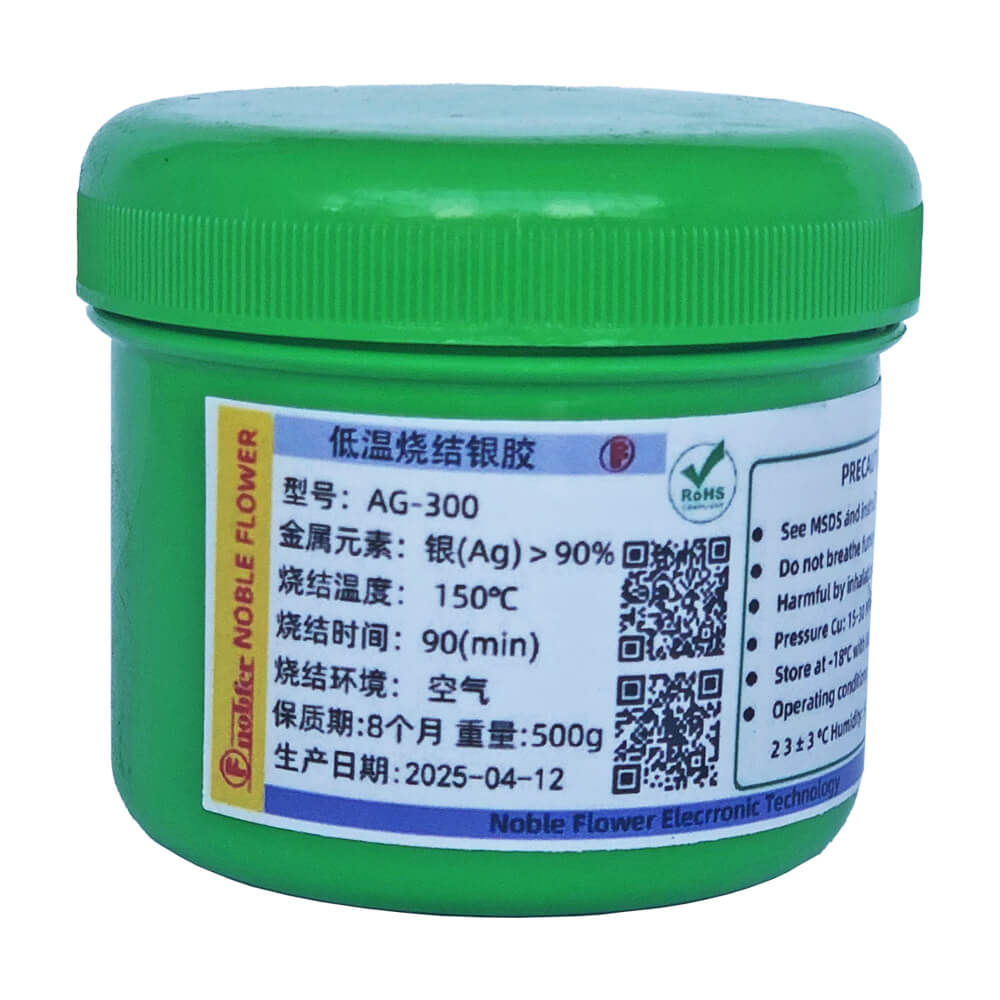
low-temperature silver paste (cured <250°C) is specially designed for HJT
batteries and is connected by chemical bonding of organic resin to transparent
conductive film, forming a stable conductive path at 150°C. This temperature
difference leads to a significant process differentiation: high-temperature silver
paste needs to match the rapid heating curve of a chain sintering furnace
(5°C/ms), while low-temperature silver paste is compatible with flexible
substrates, providing possibilities for scenarios such as BIPV. The exclusive
customization of the technical route shows the wisdom of materials. Silver
paste for PERC cells emphasizes compatibility with P-type silicon, and glass
powder contains 20% lead oxide for enhanced wettability; TOPCon silver paste
needs to deal with the high surface resistance of polysilicon doped silicon
layers, and the contact barrier is reduced by adding 0.5% tellurium. At the
heart of HJT silver paste is the dispersion stability of the nano-silver
particles, and its organic carrier contains special thiophene dispersants that
allow the silver powder to remain monodispersed after 6 months of storage.
R&D data from a silver paste company shows that silver paste customized for
specific battery types can improve battery efficiency by 0.5-0.8 percentage
points compared with general-purpose products.
2. Value chain analysis: precision
conduction from silver powder to batteries
The microscopic characteristics of upstream
raw materials are amplified through midstream processes, and finally reflected
in the difference in macro performance on downstream cells, and the small
fluctuations in each link may be magnified into significant performance gaps.
The decisive impact of upstream raw materials is concentrated in silver powder.
The particle size distribution (D50=1.2±0.1μm) directly determines the printing
accuracy, the tamping density (>4.5g/cm³) affects the density of the silver
layer, and the specific surface area (1.5-2.0m²/g) controls the sintering
activity. The standard deviation of the particle size of TOPCon special silver
powder produced by Tongwa in Japan can be controlled within 0.1μm, which makes
the silver paste using this silver powder stable printing of 25μm-wide thin
grid lines, reducing the shading area by 15% compared to ordinary silver
powder. The ratio of glass oxides is also critical, and the glass powder
containing 30% bismuth can precisely control the softening point of the
high-temperature silver paste at 560°C, which is just right for the sintering
window of PERC cells. The process code of midstream manufacturing is hidden in
the details. The batching process needs to be carried out under the protection
of inert gas to avoid the rise of resistance caused by the oxidation of silver
powder; The diameter of the zirconium beads of the sander must be controlled at
0.3mm, ensuring that the particle size of the silver powder aggregate after
grinding is < 5μm; The pressure gradient of the three-roller machine
(150-200-250 bar) determines the dispersion uniformity. The process data of a
leading enterprise shows that when the speed of the sand mill is increased from
1500rpm to 2000rpm, the particle size distribution span value of silver paste
can be reduced from 1.3 to 1.1, and the printing wire break rate can be reduced
from 1.2% to 0.3%. The detection process uses laser particle size meters
combined with ICP-MS, the former to ensure that the particle size is qualified,
and the latter to control the impurity content below 5ppm. The technology of
downstream applications feeds back to form a collaborative evolution. As cells
move towards a larger size of 182/210mm, the silver paste needs to adapt to a
longer printing path (>1.5m), which requires its thixotropic index (TI) to
be increased from 3.0 to 4.0 to avoid sagging during printing. The thinning
(<120 μm) trend requires lower sintering stresses in silver paste and
reduces wafer warpage by adding 0.1% rare earth oxides. A component factory has
shown that adapting to large sizes of silver paste can increase printing
efficiency by 20% while reducing fragmentation by 10%.
3. Market size and structure: the technical
logic behind expansion
The explosive growth of the globalphotovoltaic silver paste market is not a simple demand expansion, but the
result of the interweaving of technology iteration and capacity expansion, and
its scale change curve clearly outlines the technological evolution path of the
photovoltaic industry. Behind the leapfrog growth of the total market volume is
a triple driving force. The sales growth from 28.5 hundred tons in 2020 to 75.4
hundred tons in 2024 mainly comes from:
Expansion of installed capacity: The global
installed capacity of photovoltaics increased from 130GW in 2020 to 280GW in
2024, with a compound annual growth rate of 21%; Technical route switching: The
proportion of N-type batteries has increased from 5% to 40%, and their high
silver consumption (TOPCon 109mg / piece vs PERC 84mg / tablet) directly drives
demand. Stock replacement: The replacement demand brought about by the
renovation of old power stations will account for about 15% of the total demand
in 2024. Market research institutes predict that this growth trend will
continue until 2029, when global silver paste sales will reach 167.3 hundred
tons, with a five-year compound growth rate of 17.3%. The deep reconstruction
of the regional pattern reflects China's strength. Chinese photovoltaic silver
paste companies have achieved a counterattack through three major advantages:
response speed: the cycle from customer demand to sample delivery has been
shortened from 3 months to 2 weeks; Cost control: The use of localized silver
powder makes the product price 15-20% lower than that of imports; Customization
capabilities: Formulas can be adjusted according to the equipment
characteristics of different battery factories, such as adapting to the MBB
process of a company to develop special silver paste.
This improvement in competitiveness has
enabled Chinese manufacturers to jump from 30% in 2018 to 65% in 2024, and even
reach more than 80% in fields such as PERC backside silver paste. The
proportion of overseas revenue of a domestic silver paste company has increased
from 5% to 35%, and its products enter the supply chain of major international
manufacturers such as Hanwha Q-Cells. The iterative trend of product structure
reflects the technical direction. Although PERC silver paste still dominates
(55% in 2024), its share is declining at a rate of 10 percentage points per
year; TOPCon silver paste has become the main growth force and is expected to
account for 40% of the market by 2026; HJT silver paste will be rapidly
increased after the equipment matures, accounting for 25% in 2029. This
structural change has led to an increase in the average price of products - the
unit price of TOPCon silver paste (about 800 yuan/kg) is 20% higher than that
of PERC products, and HJT silver paste is higher (about 1,000 yuan/kg), driving
the growth rate of market size (19.9%) higher than the growth rate of sales
(17.3%).
4. Driving factors: the resonance of energy
revolution and technological innovation
The continuous expansion of thephotovoltaic silver paste market is the result of the combined effect of global
energy transition, technological progress and policy support, and the synergy
formed by these factors is driving the industry into a new growth cycle. The
underlying thrust of energy structure transformation is unprecedented. The
levelized cost of electricity per kilowatt-hour (LCOE) of photovoltaics has
fallen to US$0.03/kWh, down 89% from 2010, and is already below coal-fired
power generation in 70% of the world. This economic advantage has driven rapid
growth in photovoltaic power generation – surpassing hydropower for the first
time in 2023 as the world's second largest source of electricity, and is
expected to surpass coal-fired power generation by 2027 and account for 48% by
2050. As a key material in the photovoltaic industry chain, silver paste demand
shows a strong correlation with installed capacity (R²=0.98), corresponding to
about 80 tons of silver paste demand per GW of installed capacity, which means
that the global annual installation target of 1TW in 2030 will bring 80,000
tons of silver paste demand.
The technical dividends of N-type batteries
release incremental space. The bifacial power generation characteristics of
N-type batteries allow them to produce 15-20% more power than P-type products,
but they also bring a significant increase in silver consumption: the silver
consumption of TOPCon batteries is 109mg, which is 30% higher than that of PERC
(84mg); The silver consumption of HJT batteries is as high as 115mg/piece, an
increase of 37%; When considering the larger size of N-type batteries (210mm),
the difference in silver consumption per unit area is more obvious. As the
market share of N-type batteries increases from 40% in 2024 to 95.4% in 2029,
this structural change will drive the demand for silver paste into an
acceleration period. According to an estimate, switching technology routes
alone can bring an average annual increase of 12% to the silver paste market.
Synergy of global policies supports the creation of an enabling environment. China's 14th Five-Year Plan sets a target of 25% of non-fossil energy consumption by 2030, driving an average annual installed demand of more than 70GW; The EU's "Green Deal" requires 45% renewable energy by 2030, stimulating the expansion of local photovoltaic manufacturing; The U.S. Inflation Reduction Act provides a tax credit of $0.3 per watt, leading to a 52% year-over-year increase in U.S. PV installations in 2023. The superposition effect formed by these policies has enhanced the certainty of the global photovoltaic market and promoted silver paste companies to dare to invest 100 million yuan in capacity expansion.
5. Development trend: the balance between
technological innovation and cost optimization
The photovoltaic silver paste industry is
standing at the critical point of technological breakthroughs, and enterprises
need to find a delicate balance between performance improvement and cost
control, which will determine the future market pattern. Multi-dimensional
breakthroughs in low-silver technology alleviate cost pressure. The industry is
reducing silver consumption in three directions: Fine grid printing: from 50μm
to 30μm, with circular mesh technology, which can reduce silver paste
consumption by 30%; Silver powder morphology optimization: The use of
core-shell structure (silver-clad copper) reduces the silver content from 90%
to 60%, and the resistance is only increased by 10%; No silver substitution:
The application of copper paste technology in the back electrode has achieved a
breakthrough, and the copper paste back electrode of a company has passed a
1000-hour humidity heat test, and the resistance change rate is < 15%. After
adopting these technologies, the silver consumption per piece of PERC cell was
reduced from 84mg to 55mg, and the non-silicon cost was reduced by 0.12 yuan/W.
The competition for high-precision technology is becoming increasingly fierce.
In order to adapt to the high sheet resistance of N-type batteries
(>100Ω/□), the silver paste needs to achieve: printing accuracy: line width
deviation <±3μm to avoid short circuit of the thin grid line; Contact
resistance: <5×10⁻⁵Ω・cm², reduce series
resistance loss; Line aspect ratio: >0.8, improving current collection
efficiency. This requires a silver powder particle size of 0.8±0.05μm and an
accurate thixotropic index of 3.8±0.2 for organic support. The latest product
from a Japanese company has been able to stably print 25μm wide grids with a
yield rate of more than 99%.
The efficiency revolution of large-scale
production continues to deepen. The leading enterprises passed: continuous
production: changed batch production to continuous batching-grinding-testing,
and increased production capacity by 3 times; Intelligent Control: AI
algorithms adjust the sand mill parameters in real time, reducing the viscosity
deviation between batches from 5% to 2%; Circular economy: The recycling rate
of silver paste waste has been increased to 95%, and the cost per ton of silver
powder recycled has been reduced by 2,000 yuan. These measures reduced the
production cost per ton of pulp from 50,000 yuan to 35,000 yuan, leaving room
for price reduction while maintaining a gross profit margin of more than 15%.
Environmentally friendly technological transformation is imperative. The EU's
RoHS 2.0 directive has restricted the use of lead, promoting the research and
development of lead-free silver paste: bismuth-based glass powder replaces
lead-based, and the softening point is controlled at 580±5°C; Water-based
carriers replace organic solvents, reducing VOC emissions by 90%; Degradable
dispersants: completely decompose during the sintering process without carbon
residue. A company's lead-free silver paste is TÜV-certified and is only 0.1
percentage points less efficient than lead-containing products on TOPCon
batteries.
Conclusion: The Cornerstone of Materials in
the Energy Revolution
The development trajectory of the
photovoltaic silver paste market is a microcosm of technological progress and
cost reduction in the photovoltaic industry. From PERC to TOPCon to HJT, every
switch in technology route is accompanied by disruptive innovation in silver
paste formulations; The reduction in grid width from 80 μm to 30 μm documented
a synergistic advancement in materials science and manufacturing processes.
When the global photovoltaic silver paste market exceeds 100 billion yuan in
2029, it will not only be a commercial milestone, but also an important node in
mankind's transition to clean energy. In the future, with the maturity of new
technologies such as perovskite/crystalline silicon stacked cells, photovoltaicsilver paste will face more severe challenges - it may be necessary to achieve
10⁻⁶Ω at 120°CConductivity in cm grade, or reducing the silver content to less
than 50%. But no matter how technology evolves, the core mission of
photovoltaic silver paste, as a "conductive bridge" for energy
conversion, remains unchanged: to convert sunlight into electricity that drives
the world with higher efficiency and lower cost. In this energy revolution
spanning decades, photovoltaic silver paste is writing a chapter of macro
industrial transformation with micron-level material innovation.
 Su Gongwang Security 32058302004438