


Paparan:1 创始人: Site Editor Publish Time: 2026-02-07 Origin: Site


In the "last mile" connection of
semiconductor packaging, gold wire lead bonding technology is the core solution
for the electrical interconnection between IC chips and PCB substrates due to
its 10⁻⁸Ω level contact resistance stability and 10⁴ temperature cycling
reliability. The chemical nickel-palladium (ENEPIG) surface treatment process
achieves a dual performance balance of bonding and welding under the condition
of 0.1μm ultra-thin gold layer by introducing a palladium layer as a gold-nickel
diffusion barrier, reducing material costs by more than 40% compared to
traditional electroplating soft gold processes, and driving its penetration
rate in high-end fields such as 5G RF modules and automotive electronics by 15%
year-on-year.
The reliability chain of electronic
packaging presents a typical "short-board effect" - the failure of
the bonded solder joint can lead to the paralysis of the entire electronic
system. Research data shows that 32% of failures in consumer electronics rework
cases are due to wire bonding defects; In automotive electronics, this
percentage drops to 8%, but a single point of failure can have fatal
consequences. In this paper, the relationship model of
"material-process-reliability" is established by deconstructing the
formation mechanism of ENEPIG coating and the metallurgical bonding process of
gold wire bonding, and the key control points and optimization schemes are
output systematically.
1. ENEPIG plating system and bonding
process basics
A revolutionary breakthrough in ENEPIG
technology lies in the construction of a copper-nickel-palladium-gold gradient
functional coating, where the crystal structure and interfacial properties of
each layer determine bonding properties.
1.1 Functional synergy mechanism of
multi-layer coating
The ENEPIG process uses a five-step
chemical deposition to form a functionally complementary coating structure:
Degreasing activation stage: Acidic
cleaning agent (pH 2.5-3.5) is used to remove the copper oxide layer (CuO/Cu₂O), and a micro-etching effect (etching amount of 0.3-0.5μm) is
introduced to form a microscopic roughness of Rz=1.5-2.0μm, providing a
mechanical anchoring basis for the nickel layer. XPS analysis showed that the
carbon content of the treated copper surface should be controlled below 5%,
otherwise it would lead to a 30% decrease in the binding strength of the nickel
layer. Sodium hypophosphite (NaH₂PO₂) was used as a reducing
agent to form a Ni-P alloy layer (P content of 8-10wt%) at 85-90°C, and its
columnar crystal structure (average grain size 0.5-1μm) should be continuously
porosity-free. This layer is both a mechanical support (3-5μm thick) and a
major stress zone during bonding, and TEM analysis confirms that grain boundary
integrity directly affects bond strength. A 0.1-0.3μm palladium layer was
deposited by autocatalytic reduction process to form a dense film with a
face-centered cubic structure (density > 98%). Electrochemical impedance
spectroscopy (EIS) tests show that the palladium layer can reduce the
gold-nickel interdiffusion coefficient from 10⁻¹²cm²/s to 10⁻¹⁶cm²/s, effectively inhibiting the phenomenon of
"black disk" (interface blackening caused by nickel corrosion). A
0.05-0.1μm pure gold layer is formed through a semi-displacement-semi-reduction
mechanism that maintains good wettability during bonding (contact angle <
30°) while avoiding excessive consumption of the palladium layer. AFM
characterization showed that the surface roughness of the gold layer Ra should
be controlled at 0.05-0.1μm, and too high would increase the interfacial
voidity during bonding. The synergistic effect of this multi-layer structure is
reflected in the fact that the nickel layer provides strength support, the
palladium layer blocks diffusion, and the gold layer ensures bonding, forming a
"strength-barrier-wetting" functional triangle, which is the core
reason why ENEPIG technology is superior to traditional chemical nickel-gold
(ENIG).
1.2 Metallurgical bonding process of goldwire bonding
Thermosonic bonding achieves atomic level
bonding between the gold wire and the pad through the synergistic action of
temperature (150-180°C), pressure (50-100mN) and ultrasonic vibration
(60-120kHz), and the process can be divided into four stages: the gold wire
with a diameter of 25-50μm forms a gold ball (about 2.5 times the diameter of
the wire) under the pressure of the splitting knife, and the plastic
deformation occurs at the contact point with the pad, and the actual contact
area is reduced from 10% of the initial Expand to over 60%. The high-speed
camera shows that the deformation rate (<5 μm/ms) needs to be controlled at
this stage to avoid micro-cracks. The tangential stress (100-200MPa) generated
by ultrasonic vibration breaks the oxide film (Au₂O₃) on the surface of the gold
layer, exposing the fresh metal surface. Energy
dispersive spectroscopy (EDS) analysis confirmed that the interfacial oxygen
content needed to drop below 3% to ensure subsequent diffusion. Under thermal
activation, gold atoms diffuse towards the palladium layer (diffusion depth of
0.05-0.1μm), while palladium and nickel atoms migrate towards the gold sphere,
forming Au-Ni-Pd ternary solid solution. Diffusion kinetics studies have shown
that the diffusion coefficient at 180°C is about 10⁻¹⁴cm²/s, and it takes 15-20ms to form a
continuous metallurgical bond. When the diffusion layer thickness reaches
0.1-0.15μm, a metal bonding force (about 10⁻⁸N/atom) is formed at the
interface, and the solder joint shear strength is stable in the range of 7-10g.
High-resolution TEM shows that the interface transition zone of a qualified
solder joint should have no significant holes (porosity < 5%).
This process is extremely sensitive to the
quality of the coating - the grain boundary defects of the nickel layer will
become the stress concentration point, the discontinuity of the palladium layer
will lead to abnormal diffusion of gold and nickel, and the thin gold layer
will accelerate the consumption of the palladium layer during the ultrasonic
process.
2. Failure mode analysis and key control
factors
The root cause of wire bond failure is that
the interfacial bond strength is not strong enough to withstand external
stresses (bonding process forces or service environment forces), and three
typical failure modes and their control paths can be identified by tensile
testing (test standard IPC-TM-650 2.4.19).
2.1 Mechanism and control of gold wire
pull-off failure (mode 1).
This mode shows that when the gold wire is
separated from the pad, there is no obvious damage to the gold layer on the
surface of the pad (residual gold layer > 90%), and the tensile value is
< 3g, which is mainly due to insufficient wettability of the gold layer or
poor diffusion and bonding.
Experimental data show that the bond tension fluctuates significantly (standard deviation > 0.8 g at a palladium thickness of < 0.1 μm), and 30% of the solder joints have a single point failure. By comparing the SEM cross-sectional view of the 0.03μm and 0.3μm palladium layers, it was found that there were obvious grain boundary channels (width >5nm) in the thin palladium layer, resulting in a 5-fold increase in the diffusion rate of gold to the nickel layer after reflow, forming a brittle compound (AuNi₃). )。 It is recommended to control the palladium thickness at 0.1-0.3μm, where the diffusion blocking efficiency can reach more than 95%. Surface profiles measured with white light interferometer show a 40% reduction in the initial bond contact area and a 25% decrease in tensile force values when the Ra value increases from 0.05μm to 0.2μm. An excessively rough surface (Ra>0.15 μm) leads to a longer time for gold wire to fill gaps and increased ultrasonic energy loss. The optimization scheme included a 10% reduction in micro-etching time (from 60s to 54s) and a 2°C increase in nickel layer deposition temperature to control the overall roughness within the range of Ra=0.08±0.02μm. EDS analysis found a 30% decrease in bond tension when the surface carbon content of the gold layer >8% or the presence of sulfur (>0.5%). The main source of contamination comes from finger contact (including grease) in the post-process process or sulfides in the storage environment. Controls include: "Glove-tweezers" dual protection operation, controlled relative humidity of the storage environment at 40-50%, and nitrogen protection packaging (oxygen content < 5%).
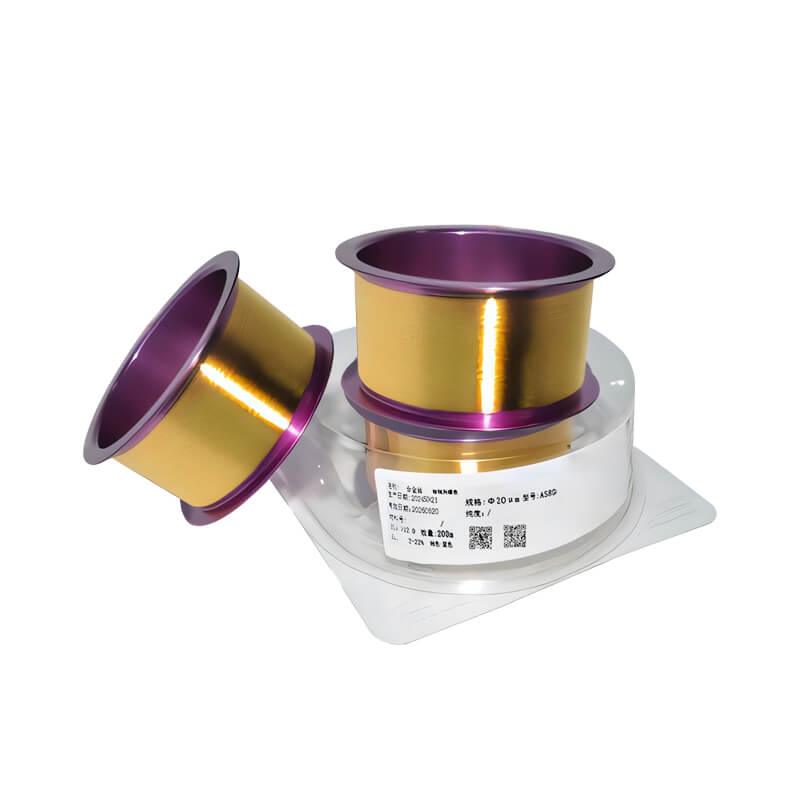
2.2 Root causes and countermeasures of gold-palladium layer pull-off failure (mode 2).
This pattern manifests as carrying part of
the gold palladium layer (residual gold layer < 50%) when the gold wire is
pulled off, exposing the nickel layer, with a tensile value of 3-5g, and the
core problem is corrosion or lattice failure on the surface of the nickel
layer. The chemical nickel layer is highly active (surface energy >
800mJ/m²) and forms an oxide layer (NiO) when exposed to air for more than 30
seconds. Experimental data show that the washing time is extended from 60s to
300s, the density of corrosion pits on the surface of the nickel layer is
increased from 5 to 30 /μm², and the bonding yield is reduced from 99% to 82%.
The optimized washing scheme was a three-stage countercurrent flushing
(conductivity < 10μS/cm) with a total time of 90±10s and an air transfer
time of < 15s. When the conductivity of the washed water increased from
10μS/cm to 50μS/cm, the corrosion rate of the nickel layer increased by a
factor of 3 due to high ion concentrations (especially Cl⁻ >10ppm) can destroy the passivation film of nickel. It is
recommended to install an online conductivity monitor (accuracy ±1μS/cm), set 15μS/cm
as the warning value, and conduct weekly ICP-MS testing to ensure that the
total amount of heavy metal ions < 5ppm. : Palladium tank pH deviations from
the norm (4.5±0.2) can lead to uneven deposition rates,
resulting in localized thin palladium zones. When the pH dropped to 4.0, the porosity of the palladium layer increased from 1% to 5%, and
the risk of corrosion in the nickel layer increased significantly. Controls
include pH stability with an automated titration system and deposition rate
detection every hour (target 10-15 nm/min).
2.3 Causes and prevention of copper-nickel
separation failure (mode 3).
This pattern shows that the solder joint is
intact but the nickel layer is separated from the copper base, and the tensile
force value is < 2g, which is fundamentally due to the presence of
contaminants at the copper-nickel interface, resulting in insufficient bonding
force (<3N/cm). The tape residue used in the pre-PCB process (mainly
acrylate) is difficult to remove during the micro-etching process, forming a
1-5 μm barrier. EDS analysis showed that the carbon content in the residual
glue area was > 30% and the oxygen content was > 20%, completely blocking
the copper-nickel binding. Preventive measures include: replacing the tape with
a magnetic fixture, adding a plasma cleaning process (power 300W, time 60s)
when necessary to ensure a residual detection rate of < 0.1 /m². The Al₂O₃ abrasive (particle size 1-3μm) used in the pretreatment will form a
hard isolation point if it is adsorbed by the residual adhesive. By improving
the cleaning process (adding 2 bar high-pressure spraying), the particle
residue can be reduced from 10 /cm² to less than 1 /cm². Validation was
performed under a 60x microscope and no particles of > 5 μm were allowed per
plate. Bare copper plates stored for more than 24 hours will form an oxide
layer of 5-10 nm, resulting in a 40% decrease in the adhesion of the nickel
layer. Solutions include antioxidation treatment (organic protective film) or
continuous production with the "copper surface treatment - nickel
chemical" process (intervals of < 4 hours).
3. Optimization and interaction of bonding
process parameters
The final quality of the wire bond is the
result of the combination of material properties and process parameters, and
the influence weights of key parameters can be quantified by DOE experiments.
3.1 Synergy between bonding pressure and
threading method
A 2-factor 3-level all-factor experiment
(pressure: 50/75/100mN; Method: Forward / Reverse), analyze the test data of
1000 solder joints: the average tensile force (7.2g) of the forward punch
method (the first solder joint is on the chip side) is 24% higher than that of
the reverse punch method (5.8g), because the PCB pad is first stressed during
the reverse punch, which can easily lead to microcracks in the nickel layer.
The increase in pressure from 50mN to 100mN resulted in a 15% increase in the
pull force of the forward stroke (from 6.8g to 7.8g), while the counter-hitting
method increased more significantly (from 5.0g to 6.5g), indicating that the
increased pressure partially compensated for the shortcomings of the
counter-strike style. When the pressure is ≥ 75mN, the standard deviation of
the tensile force of the forward stroke method is < 0.3g, and the process
capability index Cpk=1.67. The Cpk of the counter-hitting method is only 1.2
even at 100mN pressure, indicating that the process stability of the forward
stroke method is better.
Recommended parameter combination:
preferential use of forward punching method, bonding pressure 75-100mN
(adjusted according to component size); When a counterattack is required, the
pressure is set to 100mN and the ultrasonic energy is increased by 10% (from
100mW to 110mW).
Matching relationship between temperature
and ultrasound parameters
Further response surface experiments showed
a significant interaction between temperature and ultrasonic frequency: at
150°C, the ultrasonic frequency increased from 60kHz to 120kHz, the tensile
value increased by 20% (from 6.5g to 7.8g), at 180°C the optimal frequency
range narrowed to 80-100kHz, and too high a frequency (120kHz) caused excessive
softening of the gold layer and a 10% decrease in tensile force
The optimized thermal ultrasonic parameters
are as follows: temperature 165±5°C, ultrasonic frequency 90±5kHz, at this
time, the thickness of the intermetallic compound layer at the bonding
interface is moderate (0.12μm), which has both strength and toughness.
4. Reliability guarantee system and
prospects
The reliability control of ENEPIG wire
bonding requires the establishment of a full-process prevention mechanism,
forming a closed-loop system of "parameter-detection-verification".
4.1 Key parameter control matrix
|
Process stage |
Key parameters: |
Control range |
Detection method |
Monitor frequency |
|
Nickel chemical |
Nickel layer thickness |
3-5μm |
X-ray fluorescence |
hourly |
|
Chemical palladium |
钯厚 |
0.1-0.3μm |
Electrolytic peeling |
per class |
|
Chemical gold |
The gold is thick |
0.05-0.1μm |
Glow discharge spectrum |
Every day |
|
Surface |
Roughness Ra |
0.05-0.1μm |
White light interference |
Every day |
|
Bonding process |
Ultrasonic power |
80-120mW |
Process recorder |
real time |
4.2 Technological development trends
Developed nanocomposite nickel layers (with
W or Mo elements) to replace palladium layers, preliminary results show that
their diffusion blocking capacity reaches 80% of that of palladium layers and
reduces material costs by 50%. Developed ultrasound-assisted room temperature
bonding technology to achieve a tensile force of more than 7g at 80°C, suitable
for heat-sensitive applications such as flexible substrates. Machine learning
algorithms are used to analyze the force-displacement curves of the bonding
process to achieve 100% online prediction of solder joint quality (> 95%
accuracy). The development of ENEPIG wire bonding technology has proven that
high-reliability connections can be achieved at low cost through micro-control
of material design and precise matching of process parameters. In the future,
with the development of advanced packaging technologies such as chiplets, this
technology will evolve in the direction of finer pitch (<25μm) and higher
strength (>10g), providing continuous technical support for semiconductor
packaging.
 Su Gongwang Security 32058302004438