According to the latest report from an industry research institution, the market size of conformal coatings in China reached $340 million in 2022 and is expected to exceed $470 million by 2029, with a compound annual growth rate (CAGR) of 5.69%. Behind this seemingly steady growth curve lies the shifting dynamics between acrylic and silicone products, the explosive demand from consumer electronics and new energy vehicles, and the fierce competition between domestic enterprises and international giants. As one industry analyst remarked, "Although conformal coatings play a supporting role in electronic manufacturing, they reflect the technological upgrade path of the entire manufacturing industry."
I. Product Matrix: Technological Leap from "Basic Protection" to "High-End Customization"
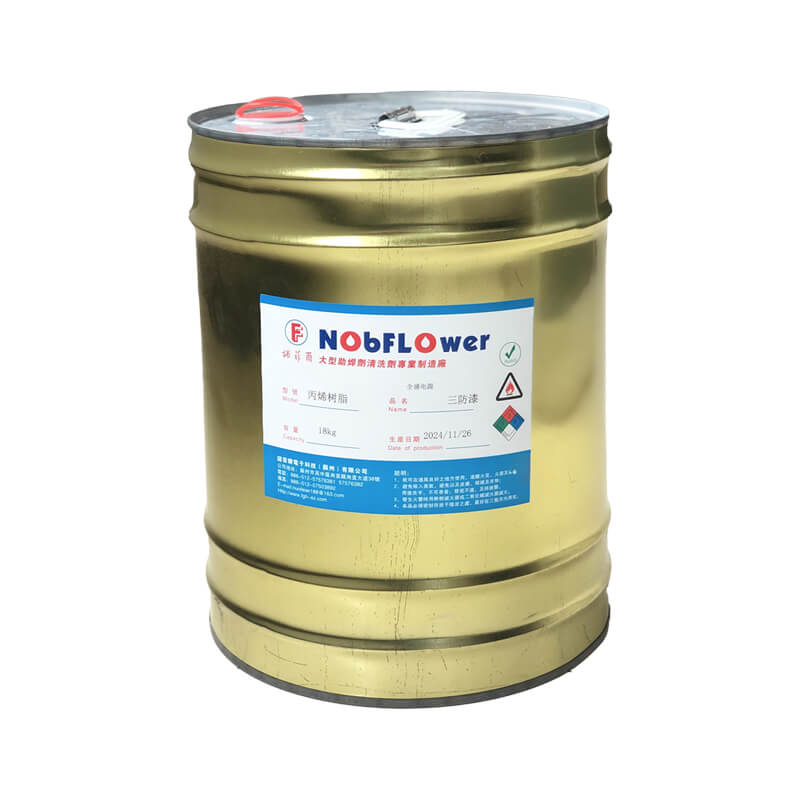
Conformal coating products exhibit a clear gradient distribution: acrylic
conformal coatings are labeled as "economical," priced at about ¥80 per liter, while silicone conformal coatings are marked as "military-grade," with prices as high as ¥300 per liter. The price difference reflects significant performance disparities—laboratory tests show that at 125°C, the insulation resistance retention rate of acrylic coatings is only 60%, while silicone coatings maintain over 90%.
(1) Acrylic Conformal Coatings: The "King of Cost-Effectiveness" in the Mass Market
In a consumer electronics OEM factory, automated spray machines are applying acrylic conformal coatings to smartwatch motherboards. "This coating dries in just 5 minutes, suitable for production lines handling 100,000 boards per day," the factory manager calculated. "Priced at ¥80 per liter, it's 60% cheaper than silicone coatings and sufficient for ordinary environments." In 2022, this product category generated $122 million in revenue in the Chinese market, accounting for 36% of the total market, primarily used in non-precision devices like phone chargers and smart speakers.
However, its shortcomings are equally evident. Tests by an outdoor camera manufacturer showed that acrylic coatings developed cracks after 500 thermal shock cycles between -40°C and 85°C, whereas silicone coatings withstood over 1,000 cycles. "Currently, we only use acrylic coatings for indoor products; all outdoor models have switched to silicone," a technical supervisor stated, a shift that directly drives the growing demand for silicone coatings.
(2) Silicone Conformal Coatings: The "Performance Benchmark" in High-End Applications
On a new energy vehicle battery management system (BMS) production line, silicone conformal coatings are precisely applied to circuit boards via selective coating machines. "Battery compartment temperatures can reach 80°C with vibration frequencies of 2000Hz; only silicone coatings can handle these conditions," an engineer explained, presenting reliability reports showing no solder joint loosening and 95% insulation resistance retention after 1,000 hours of vibration testing. In 2022, silicone conformal coatings generated $69.63 million in revenue in China, projected to exceed $110 million by 2029, with a CAGR of 7.2%, far exceeding the industry average.
Applications in the military sector are even more representative. After a domestic silicone conformal coating was used on satellite control boards by an aerospace research institute, the boards passed space environment simulation tests—freezing in -196°C liquid nitrogen for 24 hours followed by heating in a 150°C oven—without cracking or peeling, maintaining stable insulation performance. This breakthrough increased the substitution rate of domestic silicone coatings in the defense sector from 5% to 20%.
(3) Other Types: "Specialist Players" in Niche Markets
Polyurethane conformal coatings hold an advantage in medical equipment. Tests by an infusion pump manufacturer showed 98% film integrity after 1,000 wipes with 75% alcohol, far higher than acrylic coatings' 70%, making them the preferred choice for medical electronics. Epoxy
conformal coatings, with their excellent chemical resistance, account for 40% of use in chemical control equipment, capable of withstanding long-term exposure to 30% sulfuric acid.
II. Market Landscape: Demand Surge from "Consumer Electronics" to "New Energy"
Shifts in application areas profoundly impact the conformal coatings market. In 2022, consumer electronics held a 33% market share with $113 million in revenue, but new energy vehicles showed more significant growth—driven by heightened safety requirements for power batteries, coating usage surged in components like motor controllers and onboard chargers, reaching a market size of $65.04 million in 2022 and projected to exceed $90 million by 2029.
(1) Consumer Electronics: "Quality Upgrade" in a Mature Market
In smartphone motherboard coating workshops, the amount of conformal coating per board increased from 0.5g to 0.8g. "5G phone component density has risen by 30%, with solder joint spacing reduced to 0.1mm, necessitating higher-performance coatings to prevent short circuits," an OEM process supervisor stated. This upgrade drove the unit price of coatings in consumer electronics from ¥120 per liter in 2018 to ¥150 per liter in 2022, contributing to steady market growth.
The rise of wearable devices created new demand. A smart wristband manufacturer adopted UV-curable conformal coatings, reducing coating process time from 15 minutes to 3 minutes and increasing capacity fivefold—this efficient process boosted the penetration of specialty coatings in wearables from 10% to 35%.
(2) New Energy Vehicles: "Rigid Demand Driving" an Expanding Market
Inspection data from power battery pack workshops show that the failure rate of uncoated battery management systems in damp-heat environments is eight times that of coated systems. "Every BMS board must use silicone coatings; it's a mandatory standard," emphasized a quality director at a new energy vehicle company. Currently, a single new energy vehicle uses about 0.5kg of conformal coating, five times that of a traditional fuel vehicle. With annual production and sales exceeding 10 million units, this market is entering a boom period.
Charging pile applications are also substantial. Tests by a charging station operator showed that control boards coated with polyurethane conformal coatings extended service life from one year to three years in outdoor environments, reducing maintenance costs by 60%. In 2022, the charging pile sector alone consumed 1,200 tons of conformal coatings, growing at 25% annually.
(3) Emerging Fields: "Limitless Potential" in Blue Ocean Markets
Photovoltaic inverter operating environments are notoriously "harsh"—desert heat, coastal salt spray, and high-altitude UV radiation all demand extreme performance from coatings. After one inverter manufacturer adopted fluorine-modified conformal coatings, product lifespan in Middle Eastern deserts extended from 5 to 10 years, driving a 40% increase in demand for such specialty coatings.
Military and aerospace needs carry greater strategic significance. After a drone company used domestic high-temperature-resistant conformal coatings on its reconnaissance-strike integrated models, the drones operated normally at 6,000 meters altitude and -55°C, breaking foreign product monopolies. Currently, the localization rate in these high-end sectors has risen from 10% to 30% and is accelerating.
III. Industry Chain Dynamics: Breaking Through from "Raw Material Dependence" to "Self-Sufficiency"
In a conformal coating production facility, a can of silicone resin is labeled "imported," while the adjacent curing agent is marked "domestic." "Core resins were previously 100% imported; now we can achieve 50% substitution," a procurement manager noted, reflecting a comprehensive reshaping of the industry chain from upstream raw materials to downstream applications.
(1) Upstream: From "Bottleneck" to "Gradual Substitution"
High-purity silicone resins were long monopolized by international giants like Dow Corning and Wacker, costing up to ¥800 per kilogram. After a decade of effort, domestic companies have increased product purity from 99.5% to 99.99%, reducing impurity content to below 5ppm, matching imported product performance at 30% lower cost. This breakthrough cut raw material costs for domestic coatings by 15%, significantly enhancing competitiveness.
However, some additives still rely on imports. An R&D director admitted, "High-performance defoamers and leveling agents still need to be sourced from Germany's BYK; domestic products lag in stability." This "semi-autonomous" status constrains domestic companies' ability to compete in high-end markets.
(2) Midstream: From "Fragmented" to "Scaled"
Domestic conformal coating companies form a "pyramid" structure: the apex comprises firms like Hui Tian New Materials and Debon Technology with annual revenues over ¥1 billion, dominating the mid-to-high-end market; the middle tier consists of companies with ¥100-500 million in revenue, focusing on regional markets; the base includes thousands of small workshops mainly producing low-end acrylic coatings, with product qualification rates below 60%.
Industry consolidation is accelerating. In 2022, Hui Tian New Materials acquired a silicone coating manufacturer, expanding capacity from 5,000 to 10,000 tons and increasing market share from 8% to 12%. Such mergers and acquisitions raised the industry's CR5 (concentration ratio of the top five firms) from 35% in 2018 to 45% in 2022, gradually approaching the structure dominated by international giants.
(3) Downstream: From "Passive Acceptance" to "Active Participation"
Deep involvement from downstream companies is reshaping product standards. A new energy vehicle company collaborated with a domestic coating manufacturer to develop a specialized "high-temperature and vibration-resistant" coating for battery pack environments. By adjusting the siloxane bond ratio, the coating's elastic modulus was reduced from 300MPa to 150MPa, meeting insulation requirements while flexing with metal casing deformation, solving long-standing cracking issues. This "joint development" model allows domestic firms to better understand market needs.
IV. Competitive Landscape: The Battle Shifts from "International Monopoly" to "Local Rise"
International chemical giants have been operating in China for decades. Henkel's Shanghai plant produces 20,000 tons of
conformal coatings annually, holding 30% of the high-end market; Dow's silicone coatings, with their "self-healing chemical bond" technology, nearly monopolize the military sector. These companies' advantages lie not only in technology but also in robust supply chains and brand premium—a tender showed Henkel winning despite bids 50% higher than domestic equivalents, solely due to customer trust in its stability.
Yet domestic companies are breaking through rapidly. Hui Tian New Materials' photovoltaic-specific coatings entered Jinko Solar and LONGi Supply chains after TÜV certification, with 2022 sales growing 60%; a specialized "little giant" enterprise's UV-curable coatings replaced Japan's Fuji Chemical in smartphone camera modules, capturing 40% market share. These breakthroughs are backed by increased R&D investment—top firms' R&D expense ratios rose from 3% in 2018 to 5% in 2022, with some reaching 8%, nearing international giant levels.
Price wars remain a domestic "weapon." Procurement data from a consumer electronics OEM shows domestic acrylic coatings are 30% cheaper than imports, and silicone coatings 20% cheaper, making them highly competitive in cost-sensitive mid-to-low-end markets. However, as international giants localize production in China, this advantage is shrinking—Henkel's new Guangzhou plant reduced acrylic coating prices by 15%, putting pressure on domestic firms.
V. Future Trends: "New Tracks" Driven by Environmental Protection and Innovation
Tightening environmental regulations are rewriting the rules. After the EU's REACH regulations added 10 restricted substances, halogen-containing coatings faced export barriers, forcing domestic companies to develop halogen-free alternatives. One company's halogen-free silicone coating, with halogen content below 50ppm, saw exports grow 80% in 2022, successfully entering European new energy vehicle supply chains.
Technological innovation opens new frontiers. A university-developed "self-healing conformal coating" triggers cross-linking reactions via environmental humidity to automatically repair micro-cracks, doubling service life. Once industrialized, this technology could disrupt the existing market.
Localization remains the main theme. Driven by policies like "Made in China 2025," targets for conformal coating localization in military, aerospace, and other sectors are set at 50% by 2025 and 80% by 2030. A military enterprise head revealed, "New models explicitly prioritize domestic coatings; as long as performance meets standards, price is not an issue."
At this industrial crossroads, Chinese conformal coating companies face historic opportunities. Those that continuously invest in R&D, deepen industry chain integration, and build advantages in niche markets are poised to stand out, evolving from "followers" to "leaders." As an industry expert stated, "Though small,
conformal coatings epitomize China's manufacturing upgrade—only by perfecting such 'details' can true industrial breakthroughs be achieved."
If you are a decision-maker in a conformal coating company, consider these three questions: What is your product's penetration in emerging fields like new energy vehicles and photovoltaics? Where does your core technology lag compared to international giants? Do you have a clear roadmap for balancing environmental concerns with performance? Finding answers may secure your place in future market competition.



 Безопасность сети 32058300438