


Замечания:1 创始人: Site Editor Publish Time: 2025-12-27 Origin: Веб - сайт


Comprehensive Analysis of the
Characteristics and Technological Development of Waterborne Insulating
Varnishes
In the field of electrical equipment
manufacturing, the performance of insulating materials directly affects the
safe operation and service life of equipment. As a type of special coating,
insulating varnish, with its excellent electrical insulation, thermal
stability, and mechanical strength, has become a core material for the
insulation treatment of motor and electrical appliance windings. Traditional
solvent-based insulating varnishes contain large amounts of volatile organic
compounds (VOCs) such as benzenes and ketoesters, which not only pose fire
hazards during production and application but also seriously threaten the
health of operators and the ecological environment. With increasingly stringent
national environmental regulations, waterborne insulating varnishes, which use
water as the main dispersion medium, have gradually become an inevitable choice
for industry upgrading. Their low VOC emissions, safety, and environmental
friendliness are leading technological innovation in the field of insulating materials.
Core Definition and Classification System
of Waterborne Insulating Varnishes
Waterborne insulating varnishes are
insulating coating systems constructed using water-soluble polymers or
water-emulsifiable polymers with water as the dispersion medium. They are
mainly divided into two categories:
Water-soluble insulating varnish: Relies on
polar groups (such as hydroxyl and carboxyl groups) in the molecular chain to
form hydrogen bonds with water molecules, enabling the polymer to dissolve in
water and form a uniform, transparent aqueous solution.
Water-emulsifiable insulating varnish: Uses
emulsifiers to disperse polymer resins into nanoscale droplets, forming a
stable emulsion system with a dispersed phase particle size typically in the
range of 50–500 nm.
These coatings inherit the core functions
of traditional insulating varnishes—forming a
continuous, dense insulating film under specific curing conditions to block
current leakage paths, while withstanding harsh environments such as high
temperatures and vibrations during electrical equipment operation. Compared to
solvent-based products, the innovations of waterborne insulating varnishes lie
in: Solvent substitution: Replacing traditional organic solvents with water
(VOC content nearly zero), reducing VOC emissions by over 80%; Safety
improvement: Eliminating the risk of flammability and explosion caused by
solvent volatilization, lowering the fire hazard level of the application
environment from Class A to Class C; Cost optimization: The cost of water as a
dispersion medium is only 1/20 that of organic solvents, significantly reducing
raw material costs.
Currently, mainstream waterborne insulating
varnishes use high molecular polymers as the base, supplemented by components
such as flame retardants (e.g., aluminum hydroxide, decabromodiphenyl ether),
curing agents (isocyanates, amine compounds), and pigments/fillers (titanium
dioxide, talc), forming a multiphase composite system. The curing process
essentially involves cross-linking reactions between polymer chains to build a
three-dimensional network structure, thereby endowing the film with excellent mechanical
strength and insulating properties.
Technical Bottlenecks and Breakthrough
Directions for Waterborne Insulating Varnishes
Despite significant environmental
advantages, waterborne insulating varnishes still face three core challenges in
practical applications. Solving these problems directly determines whether
their performance can meet industrial application standards: Dual Impact of
Polar Groups Waterborne polymers require the introduction of a large number of
polar groups (such as carboxyl and sulfonic acid groups) or the use of
emulsifiers to achieve water dispersion. If these groups remain excessive after
curing, they become "hidden danger points" in the film:
Water absorption risk: Polar groups are
highly hydrophilic and easily absorb moisture in high-humidity environments,
causing volume resistivity to drop from 10¹⁴ Ω·cm to below 10⁹ Ω·cm;
Mold prevention failure: Moisture
penetration can breed mold, forming conductive channels on the film surface,
especially problematic in tropical climates.
The industry currently uses two technical
approaches to mitigate this issue: First, developing self-crosslinking polymers
so that polar groups are consumed during the curing process; Second, adding
hydrophobic silane coupling agents (e.g., KH-570) to form a waterproof
protective layer on the film surface. Experimental data show that after 1000
hours in an 85% humidity environment, waterborne insulating varnish modified
with silane still maintains over 70% of its initial insulation resistance.
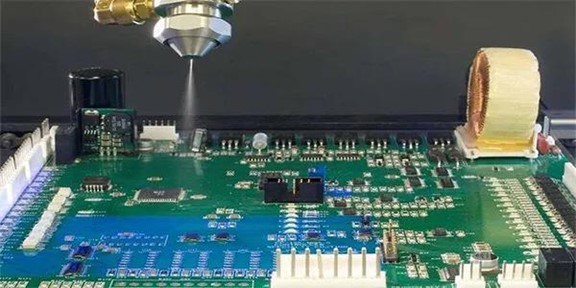
Metal Corrosion and Protection Balance
Water molecules and residual ionic
emulsifiers can cause electrochemical corrosion of metal windings such as
copper and aluminum, manifested as: Green copper rust (basic copper carbonate)
on the surface of copper windings; Pitting corrosion on aluminum components,
forming corrosion pits with diameters of 0.1–0.5 mm in
severe cases. The application of anti-flash corrosion technology has partially
solved this problem. By adding corrosion inhibitors like benzotriazole (BTA), a
passivation film can form on the metal surface. However, studies show that
adding corrosion inhibitors reduces the breakdown voltage of the film by 5–10%. Finding a balance between corrosion prevention and insulation
performance remains a challenge in formulation design. Practices at a motor
factory show that when the BTA addition is controlled at 0.5–1.0%, the corrosion rate can be ≤ 0.01
mm/year while maintaining a breakdown voltage above 30 kV/mm.
Contradiction in High-Temperature
Mechanical Performance
During operation, the winding temperature
of electrical equipment can reach 120–180°C, requiring the film to maintain sufficient bonding strength (≥ 5 MPa) and tensile strength (≥ 20 MPa) at
this temperature. However, water-soluble polymers typically have strong
polarity and weak intermolecular forces, leading to: High-temperature
softening: Low glass transition temperature (Tg), with significant softening
above 150°C; Bonding failure: Adhesion to metal drops
from 10 MPa at room temperature to below 3 MPa at high temperatures. To
overcome this limitation, the industry is adopting composite modification
strategies: Introducing aromatic monomers (e.g., phthalic anhydride) to
increase molecular chain rigidity; Adding nano-montmorillonite to form a
reinforcing phase. Experimental data indicate that nano-composite modification
can increase the bonding strength retention rate of waterborne insulating
varnish at 200°C to 80%.
Technical Characteristics of Mainstream
Waterborne Insulating Varnish Varieties
After years of development, waterborne
insulating varnishes have formed a pattern of multi-variety collaborative
development, with each type having unique performance focuses to meet
application needs in different scenarios: Alkyd Resin-Based Waterborne Insulating
Varnish As the most used category (about 45% of the market share), its core
advantages are readily available raw materials and low cost: Synthesis route:
Polyols such as trimethylolpropane and neopentyl glycol undergo esterification
with oleic acid and phthalic anhydride to produce the base resin, which is then
cross-linked and cured with methanol-etherified melamine-formaldehyde resin;
Performance shortcomings: Heat resistance
rating is only Class B (130°C), with breakdown voltage
typically 20–25 kV/mm, limiting its use in high-voltage
equipment; Typical applications: Impregnation insulation treatment for small
and medium-sized low-voltage motors (power ≤ 100 kW)
and household appliance motors. In recent years, performance has been improved
through silicon modification technology. For example, the electrical strength
of tung oil-based silicon-modified alkyd insulating varnish can reach 130 MV/m,
expanding its applicability in high-temperature environments.
Waterborne Polyester Insulating Varnish
By introducing aromatic diacids (e.g.,
terephthalic acid), its heat resistance and insulation properties are
significantly improved compared to alkyd types:
Synthesis process: Two-step melt
polymerization is used, where diacids and diols first form oligomers, then
trimellitic anhydride is added to introduce carboxyl groups, which are
neutralized to achieve water dispersion; Performance advantages: Heat resistance
rating reaches Class F (155°C) or above, dielectric
constant remains stable at 3.5–4.0, suitable for
high-frequency motors; Typical product: Silicon steel sheet insulating varnish,
with film thickness controllable at 5–10 Мm and adhesion rating reaching Level 0 (cross-cut method).
A case study shows that when used in
variable frequency motors, this type of varnish can reduce core loss by 15–20%, demonstrating excellent electrical performance.
Waterborne Epoxy Insulating Varnish
The inherent properties of epoxy resin make
it a preferred choice for high-performance insulating materials: Performance
matrix: Outstanding mechanical strength (tensile strength ≥ 30 MPa), excellent chemical corrosion resistance (no change after
1000 hours of immersion in engine oil), low shrinkage (≤ 0.5%); Technical difficulty: Dispersing high molecular weight solid
epoxy resin in water requires a large amount of emulsifier, leading to reduced
water resistance of the film; Application scenarios: High-voltage motor
windings (voltage ≥ 10 kV), transformer insulating
bushings, and other components with extremely high reliability requirements. To
solve the water-based dispersion challenge, the industry has developed
self-emulsifying epoxy resins, which achieve self-dispersion by introducing
carboxyl groups into the molecular chain, reducing emulsifier usage from 5% to
below 1%.
Waterborne Polyimide Insulating Varnish
As a representative of high-performance
polymers, its performance reaches the top level of insulating materials: Core
advantages: Heat resistance rating reaches Class H (180°C) or above, maintaining 70% mechanical strength at 250°C, dielectric strength ≥ 40 kV/mm; Technical
bottleneck: The rigid chain structure of polyimide makes it very poorly soluble
in water, requiring chemical imidization or the introduction of flexible chain
segments to improve dispersibility;
Development prospects: Special motor
insulation in extreme environments such as aerospace and nuclear energy,
currently in the transition stage from laboratory to industrialization.
Technological Development Trends and Future
Outlook
With the advancement of the "dual
carbon" goals, the development of waterborne insulating varnishes is
showing three major directions:
High performance: Through molecular design
and composite modification, break through the current bottlenecks in
high-temperature mechanical performance and water resistance, aiming to reach
the performance level of solvent-based products; Functional integration:
Develop composite coatings with multiple functions such as insulation, thermal
conductivity, and corrosion prevention, e.g., adding graphene to improve
thermal conductivity (from 0.2 W/m·K to 1.0 W/m·K); Process adaptability: Optimize curing conditions, develop
low-temperature rapid curing systems (60°C/30 min) to
meet the needs of continuous production lines.
Currently, domestic research institutions
have made breakthroughs in several key technologies: A self-crosslinking
waterborne epoxy varnish developed by a university achieved a breakdown voltage
of 45 kV/mm; A nano-composite polyester varnish developed by a company
increased the heat resistance rating to Class H. These advancements indicate
that waterborne insulating varnishes are expanding from low-voltage,
room-temperature applications to high-voltage, high-temperature scenarios, and
are expected to fully replace traditional solvent-based products in the future,
promoting the green transformation and upgrading of the electrical
manufacturing industry.
 Безопасность сети 32058300438