


Замечания:1 创始人: Site Editor Publish Time: 2025-12-28 Origin: Веб - сайт


Category Characteristics and Quality Control System of Insulating
Varnishes for Electric Motors As a key
foundational material in the field of electric motor manufacturing, the
technological evolution of insulating varnish has always been closely linked to
the development of motor design. From early basic insulation suitable only for
conventional operating conditions to today's specialty coatings supporting
high-temperature, high-power-density motors, continuous breakthroughs in the
composition innovation and manufacturing processes of insulating varnishes have
constantly expanded the performance boundaries of traditional motor design. The
synergistic evolution between materials and equipment has enabled motors
designed for extreme operating conditions, once confined to laboratories, to
gradually move towards industrial application. Precisely because of this, the
technical characteristics and quality control of insulating varnishes remain a
core focus of the motor industry.
Category System and Application Scenarios
of Motor Insulating Varnishes
Based on their functional roles in motor
manufacturing, insulating varnishes have formed five major product categories,
each undertaking a unique insulation mission and collectively building the
safety barrier for motor operation:
Impregnating Varnish: The
"Lifeblood" of Motor Windings
As the most consumed category of insulating
varnish, the core function of impregnating varnish is to penetrate and fill the
gaps and micropores in winding coils, solidifying the loose windings into a
rigid whole after curing. Its technical forms are mainly divided into two
branches:
Solvent-based Impregnating Varnish:** Viscosity is adjusted by
adding solvents such as toluene or xylene. Typical products like 1032 Melamine
Alkyd Varnish usually have a solid content ≥45%.
Multiple impregnation-drying cycles are required to form a dense paint film,
suitable for mass production of small and medium-sized motors.
Solventless Impregnating Varnish:** Based on low molecular weight
prepolymers, with volatile content during curing ≤15%.
It can complete impregnation and curing in a single step, significantly
improving production efficiency, and is widely used in high-voltage motor
windings.
Production data from a motor factory shows
that using solventless impregnating varnish can reduce winding curing time from
8 hours to 2 hours, with insulation breakdown strength increasing by 20%.
Wire Enamel: The "Protective
Armor" for Magnet Wire
As the core component for electromagnetic
conversion, the surface insulation of magnet wire relies entirely on the
protection of wire enamel. This type of coating must withstand the harsh tests
throughout the motor manufacturing process:
Mechanical Stress:** Withstands stretching
(tension ≥15N) and bending (bend radius ≤2 times wire diameter) during coil winding without film cracking.
Thermal Shock: Maintains insulation
integrity through repeated thermal cycling (≥50 cycles)
from room temperature to 180°C.
Chemical Resistance: Withstands long-term
immersion (≥1000 hours) in media like transformer oil
and Freon.
The paint film formed by high-quality wire
enamel has uniform thickness, controlled between 0.02–0.05mm,
and passes the twist-and-peel test (180° twist angle × 3 times) without peeling.
Covering Varnish: The "Outer
Shield" of the Insulation System
Applying covering varnish to the winding
surface after impregnation is like adding a protective shell to the insulation
system. Its technical requirements focus on environmental resistance:
Physical Protection:** Film hardness ≥2H (pencil hardness), impact strength ≥50 kg·cm, capable of resisting mechanical impacts during assembly.
Environmental Adaptation:** After 1000
hours in 95% relative humidity, insulation resistance retention rate ≥80%.
Chemical Resistance: After 168 hours
immersion in 30# mechanical oil, the film shows no wrinkling or peeling.
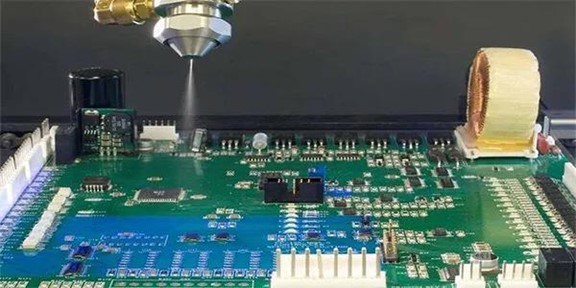
The typical application thickness for
covering varnish is 30–50Мm,
applied by dipping or spraying, and requires baking at 120°C for 2 hours to achieve optimal performance.
Lamination Coating: The "Invisible
Film" for Reducing Core Loss
As the core material of the motor iron
core, the surface insulation coating on silicon steel sheets is crucial for
suppressing eddy current losses. The technical characteristics of lamination
coating are:
Ultra-thin Coating:** Dry film thickness
strictly controlled at 1–3Мm.
Excessive thickness reduces the stacking factor of the core (each 1Мm increase reduces stacking factor by 0.5%).
High-Temperature Curing: Requires rapid
curing at 300–400°C for 10–30 seconds, compatible with the silicon steel annealing process.
Insulation Resistance:** Coating volume
resistivity ≥10¹⁴ Ω·cm,
ensuring interlamination insulation.
Experimental data indicates that
high-quality lamination coating can reduce motor core loss by 15–20%, significantly improving energy efficiency class.
Corona Suppression Varnish: The
"Voltage Stabilizer" for High-Voltage Environments**
In high-voltage motors (voltage ≥10kV), the
strong electric field at the coil ends can easily cause corona discharge.
Corona suppression varnish achieves uniform electric field gradient
distribution by precisely controlling the film resistivity (10⁴–10⁸ Ω·cm). Its special features include:
Conductive Fillers:** Uniformly dispersed
carbon black or graphite particles (particle size 50–100nm)
form conductive pathways, suppressing local high field strength.
Gradient Design:A coating system with
progressively varying resistivity (3–5 layers) from the
coil surface to the end eliminates abrupt field strength changes.
Application Precision:** Wet film thickness
controlled at 80–120Мm, with
post-curing deviation ≤5Мm.An
application case in a 50MW turbo generator showed that after using corona
suppression varnish, the corona inception voltage at the coil ends increased
from 3kV to 15kV.
Core Performance Indicators and Technical
Requirements for Impregnating Varnish
As a key material in the motor insulation
system, the performance indicators of impregnating varnish directly determine
winding reliability. The industry has established systematic technical
specifications:Process Compatibility Indicators
Viscosity Characteristics:** Dynamically adjusted according to coil gap
size. For 0.2–0.5mm gaps, viscosity is controlled at 20–50s (No.4 viscometer, 25°C) to ensure
complete penetration within 10 minutes.Solid Content:** Solvent-based varnish ≥45%; Solventless varnish characterized by volatile content during
curing (≤15%). High-solid, low-viscosity products can
reduce the number of impregnation cycles. Drying Rate:** After baking at 130°C for 30 minutes, the film is dry-to-handle (no mark by finger touch
method), meeting continuous production rhythms.
 Безопасность сети 32058300438