


Замечания:1 创始人: Site Editor Publish Time: 2026-01-03 Origin: Веб - сайт


Technical Specifications and Practical
Operation Guide for the Complete Process of BGA Chip Desoldering
In the field of electronic equipment repair
and manufacturing, BGA (Ball Grid Array) chips have become core components of
high-end electronic products such as smartphones, computers, and communication
devices due to their high-density pin design and excellent electrical
performance. However, this packaging form also presents unique desoldering
challenges – the solder joints are located at the
bottom of the chip forming invisible connections, making traditional soldering
iron methods difficult to apply. A professional process combining hot air
heating and precise operation is essential. Industry statistics show that the
desoldering quality of BGA chips directly affects the product repair
qualification rate. Standardized operation can increase the rework success rate
to over 90%, while improper operation can lead to a PCB damage rate as high as
40%. Based on thousands of practical experiences, this article systematically
outlines the key technical points of the entire process of BGA chip removal,
solder ball placement, and installation, and provides a detailed analysis of
the special handling process for glued BGAs, offering a standardized operation
guide for electronic repair and manufacturing personnel.
BGA Chip Removal Process and Peripheral
Protection Technology The removal of BGA chips is the foundation of the entire
desoldering process. Its core lies in achieving uniform melting of the solder
joints while maximizing the protection of surrounding components and the PCB
substrate. The operational quality of this step directly determines the
feasibility of subsequent solder ball placement and installation, necessitating
the establishment of strict operating procedures.
Peripheral Component Protection System
The PCB layout of modern electronic
equipment is increasingly compact. BGA chips are often closely adjacent to
sensitive components such as memory, temporary storage, and power amplifiers
(spacing typically less than 5mm). High temperature and airflow during removal
can easily cause damage. Building a multi-level protection system is a
prerequisite for successful removal: Heat-Sensitive Component Protection: For
components like plastic-encapsulated power amplifiers (heat resistance
typically ≤220°C) and soft-encapsulated
memory (e.g., COB packaging, heat resistance ≤200°C), use water-soaked cotton balls (water content over 80%) for
coverage protection. The cotton balls should be cut into shapes matching the
components, with a thickness ≥5mm, ensuring that the
component temperature is controlled below 180°C through
evaporative cooling during hot air heating. Experimental data shows that this
method can reduce peripheral component damage rates from 25% to below 3%.
Spacing Isolation Measures: When the spacing between the BGA and peripheral
components is ≤3mm, use high-temperature resistant tape
(e.g., Kapton tape, heat resistance ≥260°C) to create a physical barrier between them, with a height ≥3mm and width ≥2mm, to prevent direct hot
air impact on adjacent components. The tape edge should extend 1mm beyond the
BGA edge, forming a complete thermal isolation zone. PCB Substrate Protection:
For thin PCBs (thickness ≤0.8mm), place a 3mm thick
aluminum alloy heat sink (thermal conductivity ≥200W/(m·K)) on the backside to disperse heat through thermal conduction,
avoiding PCB blistering caused by localized overheating (which usually occurs
when sustained at 260°C or above for 10 seconds).
Flux Application and Hot Air Parameter
Settings
Uniform melting of the solder joints under
the BGA relies on the capillary action of flux and precise temperature control
of the hot air. Their coordinated cooperation is key:
Flux Selection and Application: Choose
medium-activity rosin-based Поток(solid content 20–30%),
which maintains optimal activity in the 180–220°C range. During application, use a syringe-style dispensing needle
(needle diameter 0.5mm) to apply evenly along the BGA edges, using 0.1–0.2ml per side. Then, gently stir the flux with a fine steel needle
(diameter 0.3mm) to allow it to seep under the chip via capillary action. A
sign of complete infiltration is observing flux seeping out from the opposite
edge of the chip, ensuring full contact between solder joints and flux. Hot Air
Gun Parameter Calibration: Select an appropriate nozzle based on the BGA size
(diameter 60–80% of the chip diagonal). Standard
parameter settings follow the "temperature–airflow–distance" triangular balance principle: Medium-sized BGA (10mm×10mm to 20mm×20mm): Temperature 320–350°C (gear 3–4),
Airflow 5–6 L/min (gear 2–3),
Nozzle distance from chip surface 3±0.5 cm; Large-sized
BGA (>20mm×20mm): Temperature 350–380°C (gear 4), Airflow 7–8 L/min (gear 3), Nozzle distance increased to 3.5–4 cm to avoid overheating the central area; Small-sized BGA
(<10mm×10mm): Temperature 300–320°C (gear 3), Airflow 4–5 L/min (gear 2), Nozzle distance reduced to 2.5 cm to ensure heat
concentration. All parameters must be verified with a hot air gun calibrator
before removal, with temperature deviation ≤±10°C and airflow fluctuation ≤±0.5 L/min.
Heating Technique and Chip Separation
Skills
The melting process of BGA solder joints
requires achieving "synchronous melting" to avoid inconsistent solder
joint detachment due to localized overheating: Dynamic Heating Path: Use the
"spiral circumferential heating method". Start the nozzle from the
chip edge and move spirally clockwise at a speed of 5mm/s, completing one
circle every 3 seconds, gradually approaching the center area. This method
controls the temperature difference across the chip bottom within ±15°C, superior to the ±40°C deviation of fixed-point heating.
Melting Judgment Criterion: When heated for 60–90
seconds (adjusted based on size), gently push the chip edge (using insulated
tweezers with tip diameter 0.5mm) to observe if there is any sign of horizontal
movement. If a displacement of 0.5mm or more occurs with no significant
resistance, it indicates the solder joints are uniformly melted, and separation
can be performed. Chip Extraction Method: Use the "vertical lift
method". Use two tweezers to grip opposite edges of the chip (2mm from the
corners). While maintaining continuous hot air heating, lift vertically upward
at a speed of 5mm/s. Tilting during extraction is prohibited, as it can easily
cause solder joints to tear off the PCB pads (occurrence rate up to 30%).
Pad Cleaning and Substrate Repair Process
The condition of the pads after BGA removal
directly affects subsequent installation quality and must undergo standardized
cleaning: Excess Solder Treatment: Apply solder paste to the PCB pad area
(amount 0.5–1 ml/cm²). Use a
constant temperature soldering iron (temperature 300±10°C) with a horseshoe-shaped tip (width matching the pad row/column
spacing) for drag soldering. During operation, the iron tip should maintain a
45° angle to the PCB and move uniformly at 2mm/s,
ensuring the residual solder thickness on each pad is controlled between 0.1–0.2mm. Solder Mask Protection: Pay special attention to the solder
mask (solder resist) at the pad edges during cleaning. If solder mask lifting
is observed (area > 0.5mm²), immediately stop
mechanical cleaning and switch to a chemical method: apply a dedicated solder
mask repair agent (e.g., UV-curable type), covering an area 1mm beyond the
damaged region, and cure with a UV lamp (wavelength 365nm) for 30 seconds,
achieving a hardness of Shore D 60 or above. Cleaning Verification: Wipe the
pad surface with a lint-free cloth (ultra-fine fiber material) soaked in
Thinner (purity ≥99%) until no visible residue remains
on the cloth surface. Inspect under a 20x microscope; each pad must be flat and
free of burrs, with no residual solder slag between pads (diameter > 0.1mm
is deemed unqualified). BGA Solder Ball Placement Process and Solder Ball
Formation Control Technology Solder ball placement is the core step in BGA chip
repair, and its quality determines the reliability of the electrical connection
after installation. This process requires uniform solder ball size, precise
positioning, and perfect matching with the pads.

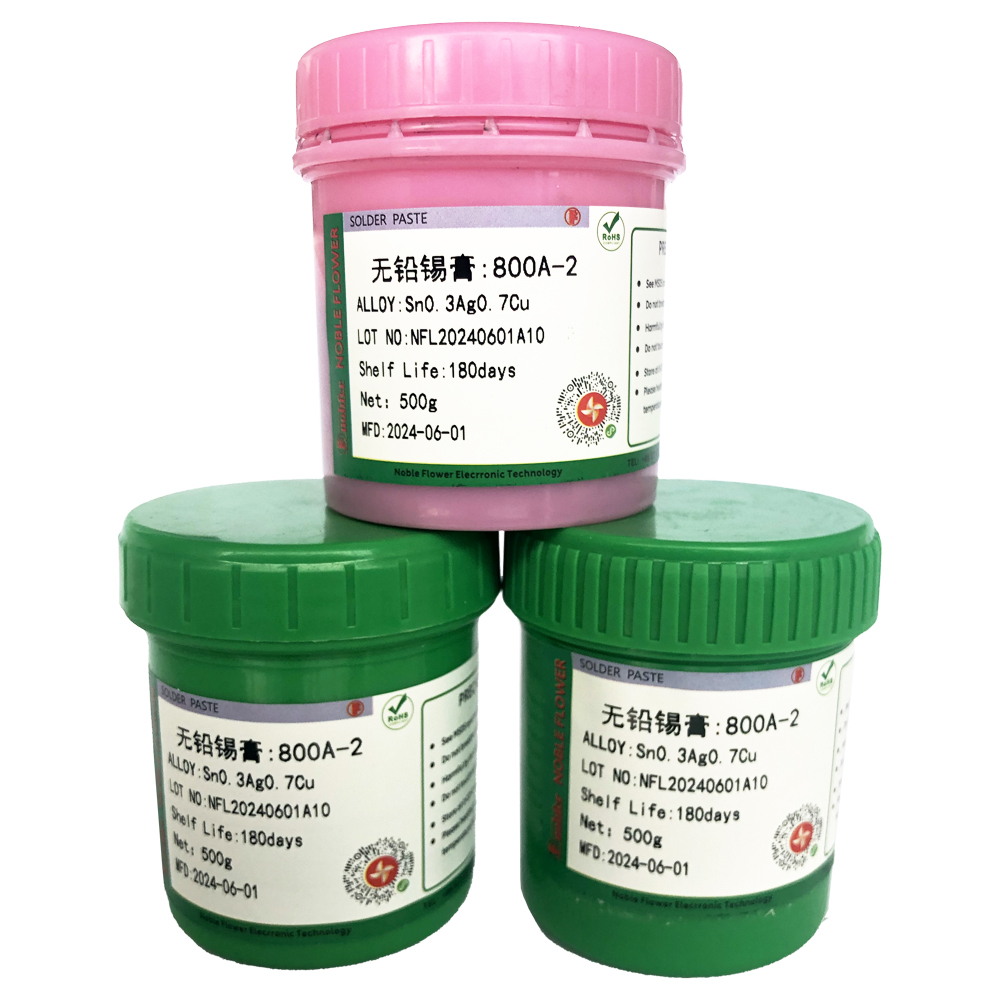
Chip Pre-treatment and Condition Assessment
The condition of the solder points on the
BGA chip surface directly affects the solder ball placement outcome. Strict
pre-treatment and quality assessment are essential: Residual Solder Removal:
Place the chip with the solder point side facing up. Apply solder paste (amount
0.3–0.5 ml/cm²). Use a pointed
soldering iron (tip diameter 0.5mm) to remove excess solder from each point
individually. The iron temperature should be 50–70°C above the solder melting point during operation (e.g., 230–250°C for Sn63Pb37 solder), with contact
time per solder point ≤2 seconds to avoid chip
overheating (temperature ≤250°C,
duration ≤10 seconds). Oxide Layer Treatment: The
cleaned solder points should exhibit a bright metallic luster. If a dark gray
oxide layer is present (thickness > 50nm), perform activation treatment:
gently rub the solder point surface with a copper wire ball (diameter 0.3mm)
dipped in Поток, while simultaneously heating with a hot air gun (temperature
200–220°C) for 3–5 seconds to remove the oxide layer through the flux's activation.
After treatment, clean immediately with Thinner to prevent re-oxidation.
Flatness Check: Place the chip on a 2D image measuring instrument to detect the
flatness of the solder point area. The maximum deviation should be ≤0.05mm/10mm; otherwise, perform flattening treatment (e.g., using a
dedicated fixture for pressure correction at 150°C,
pressure 0.5–1 N/cm²).
Solder Ball Stencil Fixation System
Precise alignment between the solder ball
stencil and the chip is the foundation for consistent solder ball formation.
Establishing a stable fixation system can significantly improve placement
quality:
Label Paper Fixation Method: Select
high-temperature resistant label paper (thickness 80–100Мm, heat resistance ≥150°C) and cut it into a square 5mm larger than the stencil. After
aligning the chip and stencil positioning holes, gently press the label paper
with tweezers to ensure tight adhesion, making sure all four sides are covered
by the label paper (width ≥2mm). This method offers an
alignment accuracy of ±0.03mm and is suitable for batch
placement operations.
Tissue Paper Padding Method: Place 3–5 layers of lint-free tissue paper (thickness 0.5–0.8mm) under the chip, utilizing the paper's elasticity to
compensate for minor chip warpage. After placing the stencil, apply 0.3–0.5N of pressure with a finger at the center of the stencil, while
gently tapping the stencil edges with tweezers to ensure complete contact
between the stencil and chip. This method is particularly suitable for older
chips with slight deformation and can increase the qualified rate of solder ball
formation by 15%. Fixation Effect Verification: Check the alignment of at least
four diagonal solder points with the stencil holes under a 40x microscope. The
offset should be ≤0.02mm; otherwise, re-fixation is
required. Poor fixation can lead to solder ball eccentricity exceeding 10%,
directly affecting subsequent soldering quality.
Solder Paste Property Control and
Application Process
The physical properties of the solder paste
and the application quality are key factors determining solder ball formation
and require fine control: Solder Paste Condition Adjustment: High-quality
placement solder paste should have a "creamy" consistency (viscosity
300–500 Pa·s at 25°C). Paste that is too thin (<200 Pa·s)
can cause boiling and splattering during heating, while paste that is too thick
(>600 Pa·s) cannot fill the stencil holes
completely. Adjustment Method: For overly thin paste, use a clean tissue paper
(folded into 4 layers) to gently press and absorb excess solvent; each 3-second
press can increase viscosity by about 50 Pa·s. For
overly thick paste, add a dedicated thinner (ratio ≤5%)
and stir for 5 minutes until uniform. Application Tool Selection: Use a hard
squeegee (hardness HRC50–55) with a blade angle of 30° and a width 10mm wider than the stencil. Maintain a 45° contact angle between the squeegee and the stencil, applying 5–10N of pressure to ensure the solder paste completely fills the
aperture (typically 0.3–0.8mm). Application Operation
Standard: Use the "cross-hatching" method –
first spread along the X direction once, then along the Y direction once, and
finally finish with a 45° edge pass. Maintain
consistent speed for each pass (20–30mm/s), ensuring
the solder paste volume deviation in each hole is ≤10%.
After application, heating must occur within 1 minute to avoid changes in paste
condition due to solvent evaporation.
Hot Air Heating Parameters and Solder Ball
Formation Control
The melting process of the solder paste
requires precise control of the temperature profile to achieve a stable
transition from paste to ball: Heating Parameter Settings: Set the hot air gun
airflow to gear 2 (3–4 L/min). Initially set the
temperature to 200–220°C, with
the nozzle 4–5cm from the stencil surface. Use a
"circular scanning" heating method (circular motion with a 5cm
diameter, speed 30mm/s). This heating method controls the temperature deviation
across the stencil within ±8°C.
Phase Change Observation and Temperature Adjustment: When the solder paste
changes from gray to bright silver (approximately 15–20
seconds), it indicates the beginning of solder ball formation. Immediately
reduce the hot air gun temperature to 180–200°C and raise the nozzle to 6–7cm, maintaining
for 3–5 seconds to allow the balls to fully form. The
total heating time should be controlled within 30 seconds to prevent stencil
deformation (which usually occurs after heating exceeding 40 seconds). Defect
Repair Process: Oversized Solder Balls (diameter deviation > 15%): After
cooling, gently scrape the excess part of the ball with a scalpel (blade angle
15°), ensuring adjacent balls are not damaged;
Undersized or Missing Solder Balls: Clean the corresponding stencil hole, then
refill with solder paste (using 30% less than the initial amount), and use
low-temperature heating at 200°C for repair; Solder
Bridging: Use a copper wire dipped in flux to separate the bridge, then use the
hot air gun at 200°C for 3 seconds to reshape the balls.
After all repair operations, thoroughly clean the stencil with isopropyl
alcohol (purity ≥99%) to prevent residual paste from
affecting future use.
Solder Ball Placement Quality Inspection
Standards
Qualified solder ball placement must meet
multi-dimensional quality indicators. Ensure reliability through the following
inspections: Visual Inspection: Under a 20x microscope, solder balls should be
complete spheres (roundness ≥0.9) with smooth surfaces
free of pinholes (pinholes with diameter > 0.05mm are unqualified); Size
Consistency: Diameter deviation of balls in the same batch ≤5%, height difference ≤0.03mm; Bond
Strength: Apply a 0.1N lateral force with a probe (diameter 0.1mm); the ball
should not detach or deform; Positional Accuracy: Deviation between the ball
center and the pad center ≤0.03mm, with no obvious
offset. BGA Chip Installation Process and Precise Alignment Technology: The
installation of BGA chips is the critical step for achieving electrical
connection. Its core lies in ensuring precise alignment and uniform soldering
between the solder balls and PCB pads, while avoiding fatal defects such as
cold joints and short circuits.
Flux Coating and Pre-alignment Process
Preparations before installation directly
affect alignment accuracy and soldering quality. A standardized operation
process must be established: Поток Selection and Coating: Use low solid content
flux (solid content 5–10%). Apply evenly to the chip's
solder ball side using a dispenser (accuracy ±0.02mm),
controlling the amount to 0.01–0.02 ml/cm². After coating, gently blow with a hot air gun (temperature 120–150°C, airflow gear 1) for 5–10 seconds to allow the flux to uniformly cover each solder ball
surface (coverage rate ≥95%), forming a viscous film
(viscosity 500–800 cP). PCB Pad Pre-treatment: Apply a
small amount of solder paste (solder particle size 20–38Мm) to the PCB pad area, using 0.001–0.002 ml
per pad. Gently spread the paste with a scraper to ensure uniform distribution
and a pad coverage rate ≥90%. This step effectively
compensates for height differences between pads and balls, improving soldering
reliability. Pre-alignment Method: Use the silkscreen outline or positioning
holes on the PCB as a reference. Gently place the chip in the target position
and perform initial visual alignment (deviation should be ≤0.1mm). For PCBs without clear references, use the "marking
alignment method" – before removal, make alignment
marks with a marker pen between the chip edge and the PCB (at least 3
locations), and strictly align according to these marks during installation.
Hot Air Soldering Parameters and Operation
Standards
Temperature control during the soldering
process is key to ensuring the formation of good intermetallic compound (IMC)
at the solder joints. A precise heating profile must be followed: Soldering
Temperature Profile: Use a three-stage heating process: Preheating Stage (60–120 seconds): Temperature rises from room temperature to 180–200°C, heating rate 1–2°C/s, to fully activate the flux and remove
the oxide layer; Soldering Stage (30–60 seconds):
Temperature rises to 220–240°C
(for leaded solder) or 240–260°C
(for lead-free solder), hold for 15–20 seconds,
ensuring complete melting of the solder balls; Cooling Stage (Natural Cooling):
Turn off the hot air gun and allow the chip to cool naturally to below 50°C, avoiding solder joint stress caused by rapid cooling.
The entire process requires real-time
monitoring of the chip center temperature with a thermocouple, ensuring the
actual temperature deviation from the set value is ≤±5°C. Hot Air Operation Technique: Use the "center focus
method" – align the center of the nozzle with the
geometric center of the chip, maintain a 45° tilt angle
(from vertical), and perform a slow circular motion (speed 10mm/s) with a 5mm
radius. This method ensures uniform temperature across the chip (temperature
difference ≤10°C), avoiding premature
melting of edge joints or delayed melting of center joints. Soldering
Completion Judgment: When a slight sinking of the chip is observed (amplitude
0.05–0.1mm) and Потокuniformly oozes out around the
edges, it indicates complete fusion of the solder joints. Immediately stop
heating at this point to avoid increased brittleness of the solder joints due
to over-soldering (IMC layer thickness exceeding 3Мm
significantly reduces joint strength).
Soldering Quality Inspection and Defect
Repair
Quality inspection after installation is
the final line of defense for ensuring reliability and requires comprehensive
verification using multiple methods: Visual Inspection: Use a 20x microscope to
check around the chip. There should be uniform flux oozing (no local absence),
and no obvious solder balls (diameter > 0.1mm) or bridging; Electrical
Testing: Check the conductivity of key pins with a multimeter (resistance
should be ≤0.5Ω). For multi-pin
chips, a bed-of-nails tester can be used.
 Безопасность сети 32058300438