


Замечания:1 创始人: Site Editor Publish Time: 2026-01-25 Origin: Веб - сайт


Chip bonding: The core process that
enables seamless connection between chips
In the back-end process of semiconductor
manufacturing, the packaging process is like putting on a "protective
armor" for the chip, and chip bonding is the "key hub"
connecting the chip to the outside world in this armor. The packaging process
includes multiple steps such as backside grinding, dicing, chip bonding, wirebonding, and molding, which are not static, but will be adjusted, fused or even
merged according to the innovation of packaging technology. In the previous
issue, we detailed the dicing process that cuts wafers into individual chips,
and today we focus on the key link after dicing – die bonding. The core role of
this process is to accurately and securely attach individual chips cut from the
wafer to the packaging substrate (which may be a lead frame or printed circuit
board), laying the foundation for subsequent electrical connections and
functional implementation.
1. The essence and classification of
bonding technology: the "bridge" between the chip and the outside
world
In the precision world of semiconductor
manufacturing, "bonding" is the core technology that achieves a
stable connection between chips and substrates. In simple terms, it is to fix
the wafer chip to the substrate through a specific process to establish the
physical and electrical connection between the chip and the outside world.
According to different stages of technological development and application
scenarios, the bonding process can be divided into two types: traditional and
advanced, each with its own unique technical path and application advantages.
1. Traditional bonding technology:
mature and stable connection solution
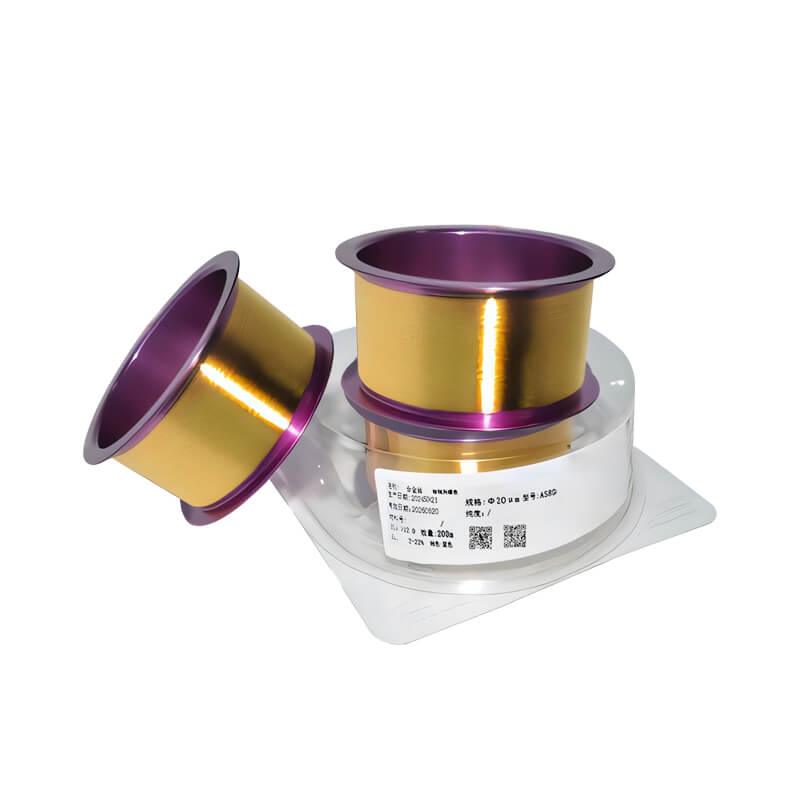
Traditional bonding technologies mainly
include die bonding (also known as die attach) and wire bonding. Chip bonding
focuses on physically attaching the chip to the substrate, while wire bonding
enables the electrical connection between the chip pad and the substrate pins
through a thin metal wire, such as gold, copper, or nickel wire. These two
technologies work together to form a mature, stable and cost-controllable
connection solution, which is widely used in consumer electronics, automotive
electronics and other fields. Its advantages lie in its high process maturity
and strong compatibility, and can adapt to a variety of chip sizes and
substrate types, but it has certain limitations in high-density integration
scenarios.
2. Advanced Bonding Technology: Flip
chips lead the way in high-density connections
A representative of advanced bonding technology is Flip Chip Bonding, which was pioneered by IBM in the late 60s of the 20th century and revolutionized the connection logic of traditional bonding. It innovatively combines the functions of chip bonding with wire bonding: first make tiny metal bumps (such as Solder Balls) on the chip's pads, and then place the chip "upside down" (top side down) on the substrate so that the bumps on the chip are in direct contact with the corresponding pads on the substrate. Through subsequent heating and other processes, the bump melts and forms a strong solder joint with the substrate pad, while achieving physical fixation and electrical connection. The biggest advantage of this technology is that it has a high connection density, which can meet the needs of high-end chips for miniaturization and high speed, and plays an irreplaceable role in smartphone chips, high-performance processors and other fields.
3. The Role of Bonding Technology:
Multiple missions that transcend connections
If the engine is the "heart" of
the car, then chip bonding technology is the "power source" of
semiconductor packaging. It attaches semiconductor chips to lead frames or
printed circuit boards to build an electrical path between the chip and the
outside world, ensuring smooth transmission of electrical signals. But the
mission of bonding is much more than that: it must ensure that the chip can
withstand various physical pressures (e.g., vibration, shock) that it may face
after packaging, preventing chip detachment or damage; At the same time, it is
necessary to efficiently export the heat generated during chip operation to
avoid performance attenuation or failure due to overheating. In some specific
scenarios, it is also necessary to maintain constant conductivity (e.g., power
devices) or achieve high levels of insulation (e.g., high-frequency circuits).
As chip size continues to shrink and integration continues to improve, the
accuracy and reliability requirements of bonding technology are becoming increasingly
stringent, which has become a key factor affecting the performance of
semiconductor devices.
2. The core steps of chip bonding: the
precise process from dispensing to fixation
Chip bonding is a highly sophisticated
system engineering, and each step requires strict control of parameters to
ensure the stability and reliability of the connection. Whether it is
traditional chip bonding or advanced flip chip bonding, they all follow a set
of rigorous operating procedures, but there are differences in details.
1. The basic process of traditional chip
bonding
The steps of traditional chip bonding can
be summarized as three major links: dispensing-placement-curing. First, the
appropriate amount of adhesive (such as epoxy resin) needs to be applied at the
precise point of the predetermined position of the packaging substrate, and the
amount and distribution of the adhesive directly affect the stability of the
subsequent connection. The chip is then placed face up on the adhesive-coated
substrate through a high-precision equipment to ensure that the alignment accuracy
of the chip to the substrate is controlled at the micron level. After
placement, the assembled unit is fed into a Temperature Reflow channel, where
the temperature is precisely adjusted over time according to a preset
Temperature Profile, allowing the adhesive to gradually melt and cure over a
temperature range of 150°C to 250°C. After the temperature cools, the adhesive
hardens, firmly bonding the chip to the substrate, forming a stable physical
connection.
2. Unique process for flip chip bonding
The process of flip chip bonding has been
revolutionized on the basis of traditional processes, and the core difference
is "bump making" and "chip inversion". First, in the later
process of chip manufacturing, metal bumps (solder balls) are made on the chip
pads through evaporation, electroplating and other processes, and the material,
size and spacing of the bumps are accurately designed according to the chip
requirements. Then, place the chip face down (pad facing the substrate) on the
substrate so that the bumps on the chip are precisely aligned with the
corresponding pads on the substrate. Next, it also enters the temperature
reflow channel, where the bump (solder ball) is melted by heating to form an
alloy solder joint with the substrate pad. After cooling, the solder joints
solidify, which not only realizes the physical fixation of the chip and the
substrate, but also directly establishes an electrical connection, eliminating
the wire connection link of traditional wire bonding, and greatly improving the
connection density and signal transmission speed.
3. Chip pick-up and placement: precise
operation before bonding
Before chip bonding, there is also a
critical preparation – transferring the cut chip from the cutting tape to the
substrate, a process known as "Pick & Place" that is the first
hurdle to ensure bonding accuracy.
1. Pickup: Separate the qualified chips
from the cutting tape
After the dicing process is complete, the
wafer is divided into hundreds of individual chips, which remain gently
attached to the cutting tape and await further processing. "Pickup"
is the process of separating qualified chips from the cutting tape one by one.
The device will accurately identify the position of the qualified chip based on
the mapping table generated by the wafer test results (pass/fail). A special
plunger or vacuum nozzle is then used to apply the appropriate force to the
qualified chip to separate it from the cutting tape. For unqualified chips,
they will be left on the cutting tape and discarded uniformly in the subsequent
frame recycling process to avoid unqualified products flowing into the
subsequent process.
2. Placement: Precise positioning of the
chip onto the substrate
"Placement" is the step
immediately following pick-up, which refers to the precise placement of the
picked qualified chip in a predetermined position on the packaging substrate.
This operation is done on a dedicated die bonder, which uses a high-precision
robotic arm and vision positioning system to ensure chip placement accuracy of
±10 microns or more. During placement, it is not only necessary to ensure the
alignment of the chip and the substrate, but also to control the pressure and
speed during placement to avoid physical damage to the chip. After all
qualified chips have been placed, the entire substrate can proceed to
subsequent curing or reflow processes to complete the final bonding.
4. Chip ejection process: an innovative
solution to solve the pick-up problem
The chips after slicing are flat on the
cutting tape, and the distance between them is extremely small, which is not
only difficult to pick up directly, but also easy to cause damage to the chip
(such as chipping, cracks) due to uneven force. To solve this problem, the
"ejection process" has emerged, which makes it easier to separate the
chip from the tape through clever mechanical design.
The core principle of the ejection process
is to apply a slight physical force from the bottom of the chip through an
ejection device, creating a small height difference (usually a few microns to
tens of microns) between the target chip and the surrounding chip. This height
difference breaks the uniform adhesion between the chip and the cutting tape,
allowing the vacuum picker to easily pull the chip up from above. During the
ejection process, the device will simultaneously pull up the bottom of the cutting
tape through the vacuum picker to keep the wafer flat and avoid displacement or
damage to other chips due to local stress. The force, action time and position
of the ejection device are accurately calculated to ensure that the chip can be
separated smoothly without causing damage to the chip structure, which is a key
auxiliary technology for high-precision chip pickup.
5. Bonding adhesive materials: the core
factors affecting the quality of the connection
The bonding material between the chip and
the substrate is the core factor that determines the bond strength, thermal
conductivity, electrical conductivity and even reliability. At present, there
are two main types of mainstream adhesive materials: epoxy resin (Epoxy) and
die attach film (DAF), each with its own unique performance characteristics and
applicable scenarios.
1. Epoxy: A traditional and flexible
bonding option
Epoxy resin is a commonly used bonding
material in chip bonding, especially silver-containing paste or liquid epoxy
resin, which is widely used in medium and high-power device packaging due to
its ease of use, moderate cost, and good conductivity. When used, a very small
amount of epoxy resin is precisely coated onto the substrate by a dispensing
device, and then the chip is placed and heat-cured (150°C to 250°C) to form a
strong connection.
However, there are also certain challenges
in the use of epoxy resin: if the thickness of epoxy resin is uneven, it will
cause stress during the curing process due to the difference in the coefficient
of thermal expansion between the chip and the substrate, leading to warpage,
which in turn will cause the chip to bend or solder joint failure. Therefore,
although epoxy resin is flexible to use, it requires extremely high coating
accuracy and thickness control, otherwise it is easy to affect the bond quality.
2. Wafer Bond Film (DAF): An advanced
high-precision bonding solution
In recent years, wafer bond films (DAFs)
have gradually become the preferred adhesive material in the field of high-end
packaging. DAF is a thin-film adhesive that is pre-attached to the bottom of
the chip, and its biggest advantage over liquid epoxy resin is its excellent
thickness uniformity – it can be controlled within a very small and constant
range (typically a few microns to tens of microns) and effectively avoids
warping problems caused by uneven thickness.
DAF has a wide range of application
scenarios, not only for chip-to-substrate bonding, but also for chip-to-chip
stacking bonding, providing an ideal bonding solution for multi-wafer packaging
(MCP). In terms of process, the DAF is attached to the back of the wafer before
the chip is cut, and after cutting, it comes into contact with the cutting tape
along with the chip. For bonding, the chip (along with the DAF) is simply
removed from the cutting tape and placed directly onto the substrate,
eliminating the need for traditional dispensing steps and simplifying the
process while increasing productivity and consistency.
However, DAFs also have some limitations:
they are relatively expensive and require high precision from the handling
equipment – if not done properly, they can cause air to penetrate the film and
cause deformation, affecting bond quality. However, overall, the advantages of
DAF in terms of thickness uniformity, process simplification, and reliability
have led to its increasing use in high-end packaging.
6. Diversified development of bonding
technology: adapt to the needs of different scenarios
The development of chip bonding technology
has always been closely linked to the needs of the semiconductor industry. With
the improvement of chip integration, the reduction of size and the
diversification of application scenarios, bonding technology is also constantly
innovating, deriving a variety of process solutions to meet different needs.
1. The influence of substrate type on
the bond direction
Different substrates used to place chips
(lead frames or printed circuit boards) can vary significantly in chip bonding
orientation and process parameters. As a traditional substrate form, the lead
frame is suitable for mass production, and the chip is usually top-facing when
bonding. Printed circuit boards (PCBs) are more suitable for small-batch,
multi-variety packaging scenarios, and the bonding direction can be flexibly
adjusted according to the circuit design. With the development of packaging
technology, the emergence of new substrates (such as ceramic substrates and
organic substrates) has further promoted the diversification of bonding
processes.
2. Innovation in temperature curves and
bonding methods
Drying of adhesives or melting of solderballs requires precise temperature control, so the design of the temperature
profile is crucial. Different adhesive materials (epoxy, DAF, solder balls) and
substrate types correspond to different temperature profiles – including
ramp-up rate, peak temperature, holding time, and cooling rate, all of which
need to be precisely set according to the material properties.
In addition to traditional heating bonding,
ultrasonic bonding has also become an important bonding method. This method
plastically deforms the metal surface through the energy generated by
ultrasonic vibration, forming a strong metallurgical bond without the need for
high-temperature heating, and is especially suitable for temperature-sensitive
chips or substrates.
3. The development trend of packaging
process
With the continuous improvement of
integration technology, semiconductor packaging is developing in the direction
of ultra-thin, miniaturized and high-density. The rise of advanced technologies
such as 3D stack packaging and system-in-package (SiP) has placed higher
demands on chip bonding – not only higher connection density, but also better
thermal conductivity, electrical conductivity, and reliability. In the future,
bonding technology will be deeply integrated with materials science and
precision manufacturing technology, continuously breaking through the limits of
performance and providing core support for the continuous innovation of the
semiconductor industry.
In the next issue, we will continue to
delve into the field of semiconductor packaging, introducing another key
technology - wire bonding, and exploring how it cooperates with chip bonding to
build a complete electrical connection between the chip and the outside world.
 Безопасность сети 32058300438