


Замечания:1 创始人: Site Editor Publish Time: 2026-01-30 Origin: Веб - сайт


In-depth analysis of BGA packaging
technology and process optimization path
As the semiconductor industry continues to
push the limits of Moore's Law, the integration of chips doubles every 18
months, which poses an unprecedented challenge to packaging technology. As a
key technology solution to address this challenge, the Ball Grid Array (BGA)
has demonstrated irreplaceable advantages in solving input/output (I/O) pin
density bottlenecks, improving thermal efficiency, and ensuring signal
integrity with its unique matrix solder ball structure. Today, the number of
I/O pins in mainstream chips has easily exceeded 2,000, and some
high-performance processors have even reached more than 5,000, and BGA
packaging technology is the core force supporting this development. This
article will systematically sort out the development context of BGA packaging
technology, deeply analyze its full-process process points, and discuss in
detail the reliability improvement and emerging technology trends, so as to
provide a comprehensive and practical technical reference for industry
practitioners.
1. Technical background and development
status: from challenge to breakthrough
With the booming development of consumer
electronics, automotive electronics, artificial intelligence, and more,
semiconductor devices face a triple core challenge: increasing I/O density
requirements, increasing thermal management pressures, and the ultimate pursuit
of signal integrity. The emergence of BGA packaging technology provides
effective solutions to these challenges, and its development history itself is
a history of innovation in semiconductor packaging technology.
1.1 Technological breakthrough in BGA
packaging
Compared to traditional thin form factor
packages (TSOPs), BGA packages have made a qualitative leap in several key
metrics:
Significant reduction in package size: The
overall size of the BGA package is more than 40% lower than that of the TSOP
package for the same die area. For example, a typical 32-bit microcontroller
can be reduced to 8mm××8mm in a BGA package, from 14mm 14mm in a TSOP package,
making it possible to miniaturize portable electronic devices.
Exponential increase in I/O density: As the
ball pitch evolved from the early 1.27mm to 0.4mm or even 0.3mm, the BGA
package achieved a 300% increase in I/O density. This means that BGA packages
can accommodate several times more pins per unit area than traditional
packages, meeting the needs of high-performance chips for large signal
transmission.
Significant improvement in thermal
performance: Ceramic-based BGA packages can have a thermal resistance
coefficient as low as 1.2°C/W, which is more than 35% lower than traditional
plastic packages. This feature allows BGA packaging to effectively export the
heat generated by the chip during operation, ensuring stable operation of the
chip under high load. For example, in high-performance graphics processing
units (GPUs), the excellent cooling performance of BGA packages is a key
guarantee for their ability to operate at full capacity for long periods of
time.
1.2 Comparison of parameters with other
packaging technologies
To more visualize the advantages of BGA
packaging, we compare it with the key parameters of Quad Flat Package (QFP) and
Thin Small Form Factor Package (TSOP):
|
Package type |
Typical pin count |
Pin Spacing (mm) |
Thermal Resistance Coefficient (°C/W) |
Package Thickness (mm) |
|
QFP |
100-200 |
0.8-1.27 |
8-12 |
2.0-3.0 |
|
TSOP |
40-80 |
0.5-0.8 |
6-8 |
1.2-1.8 |
|
БГА |
200-5000+ |
0.4-1.0 |
1.2-5.0 |
0.8-2.0 |
From the above comparison, it can be
clearly seen that BGA packaging has obvious advantages in terms of the number
of pins, thermal resistance coefficient and package thickness, especially the
gap in the number of pins has increased by orders of magnitude, which has also
established its core position in the field of high-end semiconductor packaging.
2. Detailed explanation of the whole
process technology: from wafer to finished product
The BGA packaging process is a complex
system engineering involving multiple precision machining links, and the
control of process parameters in each link directly affects the quality and
reliability of the final product. From wafer thinning to final testing, every
step is the culmination of advanced manufacturing techniques.
2.1 Front-end process: lay the foundation
for packaging
The quality of these two processes directly
determines the ease of the subsequent packaging process and the performance of
the final product.
(1) Wafer thinning process
The purpose of wafer thinning is to reduce
chip thickness, improve thermal performance, and create conditions for advanced
packaging technologies such as 3D integration. Currently, the mainstream wafer
thinning process uses diamond grinding wheel grinding and a deionized water
cooling system to reduce 300mm diameter wafers from initial thickness to 50μm.
During the grinding process, the speed of the grinding wheel is controlled
between 2000-3000rpm, which not only ensures grinding efficiency, but also effectively
avoids cracks caused by excessive force on the wafer.
For advanced packaging technologies such as
3D ICs, surface roughness requirements cannot be met by mechanical grinding
alone, so additional chemical-mechanical polishing (CMP) steps are required.
The CMP process can control the wafer surface roughness to less than 0.1μm,
ensuring that the subsequent bonding process can achieve good interface
contact. According to SEMI standard M1-0318, CMP-treated wafer surface flatness
of ±2μm is required to ensure accuracy during 3D stacking.
(2) Wafer cutting process
Wafer cutting is the process of dividing an
entire wafer into a single die, and the key to this link is to ensure cutting
accuracy and reduce damage to chip edges. At present, UV laser cutting
technology is widely used in the field of advanced packaging with its unique
advantages.
The UV laser has a wavelength of 355nm and
is capable of achieving a 5μm-wide incision with a heat-affected zone (HAZ)
controlled to within 10μm. This characteristic makes it particularly suitable
for cutting wafers containing low-k media layers, as low-k materials are
extremely sensitive to thermal damage, and traditional blade cutting can easily
lead to cracking and chipping of the dielectric layer. Using UV laser cutting
technology, the chipping rate of the low-k dielectric layer can be controlled
below 0.1%, significantly improving the yield of the chip.
To better contrast the characteristics of
different cutting processes, we have listed the key parameters of blade cutting
versus laser cutting:
|
Cutting process |
Cut width (μm) |
Heat-affected zone (μm) |
Edge Collapse Rate (%) |
Suitable for materials |
|
Blade cutting |
30-50 |
50-100 |
1-3 |
silicon, ceramic |
|
Laser cutting |
5-10 |
<10 |
<0.1 |
Low-k media, compound semiconductors |
2.2 Core packaging process: the key to
determining product performance
The core packaging process includes wirebonding and ball planting, which directly impact the electrical performance and
mechanical reliability of BGA packaging.
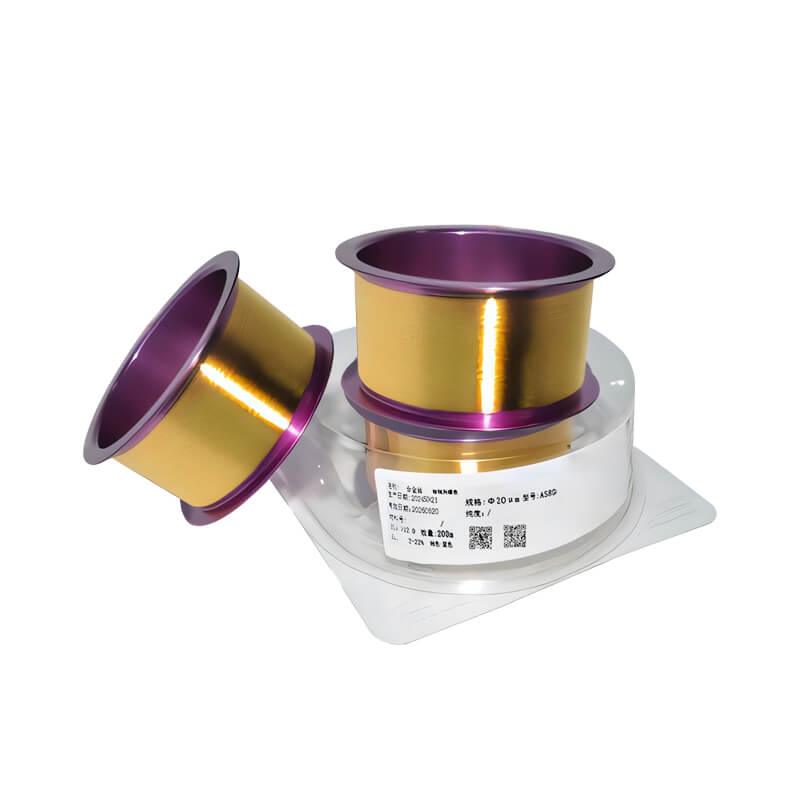
(1) Wire bonding technology
Wire bonding is a key process that realizes
the electrical connection between the chip and the packaging substrate, which
can be divided into gold wire bonding, copper wire bonding, and silver alloy
wire bonding according to the different metal wires used.
Gold wire bonding: Using gold wire with a
purity of 99.99%, it has excellent electrical conductivity and oxidation
resistance, suitable for high-frequency devices and products with high
reliability requirements. The strength of gold wire bonding is required ≥ 8gf
to ensure that there is no bond failure during subsequent processes and use.
Copper wire bonding: Copper wire bonding
can reduce material costs by around 30% compared to gold wire bonding, but its
biggest challenge is that copper wire is prone to oxidation. To solve this
problem, copper wire bonding needs to be carried out in a nitrogen protective
atmosphere, and the oxygen content in nitrogen needs to be controlled below
50ppm to prevent the formation of an oxide layer on the surface of the copper
wire, which will affect the bonding quality.
Silver alloy wire bonding: This is a new
type of bonding technology that can strike a balance between cost and
performance by adding trace alloying elements (such as palladium, gold, etc.)
to silver. The conductivity of silver alloy wire is increased by 15% compared
with gold wire, and it has good mechanical strength and oxidation resistance,
which is expected to gradually replace gold wire in the mid-to-high-end
packaging field.
(2) Innovation of ball planting process
The pelleting process is a hallmark part of
BGA packaging, and its quality directly determines its welding reliability and
electrical performance. Currently, the advanced ball planting process uses
no-clean flux with SAC305 solder balls (tin - 3 silver - 0.5 copper) to achieve
a strong bond between the ball and the pad through nitrogen reflow.
The melting point of SAC305 solder balls is
217°C, and the peak temperature is controlled at 245±5°C during the reflow
soldering process, which ensures complete melting of the solder balls while
avoiding damage to chips and substrates caused by high temperatures. Reflow
soldering in a nitrogen atmosphere can effectively prevent oxidation of the
weld ball and improve the welding quality.
The optimized ball planting process
achieves the following results:
A eutectic intermetallic compound (IMC)
layer with a thickness of 3-5 μm, mainly composed of Cu₆Sn₅, is formed, and the
IMC layer of this thickness ensures good mechanical strength and conductivity
of the solder joint.
With a shear strength of > 5kgf/ball,
the weld ball meets the requirements of the JEDEC JESD22-B117A standard,
ensuring that it can withstand various mechanical stresses during use.
The microstructure of the IMC layer of the
BGA bump can be clearly observed through scanning electron microscopy (SEM),
and a good IMC layer presents a uniform, continuous shape with no obvious holes
or defects.
3. Reliability improvement plan: from
testing to optimization
The reliability of BGA packaging is a key
measure of its performance, especially in areas where reliability is extremely
demanding, such as automotive electronics and industrial control. A series of
rigorous reliability tests and process optimization for the issues exposed in
the tests can significantly improve the reliability of BGA packages.
3.1 Reliability testing standards and
methods
Currently, the widely adopted reliability
testing standards in the industry include a series of specifications developed
by organizations such as JEDEC and IPC, and the main test items are as follows:
(1) Thermal cycling test
Thermal cycling tests are used to evaluate
the reliability of BGA packages in temperature-varying environments using JEDEC
JESD22-A104 condition G, i.e., a temperature range of -55°C to 125°C with a
number of 1000 cycles. During each cycle, the temperature changes from low to
high and back to low to simulate the temperature changes that the product may
encounter during actual use.
After 1000 thermal cycling tests, the BGA
package has excellent fatigue resistance, and its solder joint failure
probability is more than 3 times lower than that of QFP package. This is mainly
due to the matrix solder ball structure of the BGA package, which distributes
stresses caused by temperature changes more evenly.
(2) Board-level drop test
Board-level drop testing is used to
evaluate the reliability of BGA packages in mechanical shock environments,
referencing the IPC-9701 standard and using a 6-sided 1.5m free-drop method.
During the drop, the impact force of the product can simulate the collision and
vibration that may be encountered in actual use.
After rigorous board-level drop testing, the cracking rate of the solder ball of the BGA package can be controlled to less than 0.01%, which indicates that the BGA package has good mechanical reliability and can meet the application scenarios with high impact resistance requirements such as portable electronic devices.
3.2 Reliability optimization measures
In addition to testing to screen qualified
products, the reliability of BGA packages can be further improved by:
Optimize solder joint design: By adjusting
the solder ball diameter, pad size, and solder paste volume, the solder joint
can better absorb stress during temperature changes and mechanical shock,
reducing the probability of failure.
Improved Substrate Materials: Reduce
stresses caused by CTE mismatches by using substrate materials with a
coefficient of thermal expansion (CTE) that better match the chip, such as
ceramic substrates or organic substrates with low coefficient of thermal
expansion.
Underfill process: Filling the BGA package
with underfill adhesives such as epoxy resin can improve the mechanical
strength of the solder joints, enhancing their fatigue resistance and impact
resistance. The flow properties and curing characteristics of the underfill
adhesive need to be optimized for the specific package structure to ensure
adequate filling and no bubbles.
4. Evolution direction of emerging
technologies: leading future development
With the continuous advancement of
semiconductor technology, BGA packaging technology is also continuously
innovating, and a series of emerging technologies have emerged, providing new
solutions for future high-density, high-performance packaging.
4.1 3D BGA packaging technology
3D BGA packaging technology enables
vertical stacking of chips through silicon vias (TSVs), significantly
increasing package density. 3D BGAs offer more than 10x higher Z-direction
stack density compared to traditional 2D packaging, enabling the integration of
more features in a smaller space.
TSV technology is at the heart of 3D BGA
packaging, enabling electrical connections between different chip layers by
creating vertical vias on the silicon wafer and metallizing it. Currently, TSVs
can be reduced to less than 5 μm in diameter and have an aspect ratio of more
than 10:1, making it possible for high-density 3D integration. 3D BGA packaging
technology has broad application prospects in artificial intelligence chips,
high-performance computing, and other fields, which can effectively shorten the
signal transmission path and improve data processing speed.
4.2 Micro-pitch BGA packaging technology
Micro-pitch BGA packaging technology refers
to BGA packaging with a solder ball pitch of less than 0.4mm, and the 0.3mm
pitch process has entered mass production. Micro-pitch BGAs further increase
I/O density to meet the packaging needs of VLSI.
However, micro-pitch BGAs also face a set
of challenges, such as higher ball alignment accuracy requirements and easier
bridging between solder joints. To address these challenges, new underfill
adhesives are needed with a flow time of less than 30 seconds to ensure rapid
filling between solder joints and avoid voids and bubbles. At the same time,
the ball planting process and the reflow soldering process also need to be
optimized accordingly to ensure the quality of micro-pitch solder joints.
4.3 Optoelectronic devices integrate BGA
technology
With the rapid development of optical
communication technology, the integration of optoelectronic devices into BGA
packaging has become a new research hotspot. Optoelectronic devices integrate
BGA technology into the package, which can realize the transmission of
high-speed optical signals and control the insertion loss to less than 1dB/cm.
This technology integrates electrical
signal processing and optical signal transmission in the same package,
significantly improving system integration and signal transmission speed,
making it suitable for data centers, high-performance servers, and other fields
with extremely high bandwidth requirements. At present, the integrated BGA
technology of optoelectronic devices is still in the research and development
stage, facing challenges such as the compatibility of optoelectronic devices
and electronic devices, the complexity of the packaging process, etc., but its
development prospects are broad.
5. Application selection suggestions: match
the needs of different scenarios
Different application scenarios have
different performance requirements for BGA packages, so it is necessary to
choose the appropriate BGA type according to specific application needs.
|
Application scenarios |
Recommended type |
Key considerations |
|
Automotive electronics |
Ceramic BGA (CBGA) |
Operating temperature range - 40~150°C,
AEC-Q100 qualified |
|
Mobile devices |
Molded BGA (PBGA) |
0.4mm pitch, package thickness < 1mm,
lightweight design |
|
High-performance computing |
Flip BGA (FCBGA) |
It supports 1000+ pins and has a thermal
design power consumption (TDP) of >50W for excellent thermal performance |
In the field of automotive electronics,
ceramic BGA (CBGA) is recommended due to the harsh working environment, wide
range of temperature variations, and high reliability requirements. CBGA has
good high-temperature resistance and mechanical strength to meet the needs of
automotive electronics in various extreme environments, and it needs to pass
AEC-Q100 certification to ensure its quality meets automotive industry
standards.
Mobile devices have stringent size and
weight requirements for their packaging, and molded BGA (PBGA) is the ideal
choice. PBGA is designed to meet the needs of mobile devices for high-density
integration with a 0.4mm pitch that can be controlled to less than 1mm, helping
to achieve thin and light devices.
Chips in high-performance computing
typically have a large number of I/O pins and high power consumption, and flip
BGAs (FCBGAs) can meet these needs. FCBGA is flipped directly onto the
substrate through the chip, shortening the signal transmission path, improving
electrical performance, and at the same time has good heat dissipation
performance, which can effectively export the heat generated by the chip when
it works, and is suitable for high-performance processors with a thermal design
power consumption (TDP) > 50W.
6. Conclusions and prospects: technology
trends and development suggestions
BGA packaging technology, as the mainstream
technology in the field of semiconductor packaging, has made great progress in
the past few decades and will continue to evolve in the direction of ultra-fine
pitch and heterogeneous integration in the future. The latest JEDEC JC-11
Commission data shows that BGA packaging is expected to exceed 58% of the
global packaging market share by 2025, further solidifying its core position.
6.1 Technology development trends
Ultra-fine pitch: Currently, BGA packaging
technology with 0.2mm pitch has entered the research and development stage, and
mass production is expected in the future. Ultra-fine pitch will further
increase I/O density to meet the packaging needs of more integrated chips.
Heterogeneous Integration: Heterogeneous
integration of different types of chips (such as logic chips, memory chips, RF
chips, etc.) is achieved through hybrid bonding (such as HBM hybrid bonding)
technology, improving the overall performance and functional density of the
system.
Intelligent manufacturing: Introduce
advanced technologies such as artificial intelligence and machine learning to
achieve intelligent control and quality prediction of BGA packaging processes,
improving production efficiency and product reliability.
6.2 Industry development suggestions
In response to the development trend of BGA
packaging technology, manufacturers are advised to focus on the following
aspects:
Development of packaging materials with low
dielectric constant: Developing packaging materials with dielectric constant
(Dk) < 3.0 can reduce delays and losses during signal transmission, improve
high-frequency performance, and meet the needs of high-frequency communication
technologies such as 5G and 6G.
 Безопасность сети 32058300438