


Замечания:1 创始人: Site Editor Publish Time: 2026-03-12 Origin: Веб - сайт


In the precision processes of modern
industrial production, industrial cleaning agents play an indispensable role.
This kind of chemical preparation specially developed for the surface dirt of
equipment, parts and products can efficiently remove stubborn pollutants such
as oil, rust, carbon deposits, limescale, etc., and its performance directly
affects production efficiency and product quality. According to different
chemical properties, application scenarios and cleaning processes, industrial cleaningagents can build a multi-dimensional classification system, which will be
elaborated below.
1. Classification framework constructed
according to chemical properties
1. Water-based cleaners: A balanced choice
between environmental protection and safety
Water-based cleaning agents are based on
water, and a stable system is formed by compounding functional ingredients such
as surfactants, cleaning aids, and corrosion inhibitors. Its core advantage is
environmental compatibility – the biodegradation rate is usually more than 90%,
which is much higher than that of organic solvent-based products, and it is
non-flammable and explosive, significantly reducing the health hazard to
operators.
In terms of decontamination mechanism, this
type of cleaning agent mainly relies on the emulsification and dispersion of
surfactants to decompose hydrophilic dirt, and the removal efficiency of
water-soluble grease and dust can reach more than 95%. However, when dealing
with hydrophobic contaminants such as high-viscosity mineral oils, the effect
needs to be improved by heating to 60-80°C or extending the cleaning time.
Since it uses water as the medium, it can be rinsed directly with clean water
to remove residues after cleaning, making it particularly suitable for
residue-sensitive scenarios such as electronic components and precision
mechanical parts. At present, the use rate of water-based cleaning agents in
the spray cleaning line of auto parts and the PCB board cleaning process of
electronics factories has exceeded 70%.
2. Semi-water-based cleaning agents:
optimization of efficiency and cost
Semi-aqueous cleaning agents are the
product of the fusion of water-based and organic solvent technology, usually
composed of 30%-60% organic solvents (such as glycol ethers, terpenes),
surfactants and deionized water. This formulation design offers a dual
advantage: it dissolves grease-based dirt as quickly as organic solvents, and
disperses inorganic pollutants through aqueous components, resulting in 20%-30%
higher removal of mixed dirt than a single system.
Compared with pure organic solvents, its volatility is reduced by more than 50%, and the flash point is generally higher than 60°C, greatly improving the safety of storage and use. In terms of cost, it is between water-based (about 8-15 yuan/liter) and solvent-based (about 20-50 yuan/liter), which is especially suitable for precision optical instruments, aerospace parts and other scenarios that require high cleaning accuracy and have limited budgets. Application data from an optical lens factory shows that the use of semi-water-based cleaners has increased the cleaning pass rate from 82% to 97%, while reducing the unit cost by 18%.
3. Organic solvent-based cleaning agents:
professional choice for efficient stain removal
Cleaning agents with organic solvents such
as hydrocarbons, chlorinated hydrocarbons, and alcohol ethers as the main body
show strong oil dissolution ability by virtue of similar miscibility
principles. Experimental data show that the extreme pressure lubricating scale
generated by machining is removed 3-5 times faster than water-based products,
and can be completely dissolved within 30 seconds at room temperature.
The rapid volatilization nature of these
cleaning agents (boiling points below 80°C in some products) eliminates the
need for washing and is particularly suitable for cleaning moisture-sensitive
electronic components. However, the safety risks cannot be ignored: the
occupational exposure limit for benzene solvents is only 50mg/m³, and most of
them are flammable and explosive (flash point below 28°C). At present, it is
mainly used in high-end manufacturing fields such as aero engine core
components and semiconductor wafers, and needs to be equipped with
explosion-proof cleaning equipment and exhaust gas recovery systems when used.
2. Professional categories divided by
application scenarios
1. Metal cleaning agent: precise cleaning
suitable for the material
Customized formulation of metal cleaning
agents for the chemical properties of different metals: the special type for
steel adds corrosion inhibition ingredients such as sodium nitrite, which can
form a protective film of 2-5μm after cleaning, and the rust prevention period
of salt spray test is more than 72 hours; The special formula for aluminum
products adopts a weak alkaline system (pH 8.5-9.5) to avoid pitting corrosion;
copper cleaning agents such as benzotriazole are added to prevent surface oxidation
and discoloration.
In terms of decontamination ability, the
ratio of surfactant and chelating agent can be adjusted to achieve targeted
removal of different pollutants such as cutting oil, oxide scale, and welding
slag. After using a special metal cleaning agent in an automobile transmission
factory, the amount of oil stain residue after cleaning the parts was reduced
from 50mg/m² to less than 5mg/m², and the assembly qualification rate increased
to 99.5%. It is widely used in machining cleaning between processes, degreasing
before and after heat treatment, surface pretreatment before spraying, etc.
2. Optical Glass Cleaner: The guardian of
optical performance
The core technology of optical glass
cleaners lies in balancing decontamination power and safety: nanoscale
surfactants (particle size 5-20nm) are used to efficiently emulsify fingerprint
grease, while abrasive additives such as colloidal silica are added to remove
polishing powder particles below 0.1μm. Its low-foam formula (foam height below
10mm/5 minutes) ensures that the cleaning effect is not affected by the foam
wrap during ultrasonic cleaning.
Protection of optical properties is a key
indicator: the refractive index of the cleaning agent should be controlled
between 1.45-1.50 to avoid residue leading to a decrease in lens transmittance;
The pH level is strictly maintained in the neutral range of 6.5-7.5, and after
a 48-hour immersion test, there are no signs of corrosion on the glass surface.
It is mainly used for precision cleaning of optical components such as camera
lenses, laser lenses, and LCD panels, and the product defect rate has dropped from
3.2% to 0.5% after a lens manufacturer has applied it.
3. Electronic cleaner: the guarantor of
electrical safety
Electronic cleaning agents must meet strict
insulation requirements, with a volume resistivity of ≥ of 10¹²Ω cm and a dielectric strength ≥ 30kV/mm to ensure that the electrical
properties of electronic components are not affected after cleaning. Its rapid
volatilization formula (drying time < 30 seconds) avoids the risk of short
circuit due to moisture residue, and has no swelling effect on plastics such as
ABS and PC (weight change rate <0.1%).
Develop special formulations for different
electronic components: PCB board cleaning agent contains rosin solubility to
remove flux residue; Connector cleaner adds lubricating ingredients to reduce
plugging and unplugging wear while decontaminating. The chip cleaning agent
uses ultra-pure solvent (99.99% purity) to avoid particle contamination. In 5G
base station equipment maintenance, specialized electronic cleaning agents can
reduce equipment failure rates by more than 40%.
4. Plastic cleaner: Gentle cleaning with
compatible materials
The formulation design of plastic cleaningagents needs to take into account diversity: for non-polar plastics such as PE
and PP, hydrocarbon solvents are used to enhance the solubility of oil stains;
For polar plastics such as ABS and PMMA, alcohol ether solvents are used to
avoid stress cracking. Specially added plasticizer stabilizer can prevent the
plastic from turning white and brittle during the cleaning process.
Functional diversification: the degreasing
type can remove the residue of injection molding release agent; The adhesive
removal type contains special ester components, which can soften the label
adhesive layer; The anti-mold type adds preservatives such as isothiazolinone
to extend the shelf life of the cleaned plastic parts to 12 months in a humid
environment. It is widely used in the cleaning and treatment of plastic shells
of home appliances, plastic parts of medical devices, packaging containers, etc.
3. Special preparations designed according
to the cleaning process
1. Spray cleaning agent: the core additive
of the efficient assembly line
Spray cleaner is designed for high-pressure
spray systems (pressure 0.3-0.8MPa) and its low foam characteristics (foam
dissipation time < 10 seconds) prevent nozzle clogging; The special wetting
agent formulation allows the liquid to spread over 5cm/s on the metal surface,
ensuring adequate cleaning of crevices.
Concentration stability is critical to continuous assembly line operation: by adding a buffer, the concentration change rate of the working fluid < 5% after 8 hours of continuous use. The application of a spray line at an auto parts factory showed that a specialized cleaning agent increased the daily throughput of a single line by 20% while reducing chemical consumption by 30%. It is mainly used for continuous cleaning of large quantities of parts such as engine blocks, wheel hubs, and metal sheets.
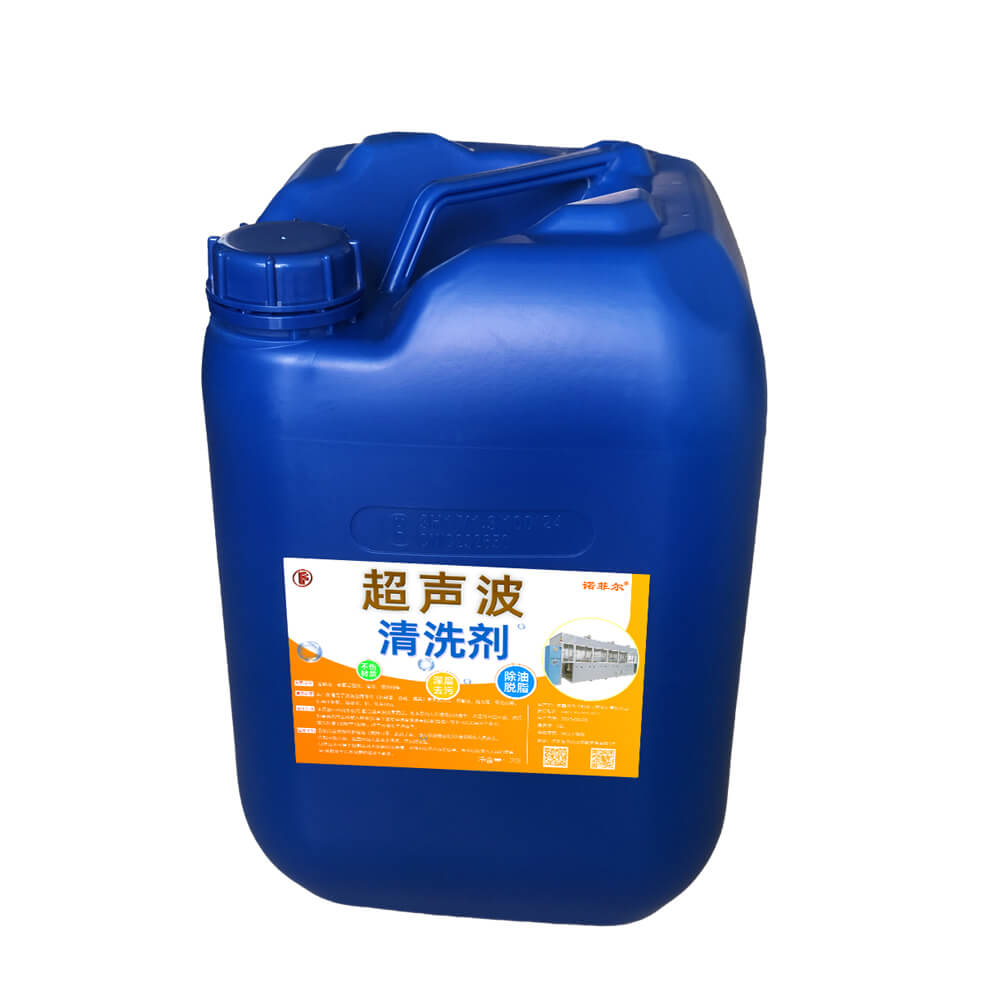
2. Ultrasonic Cleaners: Solutions for
microscopic cleaning
Ultrasonic cleaning agents form a
synergistic effect with cavitation effect: the active ingredients in the
formula can reduce the surface tension of the liquid to less than 25mN/m, and
enhance the bursting force of the cavitation bubbles; The added rust inhibitor
can evenly adhere to the surface of the inner cavity of complex parts under the
action of cavitation, solving the blind spot problem of traditional cleaning.
Thermal stability is a key indicator:
within the ultrasonic cleaning temperature range of 40-80°C, the active
ingredient decomposition rate <3%, ensuring a consistent decontamination
effect. For parts with micropores of 0.1mm, the amount of oil stain residue can
be controlled below 1mg after cleaning. It is widely used in the deep cleaning
of parts with complex structures such as precision bearings, fuel injectors,
and surgical instruments.
3. Soaking Cleaner: Ideal for flexible
treatment
The soaking cleaning agent uses a mild
chemical system (pH 6-10) and has a corrosion rate of 0.01 g/m²·h < 0.01
g/m²·h, making it particularly suitable for
vulnerable materials such as aluminum and magnesium alloys. By adjusting the
concentration (5%-20%) and temperature (ambient to 80°C), it can accommodate
different cleaning needs from light oil stains to heavy carbon deposits, with a
maximum soak time of up to 72 hours without damaging the substrate.
After a mold shop used a special immersing
agent, the cleaning time for complex cavities was reduced from 8 hours to 2
hours, while the surface roughness of the mold remained the same. It is mainly
used for non-continuous cleaning of small tools, precision molds, maintenance
parts, etc., especially suitable for cleaning scenarios with small batches and
many types.
epilogue
The classification system of industrialcleaning agents reflects the development trend of refinement in the industry -
from general to special, from single function to multi-functional integration.
Choosing the right cleaning agent requires comprehensive consideration of
multiple factors such as pollutant types, substrate characteristics, and
process conditions, and achieving efficient, safe, and environmentally friendly
cleaning goals through scientific matching. With the advancement of intelligent
manufacturing, cleaning agents will form closer synergy with cleaning equipment
and process parameters, promoting the development of industrial cleaning
technology in the direction of digitalization and precision.
 Безопасность сети 32058300438