


Замечания:1 创始人: Site Editor Publish Time: 2026-04-13 Origin: Веб - сайт


Wire Bonding: An Analysis of the Core
Technology of Microelectronic Interconnects
In the microcosm of semiconductor
packaging, wire bonding technology is like a sophisticated "circuit
architect", using metal wires with a diameter of only 18-50μm (equivalent
to 1/5 to 1/2 the diameter of a hair) to build a "micro bridge"
between the chip and the substrate. This technology uses the synergy of heat,
pressure, and ultrasonic energy to achieve atomic-scale tight bonding between
metal leads and substrate pads – under ideal conditions, the atoms on the
surface of the lead and pad will share or diffuse electrons to form a stable
metal bond connection with a contact resistance of less than 5mΩ. From
smartphone processors to spacecraft control systems, wire bonding supports the
normal operation of modern electronic devices with its unique cost-effective
advantages.
1. The pattern of packaging interconnect
technology: the dominance of wire bonding
The internal connection technology in
semiconductor packaging is like a city's transportation network, determining
the transmission efficiency of electrical signals and power sources. There are
currently three main connection methods, and wire bonding dominates due to its
balanced performance and cost advantages. The characteristic game of the three
major interconnection technologies clearly shows the market pattern. Flip Chip
Bonding is like a "highway network", through the solder ball array on
the bottom of the chip to achieve surface array connection, the interconnect
density can reach 10,000 /mm², and the signal transmission delay < 10ps, but
its process cost is 5-10 times that of wire bonding, and it is only used in
high-end processors and other scenarios that require extreme performance.
Automatic carrier tape soldering (TAB) is like a "special track",
which is connected through metal bumps on the flexible carrier tape, which is
suitable for long lead (>5mm) scenarios, but the flexibility is poor. Wire bonding
is like a "flexible street network" that meets the performance
requirements of more than 90% of electronic devices at 1/10th the cost,
although the interconnect density (<500 per mm²) and transfer speed are not
as fast as flip solder. According to data from a market research institution,
in 2024, the application of wire bonding in global semiconductor packaging will
still account for 91%, flip soldering is only 8%, and TAB technology is less
than 1%. The balance between cost and performance has made the art of wire
bonding popular. For most consumer electronics and industrial equipment, the
100MHz-1GHz signal transmission capability and 0.1-1W power carrying range
provided by wire bonding are fully met, while the cost of a single-chip package
can be controlled at $0.5-5, which is much lower than the $10-50 of
flip-soldering. According to the calculations of a smartphone manufacturer, the
chip packaging cost of each mobile phone can be reduced by $12 by using wire
bonding instead of flip soldering, and the annual cost savings of 100 million
units will be calculated as $1.2 billion. This cost advantage is also
significant in automotive electronics – automotive-grade MCUs can meet the
15-year/300,000-kilometer service life requirement at 1/3 the cost of
flip-bonded packaging in lead-bonded packages.
Extensive coverage of technology
compatibility expands application boundaries. Wire bonding is compatible with a
variety of chip materials such as silicon, gallium arsenide, gallium nitride,
etc., and supports different carriers such as ceramics, organic substrates,
metal lead frames, etc., this flexibility allows it to work reliably in extreme
scenarios from aerospace environments at -55°C to automotive engine
compartments at 150°C. In contrast, flip soldering requires extremely high
substrate flatness (warpage needs to be <5 μm) and cleanliness, and the
application scenarios are limited. The practice of a power semiconductor
manufacturer shows that the use of wire bonding technology has expanded the
application scenarios of its IGBT modules by 40% and reduced manufacturing
costs by 25%.
2. The process of wire bonding: precision
operation at the microscopic scale
The process of wire bonding is like
"embroidery" at the nanoscale, with each step requiring sub-micron
precision control, from wire preparation to final wire breakage, forming a
complex system that is interlocked.
Micron-level control of wire preparation
and positioning is the starting point of the process. Once the lead frame is
transferred from the magazine to the table, the high-resolution vision system
(with an accuracy of ±0.5μm) immediately initiates the positioning program –
calculating the exact coordinates of each pad by identifying the alignment mark
on the chip and the reference point of the lead frame, with a positioning time
< 10ms. For 12mm×12mm chips, the system needs to position more than 100 pads
in 0.1 seconds, ensuring a positional error of < 1μm for subsequent bonds.
Equipment data from an advanced packaging plant shows that for every 0.1μm
improvement in positioning accuracy, the bond yield can be improved by 0.5
percentage points.
The formation process of the first bond is
like microscopic welding. In the case of wire bonding, for example, the system
first sinters the end of the wire into a gold ball with a diameter of 2.5-3
times the diameter of the wire (roundness deviation <5%) through electrical
sparks (voltage 1000-3000V), a process called "ball bonding". The
splitter then descends to the chip pad with the gold ball, and under the
synergistic action of heat (150-300°C), pressure (0.5-1.5N) and ultrasonic
waves (20-60kHz), the gold ball undergoes plastic deformation (deformation rate
30-50%), forming a solder joint with a diameter of 3-4 times the wire diameter
with the pad. The shear strength of a high-quality first solder joint should be
> 15g (25μm wire diameter), and the damage depth of the aluminum layer of
the pad should be < 0.5μm to avoid leakage caused by exposing the silicon
substrate. The path optimization formed by the lead arc determines the
connection reliability. After completing the first solder joint, the splitter rises
and moves to the second solder joint according to a preset trajectory, forming
a wire arc with a height of 100-300μm. The arc shape is achieved through
dynamic control of tension and movement speed – the rise phase (0.1mm height)
is slower (5mm/s) to avoid lead breakage, and the horizontal movement speed can
be increased to 20mm/s for efficiency. The radius of curvature of the arc needs
to be 10-20 times the diameter of the wire (25μm wire diameter corresponds to
250-500μm radius), which is too small and can lead to stress concentration (50%
reduction in fatigue life), and too large may interfere with adjacent leads. In
high-density packages, adjacent leads are spaced only twice the wire diameter
(50μm wire diameter corresponds to 100μm pitch), and the consistency of line
arc height (deviation <3μm) is a key quality metric.
The reinforced connection of the second bond ensures mechanical strength. The second solder joint (lead frame side) is wedge bonded, and the process parameters are different from the first solder joint: the pressure is increased by 20-30% (1-2N), the ultrasonic time is extended to 50-100ms, resulting in greater plastic deformation (40-60%) of the lead, resulting in a wedge solder joint with a width of 2-3 times the wire diameter. This design results in a 2nd solder joint with a 30% higher tensile strength than the first solder joint, allowing it to better withstand the mechanical stress of the package. In power devices, the pad area of the second solder joint is typically 5-10 times that of the first solder joint to reduce the current density (controlled below 5A/mm²) and avoid electromigration failure. Tests of an IGBT module showed that the optimized design of the second solder joint increased its current carrying capacity from 10A to 15A and reduced the temperature rise by 8°C. The fine processing of the wire break operation ensures the subsequent quality. After completing the second solder joint, the splitter moves vertically upwards (speed 5mm/s), applying a pulling force of 50-100cN to cut off the lead, and the length of the remaining lead tail should be controlled at 5-15μm (too long may cause a short circuit with adjacent leads, too short may affect the next bond). By designing a micro-tooth structure at the edge of the splitter, the consistency of the break position can be increased to ±2μm, and an improvement in the practice of a packaging factory has shown that this improvement reduces the lead short-circuit failure rate from 0.3% to 0.05%.
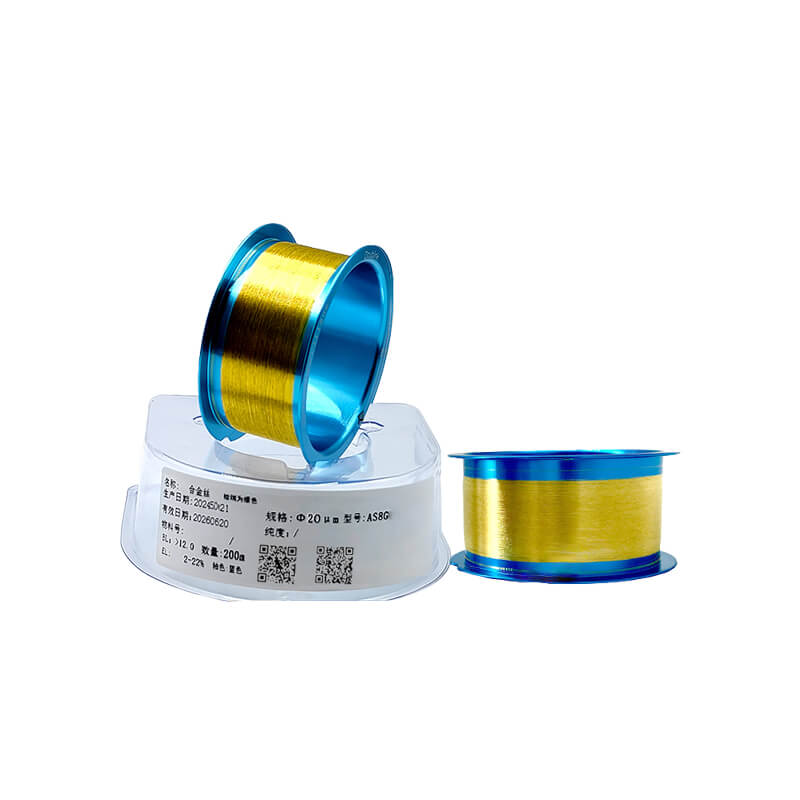
3. The characteristic game of bonding
materials: from gold wire to silver alloy wire
The selection of lead materials is like
choosing a "special cable" for a miniature circuit, requiring a
delicate balance between conductivity, reliability, and cost, and the
differences in the properties of different materials determine their applicability
in different application scenarios.
(1) Comparison of the performance of
mainstream bonding materials
Gold Wire: The "gold standard"
for microelectronic interconnects. The 99.99% pure gold wire has an ultra-low
resistivity of 1.587×10⁻⁸Ω m, stable chemical
inertness below 200°C, and a bonding yield of more than 99.5%. By adding 0.05%
palladium, the sulfur resistance of gold wire can be increased by 3 times, and
its life in humid environments can be extended to more than 10 years. But its
biggest drawback is the cost – the price of 400 yuan per gram makes the gold
wire account for more than 60% of the cost of the entire bonding process. In
LED packages, the high reflectivity of gold wire (95%) contributes to the
efficiency of light output, but in power devices, its current-carrying capacity
(<5A/mm²) is relatively limited.
Aluminum wire: an economical choice for
power devices. The 99.5% pure aluminum wire with 1% silicon enhanced strength
costs only 1/20 of the gold wire and forms a homogeneous connection with the
chip's aluminum pad, avoiding the problem of intermetallic compounds. It can
reach a diameter of 500μm and can transmit large currents of more than 10A,
making it suitable for power modules such as IGBTs. However, aluminum wire has
poor oxidation resistance (5nm oxide layer in 1 hour in air), bonding yield is
typically 95-97%, and low fatigue strength (only 60% of gold wire), making it
unreliable in vibrating environments. Tests of a new energy vehicle inverter
showed that the failure probability of aluminum wire bonding after 1,000 power
cycles was 3 times that of gold wire.
Copper wire: an alternative to
cost-sensitive products. The resistivity of copper wire (1.67×10⁻⁸Ω m) is slightly lower than that of gold wire, the cost is only 1/5 of
it, and the mechanical strength (tensile strength of 350MPa) is twice that of
gold wire. However, the oxidation problem of copper wire (forming CuO and Cu₂O)
requires bonding under nitrogen protection (oxygen concentration <10ppm),
increasing equipment costs. Its high hardness (HV 120) can
easily damage the aluminum pad during the bonding process, leading to an
increased risk of chip leakage. In low-to-mid-range consumer electronics,
copper wire bonding can reduce costs by 40%, but in high-frequency scenarios
(>5GHz), the skin effect results in losses that are 15% higher than gold
wire.
Silver alloy wire: a cost-effective choice
for the mid-to-high-end market. The resistivity (1.62×10⁻⁸Ω・m) of silver alloy wire (such as AG88/PD12) is slightly higher than silver and lower than gold, and the price is
1/3-1/2 of that of gold wire. In LED applications, its 90% visible reflectivity
can increase luminous flux by 10%; In power devices, current resistance
(10A/mm²) is better than gold and copper. Silver alloy wire can be stored for
6-12 months (without sealing) and is easier to manage than copper wire (vacuum
packed for 3 months). However, silver's migration (dendrite at 85% humidity and
5V bias for 1000 hours) limits its use in high-humidity environments and
requires use with anti-migration coatings.
(2) Collaborative selection of lead frame
materials
The material properties of the lead frame
act as the "base" for bonding, and their material properties directly
affect heat dissipation and mechanical support. Copper alloys (such as C19400)
occupy more than 80% of the market share, with a high thermal conductivity of
401W/m・K and a tensile strength of 380MPa, suitable for
most general-purpose scenarios; The thermal expansion coefficient (6.5ppm/°C)
of nickel-iron alloy (42% Ni) is close to that of silicon chips, which can
reduce thermal stress and is widely used in aerospace electronics. Composite
metals (such as Cu/Ni/Au) are optimized by plating to maintain both the thermal
conductivity of copper and the oxidation resistance of gold, making them
excellent in high-frequency devices. Tests of an RF front-end module showed
that the temperature of the bond point was reduced by 10°C compared to the
copper alloy frame and the signal transmission efficiency was increased by 5%
after using a composite metal lead frame.
4. Micro design of bonding tools: technical
details of capillary tubes
In the wire bonding process, the capillary
tube (microtubule) is the final link in the contact between the metal wire and
the chip, and its tip design directly affects the energy transfer and bonding
quality, which can be called the "precision tip" of the bonding
machine. The material and structural properties of capillaries determine their
service life. Capillary tubes made of zirconia ceramic (ZrO₂) or tungsten carbide (WC) can withstand more than one million
bonding operations with hardness of HV 1500 or more. The inner diameter needs
to be exactly matched to the lead diameter (typically 5-10% larger than the
wire diameter), for example, 18μm gold wire corresponds to 20μm inner diameter,
and a deviation of more than 1μm will result in inaccurate lead positioning.
The radius of curvature (R) design of the tip is particularly critical – the
R-value is 15-50μm for capillaries for ball welding and 5-15μm for wedge
welding, which directly affects the shape consistency of the solder joint. The
performance game of GM and P surfaces has its own focus. The tip surface
roughness of the GM capillary tube is Ra=0.5-1μm, which can transmit vibration
energy more efficiently (energy loss <5%) during ultrasonic bonding,
increasing the bonding strength by 10%, but easily adsorbing pollutants in the
air (mainly organic volatiles), and shortening the service life to 500,000
times. The P-type surface is polished to Ra<0.1 μm, which reduces
contaminant adhesion by 70% and extends the service life to 1 million cycles, but
results in a 15% increase in ultrasonic energy loss and requires a 10% increase
in ultrasonic power compensation. In high-precision scenarios (such as sensor
packaging), the cleaning advantages of P-type capillaries are more prominent.
In power bonding, the energy transfer efficiency of GM type is more favored.
Fine control of tip angle accommodates different pads. The front end angle (θ)
of the capillary is usually designed to be 30°-60°, and the small angle (30°)
is suitable for fine-pitch (<50μm) bonding, which can reduce interference
with adjacent leads; The large angle (60°) is suitable for thick wire diameter
(>50μm) bonding, which provides a larger pressure distribution area.
Optimizing the angle parameters through finite element analysis can increase the
uniformity of the stress distribution at the bond point by 30%, and tests of a
MEMS accelerometer show that the probability of failure of the bond point in
vibration testing is reduced from 8% to 1% when the capillary with the
optimized angle is used.
5. Technical characteristics of bonding
methods: synergy between heat, force and ultrasound
The three main methods of wire bonding –
hot compression welding, ultrasonic welding and thermoacoustic welding – meet
diverse application needs through different energy combination strategies, with
the core difference being the energy input method and intensity.
(1) Thermocompression Bonding: a
traditional solution of high temperature and high pressure
The process principle of hot press welding
is like "micro forging", at a high temperature of 200-400°C, a
pressure of 0.5-1.5N is applied through the splitting knife, so that the lead
and the surface of the pad are plastically deformed and reach the atomic
spacing (<0.5nm), forming a metal bond connection. This method has bond
strengths of up to 0.05-0.09N (25μm wire diameter) and is suitable for
low-frequency scenarios (<100MHz) where strength is not required.
The dual effects of high temperatures need
to be carefully balanced. Although the chip temperature of 330-350°C can
promote atomic diffusion, it will lead to the formation of excessive
intermetallic compounds (AuAl₂, Au₂Al)
at the gold-aluminum interface etc.), these brittle phases are prone to
cracking during temperature cycling. A reliability test showed that after 1000
hours of aging at 150°C, the contact resistance increased from the initial 5mΩ
to 50mΩ, and the bond strength decreased by 40%. Therefore, hot press welding
is currently only used in some low-end consumer electronics (such as toy
chips), accounting for less than 5%.
(2) Ultrasonic Bonding: A low-temperature
scheme for room temperature connection
Ultrasonic welding frees itself from the
dependence on high temperatures and uses ultrasonic vibration at room
temperature (25±5°C) at room temperature (255°C) through ultrasonic vibration
at 20-60kHz, combined with a pressure of <0.5N, causing high-frequency
friction (amplitude 1-5μm) between the lead and the pad surface. This vibration
energy effectively breaks up the oxide layer (5-10nm thick), exposing the fresh
metal surface, and bonding under the action of local plastic deformation with a
strength of up to 0.07N, which is slightly higher than hot press welding. The
significant embodiment of the advantages of low temperature expands the
application boundaries. The room-temperature process avoids thermal damage to
the chip from high temperatures, making it particularly suitable for CMOS
devices (high temperatures can cause threshold voltage drift) and organic
substrates (Tg<200°C). In flexible electronic packaging, ultrasonic
soldering keeps the warpage of the PI substrate within 50μm, which is much
lower than the 150μm of thermocompression soldering. However, its shortcomings
are long bonding time (50-200ms), production efficiency is only 60% of that of
hot press welding, and higher requirements for pad surface flatness (roughness
needs to be < 0.1μm).
(3) Thermosonic Bonding: the mainstream
scheme for collaborative optimization
Thermal acoustic welding combines the
advantages of heat and ultrasound, and in a medium temperature environment of
125-300°C, through the synergistic effect of 0.5N pressure and ultrasound, the
strength can reach 0.09-0.1N, which is the most balanced choice among the three
methods, accounting for more than 90% of the market share. The multiple
benefits of temperature reduction significantly improve reliability. The chip
temperature was reduced from 350°C for hot press soldering to 200°C, which
reduced the growth rate of gold-aluminum compounds by 60%, and the contact
resistance growth after 1000 hours of aging at 150°C was controlled within 10%.
The medium-temperature environment also reduces the thermal distortion of the
chip (from 5μm to 1μm), enabling fine-pitch (<50μm) bonding. Tests of an
automotive-grade MCU showed that after thermoacoustic soldering, the
probability of bond failure was only 0.1% over 3,000 temperature cycles from
-40°C to 125°C, which is much lower than the 1% of hot press welding.
 Безопасность сети 32058300438