


Замечания:1 创始人: Site Editor Publish Time: 2026-04-14 Origin: Веб - сайт


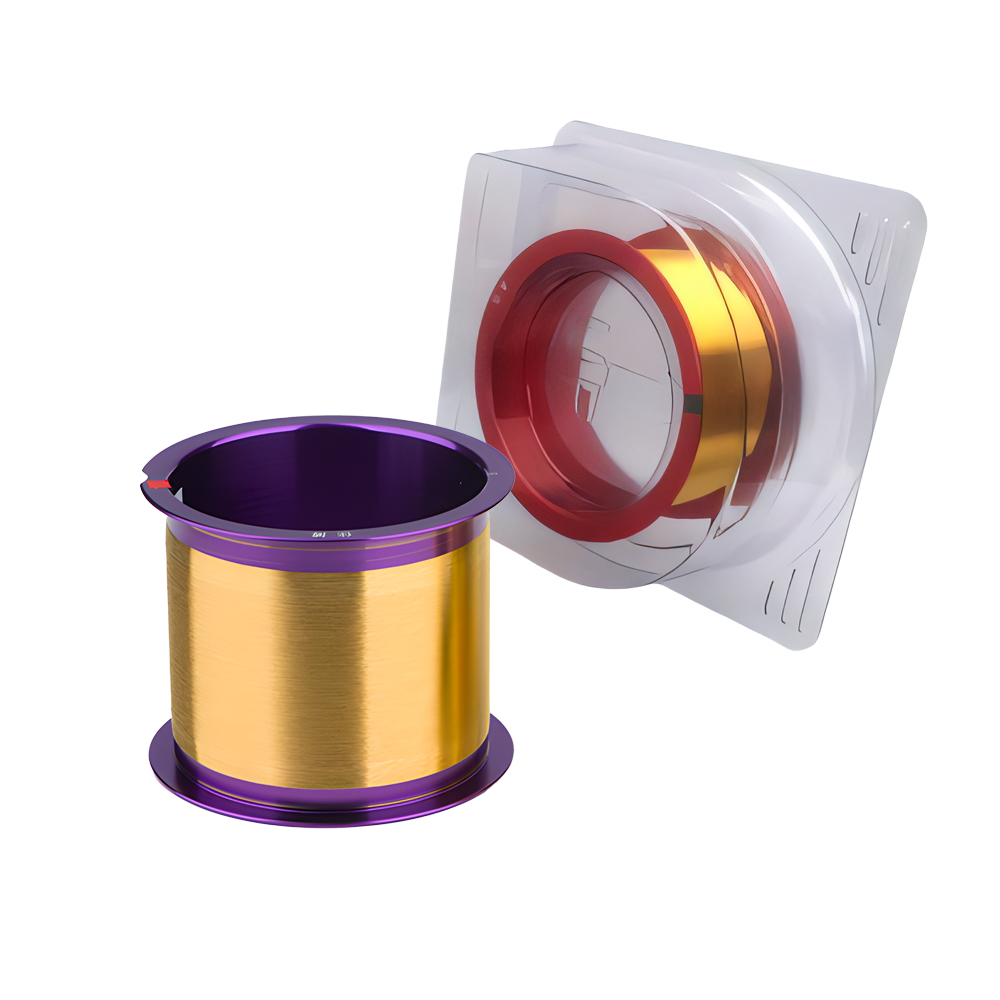
Insulating Coated Bonded Alloy Wires:
Breakthrough interconnect solutions for high-density semiconductor packaging
When the number of pins on a semiconductor
chip exceeds 1,000 and the pad spacing shrinks to less than 30μm, traditional
bare wire bonding faces a severe "short circuit dilemma" – adjacent
leads are spaced only as wide as two hair strands side by side, and any tiny
vibration or mold flow can lead to fatal electrical contact. The insulating
coated bond alloy wire developed by Taifengrui Electronics is like a nanoscale
"insulation armor" for metal leads, and an insulating layer with a thickness
of only 1-3μm is built on a gold wire with a diameter of 18-30μm, which not
only maintains the compatibility of the bonding process, but also completely
solves the short-circuit problem in high-density packaging. This innovative
approach allows leads to cross-overlap without electrical interference,
increasing package density by more than 30%, providing key support for advanced
packaging technologies such as multi-chip stacking and system-in-package (SiP).
1. Technological bottlenecks of
high-density packaging and innovative breakthroughs in insulation bonding lines
The semiconductor packaging industry is
experiencing a "density revolution" – from 100 bond points per square
millimeter in 2010 to 500 by 2024 and expected to reach 2,000 by 2030. This
exponential growth presents obstacles that traditional bare wire bonding cannot
overcome, and the advent of insulating coated bonded alloy wires offers a
systematic solution to break through these bottlenecks.
The triple challenge of traditional bare
wire bonding is becoming increasingly prominent. In PBGA packaging, the
"sweeping effect" (lead shift due to encapsulation material flow)
during the packaging process can cause short-circuit failure rates to soar to
more than 5% when pad spacing is less than 50 μm, and production data from one
memory vendor shows yield losses of up to 20% due to this failure mode. Bare
wire bonding requires a lead spacing of at least 1.5 times the wire diameter
(25μm wire diameter corresponds to 37.5μm pitch), which severely limits I/O
density gains, which prevent package sizes from exceeding 10mm×10mm in
multi-pin scenarios such as 5G RF modules. After 1000 cycles from -40°C to
125°C, the contact resistance caused by bare wire wear fluctuated by 30%, far
exceeding the industry standard of 5%.
The disruptive advantages of insulating
coated bonding wires are reflected in four dimensions. Its core advantage is
short-circuit protection - the insulation breakdown voltage is > 100V, which
can withstand 1000 hours of breakdown at 5V operating voltage, reducing the
short circuit rate of cross-leads from 0.5% to less than 0.01%. In terms of
density gains, by allowing leads to cross and overlap, increasing the number of
bond points in the same area by 30-50%, a SiP vendor adopted this technology to
reduce the package size of 4 chips from 15mm×15mm to 10mm×10mm. The increase in
design flexibility is also significant, allowing engineers to optimize signal
paths using "stereo cabling" to reduce inter-chip latency by 20%,
which increases data transfer rates from 25Gbps to 56Gbps in high-speed SerDes
interfaces. Process compatibility ensures low-cost import, and can be used
directly with mainstream bonding machines such as ASM Eagle and K&S
Iconx-Plus without the need for line modifications.
The inevitable choice of technological
evolution drives industry change. The International Semiconductor Technology
Roadmap (ITRS) has long pointed out that traditional bonding technologies will
not be able to meet the needs of high-density packaging after 2025. Insulating
coating bonding wires are a perfect fit for the industry's demand for low-cost
upgrades through the path of material innovation rather than equipment
innovation. Taifengrui Electronics' practice shows that the packaging cost of
using this technology increases by only 10-15%, which is far less than the 500%
cost increase of the flip soldering solution, and this cost-effective advantage
has made it rapidly popular in the mid-to-high-end market.
2. Material design and performance
indicators of insulating coated bond alloy wire
The choice of material for insulating
coatings is a delicate balancing act – it must meet electrical insulation
requirements while withstanding the high temperatures, pressures, and
ultrasonic vibrations of the bonding process without affecting the formation of
intermetallic compounds (IMCs). Through hundreds of formula iterations, Taifeng
Rui Electronics finally determined a coating system with both toughness and
stability.
(1) Strict control of the four core
material selection standards
Comprehensive satisfaction of application
performance is the primary principle of material selection. The insulating
coating must exhibit unique "self-peeling" properties during the EFO
(EDM) process—at 2000-3000V high pressure, when a gold ball forms at the top of
the wire, the coating cracks into a "watermelon stripe" shape in the
middle and upper part of the ball (Figure 5), while the bottom of the ball
remains uncoated, ensuring good metallurgical bonding with the pad. This characteristic
is achieved by precisely controlling the coating's coefficient of thermal
expansion (the difference from gold <5ppm/°C), resulting in a consistent
rupture position of ±1μm. In terms of bond strength, the adhesion of the
coating to the bare gold wire needs to be > 50MPa to ensure that there is no
peeling under the action of ultrasonic vibration (20-60kHz) and pressure
(0.5-1.5N), and one test showed that after 1 million bonds, the peeling rate of
the coating was still controlled below 0.1%.
Precise regulation of physical and chemical
properties ensures long-term reliability. The ion content of coating materials
(Na⁺, K⁺, Cl⁻, etc.) must be < 20ppm to avoid degradation of electrical
properties caused by migration in high temperature and high humidity
environments. Its volume resistivity > 10¹⁴Ω cm, dielectric constant < 3.0, and the tangent angle of
dielectric loss at 10 GHz < 0.002, ensuring that the transmission loss of
high-frequency signals does not increase by more than 0.1dB/cm. The water
absorption rate of the coating < 0.1%/24h, and the insulation performance
decays no more than 10% after 1000 hours of 85°C/85% RH environment.
Deep optimization of process compatibility
lowers the barrier to entry. Coating materials need to be compatible with
existing production equipment, including capillaries for wire bonders (5-10%
larger than wire diameter), plasma cleaning equipment (O₂ plasma treatment for
30 seconds without damage), and molding molds (good release agent
compatibility). In terms of bonding parameters, only ±10% fine-tuning of
traditional bare wire parameters is required, and there is no need to redevelop
the process, and a foundry's validation shows that the changeover time can be
controlled within 2 hours.
Strict adherence to environmental friendliness is in line with the trend of green manufacturing. During the EFO burning process, the VOC (volatile organic compounds) content of the coating needs to be < 10ppm, and the measured value of Taifengrui products through the EPA TO-17 test is 3.2ppm, which is only 1/3 of the standard limit. The coating material does not contain RoHS restricted substances such as lead and mercury, and can be completely degraded during disposal, meeting the requirements of the EU WEEE directive.
(2) The performance boundary and
application scope of insulating coatings
The current voltage application range of
insulating coated bonded alloy wires covers most mainstream scenarios, with a
maximum operating voltage of 5V, meeting the needs of medium and high digital
integrated circuits, consumer electronics, and automotive electronics. For
higher voltage power devices, such as 12V automotive MCUs, Typhoon is
developing a second-generation product that increases the voltage tolerance to
20V by increasing the coating thickness (3-5μm) and using ceramic fillers.
The temperature tolerance is adapted to the
process requirements of the whole process. In the process of lead-free reflow
soldering (260°C, 10-15s), the coating does not melt or decompose, and the
weight loss < 0.1%; In the curing process of chip-level packaging (CSP)
(150°C, 4 hours), its mechanical properties retain > 90%. Stable operation
in the range of -55°C to 150°C in long-term use environments, meeting AEC-Q100
Grade 2 automotive requirements, expandable to -65°C to 200°C with special treatment
versions, suitable for aerospace applications.
Chemical resistance ensures stability in
the manufacturing process. The coating is resistant to solvents commonly used
in the encapsulation process: 30 minutes of ultrasonic cleaning in isopropyl
alcohol without dissolution, 24 hours of immersion in acetone with a weight
loss of <0.5%, and no change in insulation properties after 1 hour of
boiling in deionized water. This chemical stability ensures reliability
throughout the entire packaging process, from bonding to final testing.
3. Bonding process and quality control of
insulating coating bonded alloy wires
The presence of an insulating coating does
not change the basic principle of bonding, but places higher demands on the
fineness of the process parameters. By optimizing the synergy of ultrasonic
energy, pressure, and time, bond strength and intermetallic compound formation
quality comparable to bare wire can be achieved.
(1) The formation mechanism and quality
characteristics of the first solder joint (FAB).
The formation principle of watermelon
stripe structure is the key to the process. When the EFO electrode releases a
high voltage of 1000-3000V, the top of the gold wire instantly melts to form a
gold ball (2.5-3 times the diameter of the wire), and the coating in the middle
of the gold ball breaks due to high temperature, while the bottom remains
intact due to rapid heat dissipation due to contact with the capillary, forming
a unique "watermelon stripe" distribution (Figure 5). This construction
ensures direct contact between the bottom of the ball and the pad (without
coating barriers) while the upper coating remains insulated. Through 100,000
tests, Tai Feng Rui optimized the EFO parameters (voltage, current, time) to
achieve more than 95% consistent streak position and ensure stable bond
quality.
The formation quality of intermetallic
compounds (IMCs) is comparable to that of bare wires. Under thermoacoustic
bonding (150-250°C, 20-60kHz ultrasound), the bottom of the gold ball and the
aluminum pad (containing 1% Si, 0.5% Cu) quickly form an Au-Al IMC, and the
coverage at 0 moment can reach more than 75% (Figure 7), which is better than
the 60% requirement of the JEDEC standard. After 150 hours of aging at 100°C,
the IMC thickness increased from an initial 0.5μm to 1.2μm, with a growth rate
consistent with the bare gold line, indicating that the coating did not affect
the atomic diffusion process. A reliability test showed that the IMC structure
remained intact after 1000 temperature cycles without cracking.
(2) Bonding optimization and strength
guarantee of the second solder joint
Precise control of coating rupture
mechanism for reliable connections. The second solder joint (lead frame side)
uses a wedge welding process that causes the coating to crack under a synergy
of pressure (1-2N) and vibration by increasing the ultrasonic energy by 10-15%
(compared to the bare wire) and extending the bond time by 5-10ms, exposing the
internal gold wire to form a metallurgical bond with the lead frame. This
parameter adjustment results in a tensile strength of more than 90% of the bare
wire for the second solder joint: 12-15g for 20μm, 15-18g for 23μm, and 18-22g
for 25μm (Figure 10), all meeting industry specifications.
Long-term maintenance of splitting tool
cleanliness reduces maintenance costs. With a specially formulated coating
material, the residue accumulation at the splitting tip < 0.1 mg after 1
million bonds (Figures 6a, 6b), well below the 0.5 mg limit for bare wire
bonding. This low carryover has extended the replacement cycle of the splitting
tool from 500,000 to 1 million, and an packaging factory has calculated that
this alone can save 300,000 yuan in tool costs per year. The wear rate of the
splitting tool (radial wear <1 μm/100,000 times) is comparable to that of
bare wire, proving that the hardness of the coating material (HV 50-80) does
not exacerbate tool loss.
(3) Verification of environmental
friendliness of the bonding process
Strict control of VOC emissions meets
health standards. Tested by the EPA TO-17 method, VOC concentrations near the
bond head and 1.5ppm in the operator position are well below the safe limit of
50ppm. The main volatile is a trace amount of coating curing agent
(<0.5ppm), and there are no harmful components such as benzene to ensure a
safe working environment. In a closed workshop, the concentration can be
controlled within a safe range with a conventional ventilation system, without
the need for additional environmental protection equipment.
4. Reliability verification and application
scenarios of insulating coated bonded alloy wires
The reliability of insulating coated bonded
alloy wires has been thoroughly tested and verified, and its performance not
only meets or even surpasses the level of traditional bare wires, providing a
solid guarantee for high-density packaging applications.
(1) Excellent performance in the
full-dimensional reliability test
Humidity sensitivity and return tolerance
meet the requirements of vehicle specifications. Tested according to JEDEC
JESD-22-A113-B (humidity class 3), after 192 hours of 30°C/60% RH environment,
the insulation resistance of 528 cross-bonded wires (30μm wire diameter)
remained >10¹⁰Ω after 3 245°C reflow soldering (Table 2). This performance ensures the product's reliability during
storage and welding in humid environments, making it particularly suitable for
automotive electronics and outdoor equipment applications.
Temperature cycling stability exhibits
excellent mechanical toughness. In a temperature cycle of -55°C to 125°C
(JESD-22-A104-A condition B), bond strength retention > 90% and contact
resistance change < 5% after 1000 cycles. High-power microscope observation
showed that the coating was intact and there were no cracks, and the connection
interface between the lead and the pad was not peeled off. This stability is
due to the coating's low elastic modulus (1-3GPa), which effectively absorbs
stresses caused by thermal expansion and contraction, and its fatigue life is
1.5 times higher than that of bare wire.
High temperature storage and bias stress
performance ensure long-term use. After 150 hours of high-temperature storage
at 22°C (JESD-1000-A1000-A), the IMC layer thickness was controlled within 2 μm
(no overgrowth) and the bond strength decreased by <10%. The results of the
bias high acceleration stress test (HAST, 130°C/85% RH/4.0V/100 hours) showed
no significant decrease in insulation resistance and no electrochemical
migration, proving its long-term reliability in harsh environments.
(2) Value release of diversified
application scenarios
Spatial breakthroughs in multi-layer chip
stacks (Die Stacks). In a 3D stacked package, insulating coated bond wires
allow leads from different layers of chips to cross through, increasing the
stack height from 4 to 8 layers while maintaining the same package size. Tests
of a memory chip showed a 100% increase in storage density per unit volume and
a 30% increase in read and write speeds (Figures 2a, 2b).
Chip-to-Chip performance jumps. Direct
interconnect between chips through insulated leads reduces bypass paths through
the substrate, reducing signal latency from 1ns to 0.3ns, an optimization that
increases data throughput by 40% in high-speed interfaces such as PCIe 5.0. One
FPGA vendor's practice shows that direct chip-to-chip bonding improves
system-level performance by 15% and reduces power consumption by 20% (Figure
1).
Revolutionizing the integration of
system-in-package (SiP). In a 5mm×5mm SiP, more than 500 leads can be
interconnected, integrating multiple chips such as RF, baseband, and power
management, compared to a maximum of 300 in traditional bare wire solutions.
The SiP module of a smartwatch uses this technology to improve functional
integration by 50% and extend battery life by 24 hours.
The safety guarantee of automotive-grade
high-reliability packaging. In safety-critical components such as automotive
radars and autonomous driving ECUs, the vibration and short circuit resistance
of insulating coated bonded wires has allowed them to pass all tests to ISO
16750, including random vibration from 10-2000Hz (acceleration 20G) and thermal
shock from -40°C to 125°C (1000 times). Testing by a Tier 1 vendor showed that
radar modules with this technology had a failure rate of less than 1ppm from
10ppm.
5. Conclusion: Insulated bonding wires lead
a new era of packaging technology
Insulating coated bonded alloy wires solve
the short-circuit problem of high-density packaging through material
innovation, and their technical value is not only reflected in performance
improvement, but also in providing a new degree of freedom for packaging
design. Taifengrui Electronics' practice shows that this technology can
increase packaging density by 30-50% and increase yield by more than 20%, while
maintaining compatibility with existing production lines and achieving low-cost
upgrades.
From the perspective of technical
characteristics, the core advantages of insulating coated bonded alloy wire
include: there is no risk of short circuit in the cross-lead, so that the
wiring density breaks through the physical limit; Eliminate the need for tight
control of lead spacing, simplifying the design process and shortening
development cycles; The coating is perfectly compatible with the bonding
process, ensuring that strength and reliability are not compromised; Optimize
signal paths through stereoscopic wiring to improve electrical performance.
These advantages make it an ideal solution to the challenges of the ITRS
roadmap.
Future developments will focus on higher
performance (voltage resistance to more than 20V), thinner diameters (15μm and
below), and lower cost (through coating material innovation). With the
proliferation of chiplet technology and heterogeneous integration, insulating
coating bond wires are expected to become the mainstream interconnect solution,
driving semiconductor packaging towards higher density, higher performance, and
smaller size.
For enterprises pursuing high-density,
high-reliability packaging, insulation-coated bonded alloy wires are not only a
technical choice but also a strategic reserve to meet future challenges. It not
only improves manufacturing yield, but also makes a qualitative leap in product
competitiveness.
 Безопасность сети 32058300438