


Замечания:1 创始人: Site Editor Publish Time: 2026-04-15 Origin: Веб - сайт


Laser Sintered Nano Silver Paste: A
Disruptive Technological Revolution in Printed Electronics Manufacturing
When the conversion efficiency of
photovoltaic cells hits 26%, when the computing power density of AI chips
exceeds 60 TOPS/mm³, and when flexible sensors need to work stably with a
bending radius of < 2mm - traditional electronics manufacturing processes
are encountering unprecedented precision and material limitations. The
emergence of laser sintering nano-silver paste technology is like a
"precision scalpel" for the microscopic world, and through the
synergy of high-energy lasers and nanomaterials, a conductive network with a
resistivity of only 4.7μΩ·cm is constructed in a low-temperature environment
below 200°C, breaking through the limitations of high-temperature processes on
substrates, and achieving sub-micron pattern accuracy. This innovation, which
integrates materials science and photonics technology, is reshaping the
manufacturing paradigm in photovoltaics, advanced packaging, flexible
electronics and other fields, leading the electronics industry into a new era
of "micro-nanoscale precision interconnection".
1. Technical principle: the synergistic
magic of light and nanomaterials
The core charm of laser sintered silver
nano paste lies in its "selective and precise manipulation" ability -
just by adjusting the laser parameters, the nano silver particles can be
transformed from loose stacking to dense connections without damaging the
substrate. Behind this microscopic scale precision regulation is the complex
physicochemical process of light absorption, heat conduction and material
diffusion.
(1) The atomic mystery of low-temperature
sintering
When the diameter of the silver particles
is reduced to 50-100nm, its surface energy increases dramatically (the specific
surface area can reach 10-30m²/g), reducing the sintering temperature from more
than 300°C to less than 200°C of traditional micron silver powder. The absorption rate of silver particles in the
AS9120 nano silver paste is up to 90%
under CO₂ laser irradiation at a wavelength of 10.6μm,
while the absorption rate of the TCO layer (transparent conductive oxide) and
a-Si:H passivation layer of the SHJ battery is less than 5%, and this selective
absorption allows the energy to be precisely focused on the silver paste
region, forming a localized high temperature (200-250°C). At this time, the
atomic diffusion coefficient on the surface of the silver nanoparticles is
10⁴-10⁶ times that of the bulk phase diffusion, and a continuous conductive
network is formed through necking without damaging the substrate material, and
the density after sintering can reach more than 95%.
Molecular dynamics simulations reveal the
details of this process: the laser energy causes the surface temperature of
silver particles to rise to 0.6-0.8 times the melting point within 100ns, and
the surface atoms gain enough energy to cross the diffusion barrier to form a
"sintered neck" at the point of contact of the particles; As the
laser continues to act (usually 1-5 seconds), the "sintered neck"
grows, eventually allowing adjacent particles to fuse into one, reducing
porosity from 30% to 2-5%. This low-temperature sintering mechanism perfectly
solves the "thermal sensitivity problem" of SHJ batteries - its
a-Si:H passivation layer crystallizes above 200°C, resulting in a decrease of
more than 10% in cell efficiency, while laser sintering technology can control
the substrate temperature below 150°C, and PL imaging (photoluminescence) shows
no damage to the passivation layer (no black lines generated).
(2) Dual control of high-precision
patterning
Laser sintered nano-silver paste achieves
high-precision patterns with a line width < 30 μm, relying on a dual
synergistic system of "material distribution-energy control". The
micro-dispensing pump (accuracy ±1μL/min) acts like a precision syringe to
extrude AS9120 nano silver paste (viscosity 11,000-67,000cP) at a diameter of
50-100μm to form a continuous wet film line; The synchronous laser head
(positioning accuracy ±1μm) follows closely behind, scanning and sintering the
wet film according to the preset path, and the laser power (11.8W is the
optimal value) and the scanning speed (1-5mm/s) are accurately matched to
ensure that the silver paste is sintered and solidified while the solvent is
volatilized.
This "print and burn" process
results in a perfect trapezoidal structure in the cross-section of the line
(top width and bottom narrow deviation <5%), and the line height can reach
18.6μm, which is much higher than the 5-10μm of traditional screen printing.
Tests by a flexible electronics company showed that silver wires printed with a
50μm inner diameter needle had a line width deviation of only ±2μm and an edge
roughness of <3μm on the PET substrate, which increased the wiring density of
flexible circuits by 3 times. What's more, the non-contact processing of the
laser avoids the edge collapse problem caused by traditional mold imprinting,
so that the square resistance uniformity of thin lines is controlled within
±3%.
(3) Structural intelligence of interface
optimization
The silver layer formed after sintering
presents a unique "porous bridge-like network" structure, and this
seemingly paradoxical "dense-porous" balance is the key to its
excellent performance. High-resolution SEM images show that the silver layer is
joined by silver particles with a diameter of 100-300nm, forming a continuous
conductive path (ensuring low resistance) while retaining 2-5% of nanoscale
pores (relieving thermal stress). This structure reduces the coefficient of
thermal expansion (CTE) of the silver layer from 19×10⁻⁶/°C to 15×10⁻⁶/°C for pure silver, which
is the same as that of silicon substrates (CTE 2.6×10⁻⁶/°C).
) was significantly improved. In thermal cycling tests from -55°C to 175°C,
this structure absorbs interfacial stresses through elastic deformation of the
pores, resulting in a shear strength retention rate > 90% (initial strength
> 45MPa), which is much higher than that of conventional solder at 60%.
Reliability tests of an automotive-grade power device showed that the contact
resistance change rate of the device using AS9376 sintered silver paste was
only 4% after 1000 thermal cycles, compared to 25% in the tin-lead solder
control group.
2. Core advantages: triple breakthrough in
performance, process and environmental protection
The competitiveness of laser sintered nanosilver paste technology is reflected in its comprehensive performance that
surpasses traditional processes - not only the conductivity and reliability
have been improved by an order of magnitude, but also a new path in process
compatibility and environmental protection, forming a technical barrier that is
difficult to replace.
(1) The overall leap in performance
indicators
The breakthrough in conductivity is the
most significant. AS9120 nano-sintered silver paste has a body resistivity as
low as 4.7μΩ・cm, which is only 1/5-1/20 of that of conventional screen-printed silver contacts (20-100μΩ・cm), and is close to the theoretical value of pure silver (1.58μΩ・).cm)。 This
boost stems from the tight attachment and high density of the silver
nanoparticles, resulting in electron mobility up to 80% pure silver levels. In
photovoltaic cell applications, this low resistance characteristic reduces
series resistance by 15-20%, directly contributing to a 0.3-0.5 percentage
point increase in conversion efficiency. After a TOPCon battery company adopted
LECO (Laser-Enhanced Contact Optimization) technology, the contact resistivity
was reduced to 1-3mΩ·cm², and the battery
efficiency exceeded 25.5%. The advantages of thermal management capabilities
are particularly prominent in high-power devices. AS9376 sintered silver paste
has a thermal conductivity of up to 260W/m・K, which is more than four times
that of conventional tin, silver, and copper
solder (about 60W/m・K), and close to pure
silver (429W/m・).K). This efficient
thermal capability reduces the junction temperature of SiC/GaN power devices by
15-20°C, resulting in a 3-5-fold increase in device lifetime according to the
Arrhenius model. In the power amplifier of 5G base stations, the thermal resistance
of the device is reduced from 0.8°C/W to 0.1°C/W after the use of this
technology, significantly improving operational stability.
Mechanical reliability is verified by
rigorous testing. In the extreme temperature cycle of -55°C to 175°C (more than
1000 times), the interface between the silver layer and the substrate is
crack-free, and the shear strength is maintained at > 40MPa; In a 1000-hour
humid-heat test at 85°C/85% RH, the resistance change rate <5%, which is
well above the 15% limit of the IPC standard. This stability is due to the
microstructural toughness of the nano-silver layer, which absorbs environmental
stresses through plastic deformation between silver particles, avoiding the
failure of traditional solder due to brittle fracture.
(2) Complete innovation of the process
paradigm
Non-contact machining brings unprecedented
flexibility. The nano silver ink AS9000 eliminates the needle clogging problem
of traditional dispensing processes (clogging rate <0.1% per million prints)
by using pressure drive instead of needle contact to dispense material,
resulting in an increase in SHJ battery metallization yield from 95% to 99.5%.
Production data from a photovoltaic company shows that this contactless process
reduces equipment downtime and maintenance time by 60% and increases annual
production capacity by 15%.
Low temperature compatibility expands the
range of substrate applications. The sintering temperature below 200°C enables
the application of flexible substrates such as PET (temperature resistance
150°C) and PI (temperature resistance 250°C) to realize 3D stacked packaging
and flexible circuit fabrication. In wearable devices, AS9120BL-printed silver
circuits can maintain stable conductivity at a bend radius of <2mm, with a
resistance change rate of < 10% after 100,000 bending tests, compared to traditional
copper wires breaking after 50,000 times.
Digital manufacturing has significant
characteristics. The matching of laser parameters (power, speed, spot size) to
the characteristics of the silver paste can be precisely controlled by software
to achieve a seamless connection from design to manufacturing, reducing product
changeover time from 2 hours to 10 minutes in traditional processes. After a
flexible sensor manufacturer adopted this technology, the new product
development cycle was compressed from 3 months to 2 weeks, quickly responding
to changes in market demand.
(3) The way to balance cost and
environmental protection
Although the material cost of nano silver
paste is 5-10 times higher than traditional solder, its potential for dosage
optimization is enormous. Through high-precision printing and laser selective
sintering, the silver paste utilization rate is increased from 50% to more than
90% of traditional screen printing, and the actual cost per area is only
increased by 1-2 times, which is far less than the value of performance
improvement. According to the calculations of an AI chip packaging factory,
after the use of laser sintering technology, although the cost of silver paste
increases, the chip performance release (20% increase in computing power
density) brought about by the improvement of heat dissipation efficiency
reduces the unit computing power cost by 15%.
The environmental performance is fully
compliant with the latest standards. Nano silver paste does not contain heavy
metals such as lead, cadmium, mercury, and is also halogen-free, and is RoHS
2.0 and REACH certified, meeting the environmental requirements of major
markets such as the European Union and China. During the production process,
there are no volatile organic compounds (VOCs) emissions, wastewater treatment
costs are reduced by 80%, and carbon emissions per unit of product are reduced
by 60% compared to traditional solder plating processes, in line with the
global trend of carbon neutrality.
3. Application scenarios: cross-field
penetration from energy to aerospace
The application landscape of laser sintered
nano silver paste technology is expanding rapidly, and its unique
low-temperature and high-precision characteristics make it shine in fields that
are difficult for traditional processes to set foot in, from photovoltaic power
stations to satellite communications, from wearable devices to quantum
computing, showing amazing cross-border adaptability.
(1) The efficiency revolution of
photovoltaic cell metallization
In the field of SHJ batteries, this
technology solves the problem of "passivation layer damage" that has
long plagued the industry. Conventional high-temperature sintering (>200°C)
results in crystallization of the a-Si:H passivation layer, resulting in a Voc
(open circuit voltage) loss of 50-100mV, while laser sintering controls the
substrate temperature below 150°C, and PL imaging shows that the passivation
layer is intact (no characteristic black lines). According to data from a pilot
line, the contact resistivity of SHJ batteries using AS9120 nano silver paste
is stable at 1-3mΩ·cm², and the conversion efficiency reaches
25.2%, which is 0.8 percentage points higher than that of the traditional
process.
TOPCon batteries are contact-optimized with
LECO technology. The laser selectively burns through the oxide layer, so that
the nano-silver paste forms local ohmic contact with the silicon substrate,
reducing the contact area by 50% and the contact resistance by 30%, effectively
reducing carrier recombination. This precise contact technology increases the
short-circuit current density of TOPCon batteries by 0.5mA/cm², with an
efficiency of more than 25.5%, while preserving the integrity of the
passivation layer on the back.
The flexibility of perovskite cells is
possible. The low temperature characteristics of laser sintering (<150°C)
are perfectly suited to PET-based perovskite cells, and the high conductivity
of silver electrodes (4.7μΩ・cm) reduces series
resistance by 40%, the conversion efficiency of flexible modules reaches 18.5%,
and the efficiency retention rate is > 90% after 1000 bends (radius 5mm),
opening up a new path for the commercialization of perovskite photovoltaics.
(2) Computing power support for advanced
packaging and 3D integration
The cooling bottleneck of AI chips has been
completely broken. In GPU packaging with a process of 7nm and below, AS9376
sintered silver paste is used as a TIM (thermal interface material), and the
thermal resistance is as low as 0.1°C·cm²/W, which reduces the
core temperature of the chip by 15°C and supports a computing power density of
60 TOPS/mm³. Tests in a data center showed that AI servers with this technology
were 20% faster and 50% less likely to fail at the same power consumption.
3D stacked packages enable high-density
interconnects. Through laser sintering technology, silver interconnect wires
with a line width of 30 μm and a spacing of 50 μm can be formed on the PI
interposer, with an alignment accuracy of < 5 μm between layers, achieving
three-dimensional stacking of more than 8 layers. This high-density integration
enables memory chips to increase bandwidth to 800GB/s, up to 4x faster than
traditional 2.5D packaging, and reduce latency to less than 10ns.
The radiation resistance of satellite
communication equipment has been significantly enhanced. In the T/R assembly of
the phased array antenna, the laser-sintered silver connection layer can
withstand a radiation dose of 10⁶rad, which is much higher than the 10⁵rad of
traditional solder, ensuring stable operation of the satellite in space for
more than 15 years. At the same time, the high conductivity of the silver layer
increases antenna gain by 15% and communication distance by 20%, reducing
satellite transmit power requirements.
(3) Experience upgrade of flexible
electronics and sensors
Wearables are extremely thin and light.
AS9120BL Nano silver paste prints circuits on 0.1mm thick PI substrates with a
thickness of only 5-10μm, 70% less weight than copper wire, and a bend radius
as small as 2mm. In smartwatches, this flexible circuitry reduces the thickness
of the strap by 30%, significantly improving wearing comfort, and the signal
transmission delay < 1ms, ensuring real-time health monitoring.
The sensitivity of biosensors pushes the
limits of physics. Using the high surface area (porous structure) of
laser-sintered silver paste, the response time of the glucose sensor is reduced
to <5 seconds, and the lower detection limit is as low as 0.1mM, which is 10
times more sensitive than conventional electrodes. In non-invasive glucose
monitoring devices, this high sensitivity reduces measurement errors from 15%
to less than 8% for medical-grade accuracy. The tactile perception of
electronic skin is close to that of humans. By printing a 50μm pitch silver
electrode array combined with pressure-sensitive materials, the electronic skin
can achieve a pressure detection range of 0.1-100kPa with a resolution of 1kPa
and distinguish between surfaces with different textures (such as sandpaper
thickness grades). This technique has been applied to prosthetics to enable
amputees to perform fine movements such as grasping through tactile feedback.
4. Process optimization and challenges: the
leap from laboratory to mass production
To achieve large-scale application of laser
sintered nano silver paste technology, it is also necessary to overcome mass
production bottlenecks such as large-area uniformity and cost control, and
build a stable and controllable industrial production system through equipment
innovation and material improvement.
(1) Precise regulation of key parameters
Co-optimization of laser parameters is critical. Experimental data show that when the power is fixed at 11.8W, the scanning speed and the resistivity of the silver paste show a "U"-shaped relationship - at 1mm/s, the silver particles are coarsed due to overheating (resistivity 5.2μΩ・cm), at 5mm/s due to insufficient sintering residual pores (resistivity 6.8μΩ・cm), and at 3mm/s, the optimal value of 4.7μΩ・ is reached. cm。 The distance between the spot and the tip of the needle should be controlled at 1.5-2mm, and this "golden spacing" ensures that the silver paste is sintered after the solvent partially volatilizes (viscosity rises to 100,000cP), avoiding sagging and ensuring adequate diffusion. A real-time monitoring system developed by an equipment manufacturer can control the laser power fluctuation to ±0.1W, and the scanning speed deviation is < 0.1mm/s, reducing the standard deviation of resistivity between batches to 0.3μΩ・cm。 The adjustment of the silver paste formula needs to match the process requirements. The high-viscosity AS9120 (11,000-67,000cP) is suitable for thick film printing (line height 15-18μm) and can reduce line resistance to 0.45Ω/cm; The low-viscosity AS9000 (5,000-10,000 cP) is suitable for fine line printing (line width < 30 μm) but only 5-8 μm line height. By adding 0.5% nanocellulose, the thixotropic index of the silver paste can be increased from 1.2 to 1.8, which not only ensures fluidity during printing, but also allows for fast shaping and reduces line collapse.
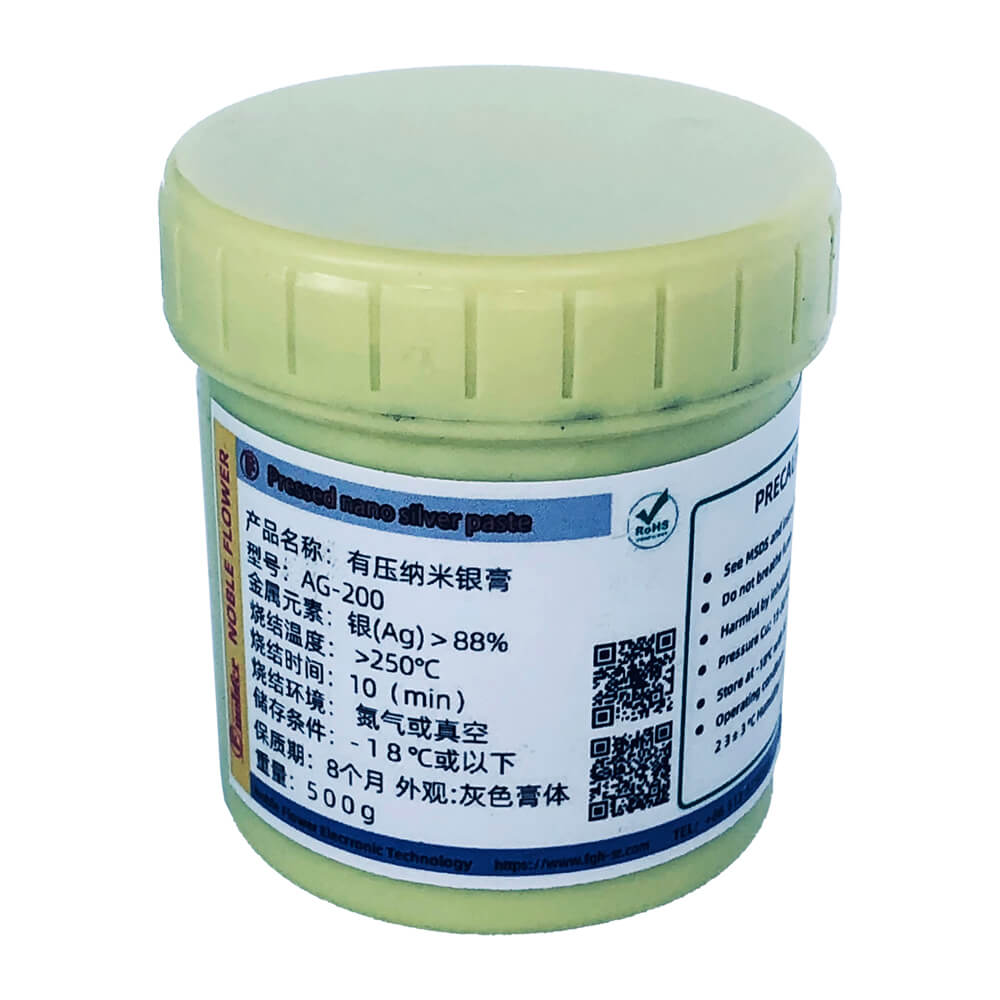
Substrate pretreatment affects the interfacial bonding strength. Plasma treatment of PET substrates (50W power, 30s) reduces the surface contact angle from 70° to less than 30° and increases the peel strength of the silver layer from 3N/cm to 5N/cm. On the surface of the silicon wafer, the roughness Ra needs to be controlled at 0.5-1nm, too coarse will increase the contact resistance, and too fine will reduce the mechanical bite force.
(2) The core challenges faced by mass
production
Large-area uniformity is a major obstacle
to module-level applications. When the sintering area exceeds 100mm×100mm, the
uneven energy distribution of a single laser head can result in a resistivity
deviation of up to 15% from the edge to the center. The solution is to use a
multi-laser head parallel system (e.g., 4-head simultaneous scanning) to
achieve uniform sintering through precision splicing (error < 5μm), so that
the resistivity deviation in the range of 1000mm×1000mm is controlled within
5%. The practice of a photovoltaic module factory shows that this scheme
reduces the standard deviation of the efficiency distribution of large-area
cells from 0.8% to 0.3%.
Cost control relies on material innovation.
The price of nano silver powder is about $1,400/kg, which is 5 times that of
micron silver powder and accounts for 80% of the cost of silver paste.
 Безопасность сети 32058300438