


Замечания:1 创始人: Site Editor Publish Time: 2026-04-18 Origin: Веб - сайт


The localization process of photovoltaic
silver paste: from technology catch-up to market-led breakthrough
In the microstructure of photovoltaic
cells, silver paste is like a sophisticated "conductive neural
network", using 1/5 of the thickness of a hair (50-100μm) to build a
current collection system on the surface of the silicon wafer, and its performance
directly determines the conversion efficiency of sunlight to electricity. This
special slurry, which mixes glass oxides and organic carriers with high-purity
silver powder (99.99% purity) as the core (accounting for 98%), seems
inconspicuous, but accounts for 33% of the non-silicon cost of photovoltaic
cells and 8-9% of the overall cost, and is a key material affecting the cost of
photovoltaic kilowatt-hours. In the past decade, China's photovoltaic silverpaste industry has completed an astonishing leap from 100% dependence on
imports to half of the global supply, which is not only a counterattack of the
material industry, but also a microcosm of the comprehensive rise of China's
photovoltaic industry chain.
1. Technical map of photovoltaic silver
paste: the world of precision from composition to classification
The technical threshold of photovoltaic
silver paste far exceeds that of ordinary conductive materials, and its
performance depends on the synergy of silver powder morphology, glass phase
formulation and organic carrier, and every slight adjustment of parameters may
lead to significant fluctuations in battery efficiency. According to data from
a laboratory, a 10nm deviation in the particle size distribution of silver
powder may reduce the battery filling factor by 0.5 percentage points, directly
affecting the conversion efficiency of 0.3%.
(1) Synergy of core components
As the core of conductivity, the
relationship between form and performance of silver powder forms a precise
technical system. For silver powder prepared by chemical reduction method,
three major indexes need to be strictly controlled: particle size (1-5μm),
specific surface area (0.5-1.5m²/g) and loose density (1.5-2.5g/cm³). Dendritic
silver powder forms a three-dimensional conductive network through a
multi-level branch structure, and the contact resistance can be as low as 2.5μΩ·cm, but it is not as printable as spherical silver powder. The
particle size deviation of spherical silver powder (Spherical) needs to be
controlled within ±0.5μm to ensure the uniformity of the printing line, and the
production standard of a leading enterprise requires the particle size
consistency of each batch of silver powder to reach more than 95%.
Glass oxides act as "conductive
bridges" that form a low-melting glass phase during sintering,
facilitating ohmic contact between silver particles and the surface of the
silicon wafer. Its composition usually contains oxides of lead, bismuth, and
silicon (e.g., PbO-Bi₂O₃-SiO₂
system), and the softening point needs to be precisely matched to the battery
process (500-600°C for high-temperature silver paste and 200-250°C for
low-temperature silver paste). One study showed that a 0.5% increase in glass
phase content reduced contact resistance by 15%, but more than 3% resulted in a
decrease in reflectivity, which in turn affected light absorption. The role of
the organic carrier is to maintain the rheology of the slurry, consisting of a
resin (e.g., ethylcellulose), solvents (e.g., terpine alcohol), and additives,
with a viscosity controlled at 5000-20000cP (25°C). In the screen printing
process, the volatilization rate of the carrier determines the edge definition
of the line - volatilization too fast will cause the line to collapse (edge
roughness > 5μm), and too slow will cause print sticking. By adjusting the
solvent ratio, a company reduced the line width deviation of the printed line
from ±8μm to ±3μm, significantly improving the current
collection efficiency of the thin grid line.
(2) The process division of the two major
technical routes
Photovoltaic silver paste is divided into
high-temperature silver paste and low-temperature silver paste according to the
sintering temperature, which are not only the difference in process parameters,
but also the key materials to adapt to different battery technology routes.
High-temperature silver paste (sintering temperature above 500°C) is the
"standard" of PERC cells, and its glass phase reacts with the silicon
nitride layer on the surface of the silicon wafer at high temperatures to form
a transition layer about 100nm thick to achieve good ohmic contact. On the
front of the TOPCon battery, the silver-aluminum paste (more than 95% silver
content) is doped with aluminum elements to form deeper p-n junctions,
increasing the open-circuit voltage by 5-10mV. Production data from a PERC
battery manufacturer showed that the conversion efficiency of the cell
increased from 22.5% to 23.1% with optimized formulation of high-temperature
silver paste, and showed excellent stability in the 200°C aging test (efficiency
decay <0.2%/1000 hours). Low-temperature silver paste (sintering temperature
<250°C) is a "proprietary material" for heterojunction (HJT)
batteries, and its core challenge is to achieve high conductivity without
damaging the amorphous silicon film of HJT cells (bandgap width 1.7eV, prone to
crystallization failure at high temperatures). By using nano-silver particles
(particle size 50-100nm) and a special resin system, low-temperature silver
paste can form a conductive network at low temperatures, and the bulk
resistivity is controlled at 8-12μΩ・cm. In HJT batteries, the
line width of low-temperature silver paste can be less than 30μm, which is 40%
thinner than high-temperature silver paste, which reduces the shading area of
the battery and increases the short-circuit current density by 1-2mA/cm².
2. Evolution of market pattern: from
international monopoly to domestic breakthrough
In the past ten years, Chinese companies
have gradually dismantled the monopoly pattern of international giants through
technical research and capacity expansion, and achieved a leap from following
to running and then leading to leading.
(1) Continuous growth of global supply
The global supply of photovoltaic silver
paste shows a high positive correlation with the installed capacity of
photovoltaics (correlation coefficient >0.9). From 2017 to 2021, the global
supply of photovoltaic silver paste increased from about 2,300 tons to 3,518
tons, with an average annual compound growth rate of 7.2%, of which 13.2%
year-on-year in 2021, reflecting the strong development momentum of the
photovoltaic industry. This growth is driven by the rapid expansion of PERC
cell capacity (global PERC capacity reached 300GW in 2021) and the initial
commercialization of HJT cells (approximately 15GW capacity).
According to the conversion relationship between photovoltaic installed capacity and silver paste consumption (about 8-10 tons of silver paste per GW of photovoltaic modules), combined with CITIC Securities' forecast model (the optimistic/neutral/pessimistic scenarios of new installations in 2025 are 350GW/278GW/201GW, respectively), the global demand for photovoltaic silver paste in 2025 will be between 2521-4390 tons. It is worth noting that with the increase in the proportion of HJT batteries (expected to reach 20-30% in 2025), the demand for low-temperature silver paste will grow significantly higher than that of high-temperature silver paste, and the compound annual growth rate may reach more than 30%.
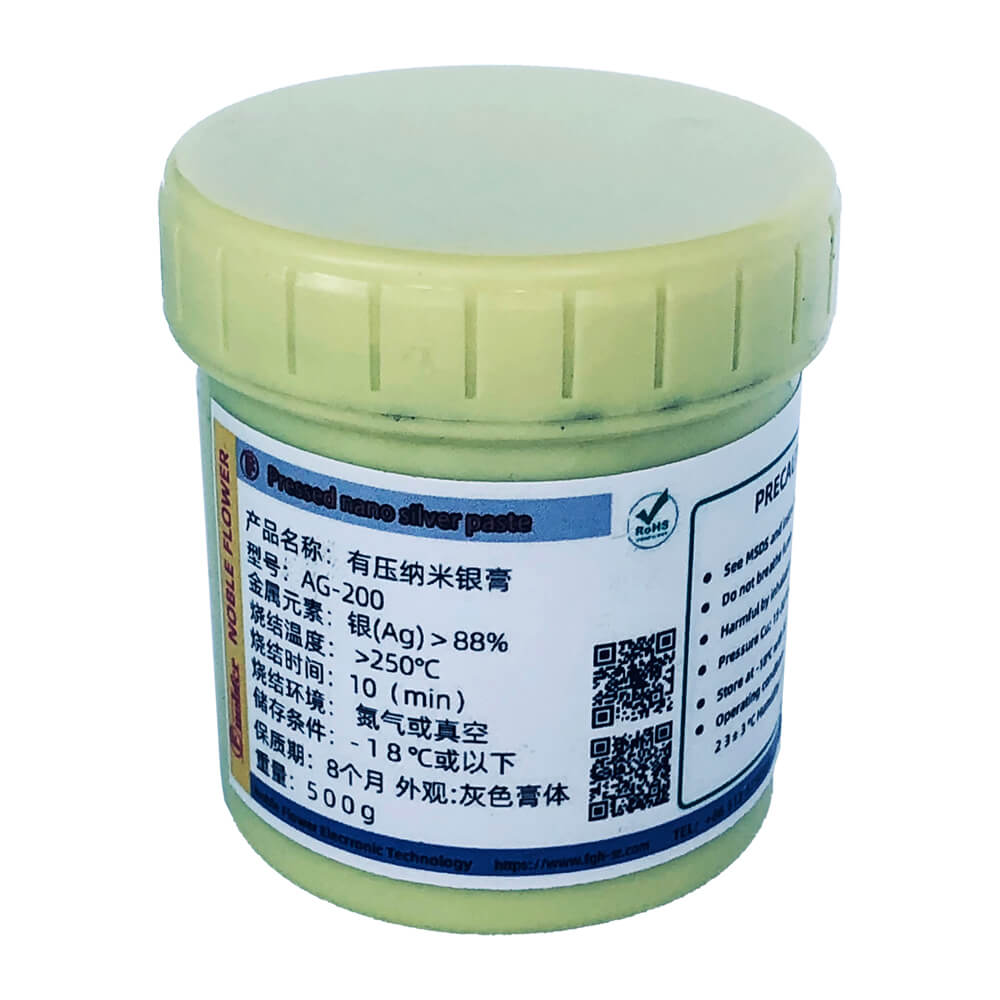
(2) The leapfrog increase in localization
rate
2011 is the "year of awakening"
for China's photovoltaic silver paste industry. Prior to this, international
giants such as Heraeus and DuPont occupied 100% of the Chinese market, and
domestic companies could only produce low-end silver paste. With the support of
national policies such as the "Golden Sun Project" and the
development of clusters in the photovoltaic industry chain, domestic silver
paste enterprises have begun to break through core technologies: the
localization rate exceeded 30% in 2015, reached 50% in 2018, and achieved a
qualitative leap in 2021 - the output of domestic silver paste enterprises
accounts for 80% of the total domestic demand and 55% in terms of global
demand, marking that China has become the main supplier of photovoltaic silverpaste in the world.
Behind this breakthrough is the continuous
increase in R&D investment. The R&D expense ratio of leading domestic
silver paste enterprises is generally 5-8%, which is much higher than the level
of 2-3% of ordinary chemical enterprises. In 2021, Dike invested 120 million
yuan in R&D, an increase of 200% over 2018, and the lead-free silver paste
products it developed have passed the certification of TÜV SÜD, with a lead
content of < 10ppm, meeting the EU RoHS 2.0 standard. Polymerization Co.,
Ltd. has built the first fully automatic silver paste production line in China,
with a parameter control accuracy of ±0.1% in the production process, reducing
the performance deviation between product batches from 5% to less than 2%.
3. The battle of domestic substitution: the
breakthrough of low-temperature silver paste
Low-temperature silver paste was once the
"Achilles' heel" of China's photovoltaic silver paste industry, and
Japan's ELEX company has long occupied more than 90% of the market share by
virtue of its first-mover advantage. However, in the past three years, domestic
enterprises are rewriting this pattern through technological innovation.
Suzhou Nofil is a leader in the
localization of low-temperature silver paste. Its low-temperature silver paste
shipments of 1.61 tons in 2020 surged to 5.14 tons in 2021, a year-on-year
increase of 219%, and this explosive growth stemmed from its breakthroughs in
three key technologies: dispersion technology for nano-silver powders
(controlled at 0.5-1% dispersant usage), low-temperature curing formulation for
resin systems (curing time reduced from 60 minutes to 30 minutes), and matching
optimization with HJT batteries (contact resistance reduced to less than 50mΩ).
In a pilot line of HJT, the low-temperature silver paste of Jingyin New
Materials has achieved a battery efficiency of 24.5%, narrowing the gap with
Japan's ELEX products to 0.3 percentage points. The flexible switching of
production capacity is an important weapon for domestic enterprises to cope
with market changes. Suzhou Technetium's 500-ton photovoltaic silver paste
production capacity can be flexibly adjusted between hot and cold products, with
a changeover time of < 48 hours, which allows it to quickly respond to
changes in market demand. The production cost of high-temperature and
low-temperature silver paste is not much different (mainly in the particle size
of silver powder), but the price difference between the two will reach
2000-2500 yuan/kg in 2021, which is a significant profit margin that drives
domestic enterprises to increase investment in low-temperature silver paste,
and it is expected that by 2025, the market share of domestic low-temperature
silver paste is expected to reach more than 60%.
Fourth, the deepening of the competitive
pattern: the production capacity and technology of the leading enterprises
The domestic photovoltaic silver paste
market presents a "three-legged" pattern, and Suzhou Nophiel,
Aggregate Co., Ltd., and Dike Co., Ltd. continue to improve market
concentration through capacity expansion and technological innovation, promoting
the industry to enter a stage of high-quality development.
In 2021, the total production capacity of
these three companies reached 2,700 tons, an increase of 82% compared to 2020,
and the average annual compound growth rate of production capacity from 2017 to
2021 was 28.6%, reflecting strong expansion momentum. In terms of output, the
total output of the three major enterprises in 2021 was 1,708 tons, a
year-on-year increase of 41%, and the average annual compound growth rate from
2017 to 2021 was 30.5%, slightly higher than the production capacity growth
rate, indicating that the capacity utilization rate is constantly improving
(from about 50% in 2017 to about 63% in 2021).
The change in market share reflects the
contest of technical strength. In 2020, Aggregate Co., Ltd., Dike Co., Ltd.,
and Nophiel Technology accounted for 23%, 15%, and 7% of the positive
photovoltaic silver paste market respectively, and by 2021, with Nofil
Technology's breakthrough in the field of low-temperature silver paste, its
market share increased to about 10%, and the industry CR3 reached 55%, which
basically matched the CR5 (54%) of the domestic photovoltaic cell industry,
forming a good industrial chain synergy. This increase in concentration is
conducive to the technological progress of the industry. Through large-scale
production, leading companies have reduced the amount of silver powder in
silver paste from 80mg to 65mg (158.75mm silicon wafers) per cell, reducing
material costs while ensuring efficiency. The "silver-clad copper"
technology developed by Dike Co., Ltd., by coating the surface of copper powder
with a silver layer thick of 5-10nm, can reduce the amount of silver by 30%,
while the conductivity is only reduced by 5%, and this technology has been
tested in some PERC cell production lines.
5. Future prospects: growth space driven by
technological innovation
The future development of the photovoltaicsilver paste industry will revolve around the two main lines of "cost
reduction and efficiency increase" and "technological
upgrading", and the industry will usher in new opportunities and challenges
in the context of the rapid development of HJT batteries and the fluctuation of
silver prices. In the short term, high-temperature silver paste will still
dominate (about 85% in 2023), but the demand for low-temperature silver paste
will accelerate. As HJT battery capacity expands from 30GW in 2022 to 150GW in
2025, the demand for cryogenic silver paste is expected to grow from about 50
tons in 2022 to more than 300 tons in 2025, with a compound annual growth rate
of more than 80%. Technological breakthroughs in the field of low-temperature
silver paste (such as nano-silver dispersion technology and low-temperature
curing system) of domestic enterprises will accelerate this process. In the
medium and long term, the "silver reduction" of silver paste is an inevitable
trend. Through thin grid printing (line width reduced from 50μm to 20μm), new
screen designs (opening rate increased to 80%), and material innovations (e.g.,
silver alloy, silver-clad copper), the amount of silver per cell is expected to
be reduced from the current 60-80mg to less than 30mg, which will further
reduce the proportion of silver paste in battery costs. Test data from an
R&D institution showed that the use of 40μm thin grid wire and silver-clad
copper paste reduced the amount of silver used in batteries by 40%, while the
efficiency decreased by only 0.2 percentage points. In terms of localization,
it is expected that by 2025, the market share of domestic high-temperature
silver paste will stabilize at more than 90%, and the localization rate of low-temperature
silver paste is expected to exceed 70%. This transformation will not only
enhance the global competitiveness of China's photovoltaic industry, but also
contribute to the global energy transition.
 Безопасность сети 32058300438