


Замечания:1 创始人: Site Editor Publish Time: 2026-04-19 Origin: Веб - сайт


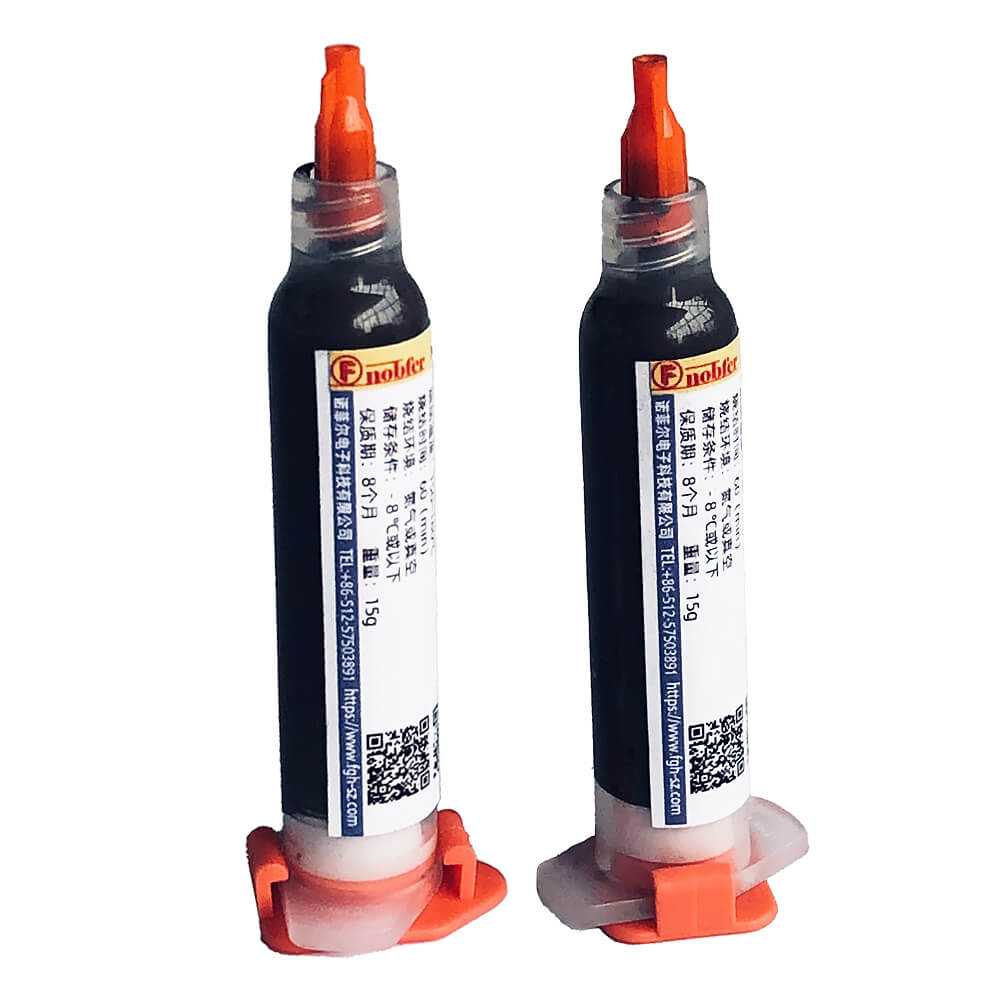
Cryogenic Sintered Nano Silver Paste AS
Series: A Material Revolution Reshaping the Boundaries of Photoelectric Sensor
Technology
When the detection range of LiDAR extends
from 200 meters to 300 meters, when biosensors can identify tumor markers with
concentrations as low as 10⁻¹⁵M, and when the conversion efficiency of
photovoltaic cells exceeds 26% - these technological breakthroughs are
inseparable from the material innovation of the AS series of low-temperature
sintered nano-silver paste. This functional material, which can achieve
densification and sintering at 130°C, is setting off a revolution in the field
of "connection technology" in the field of photoelectric sensing with
precise particle size control of 20-50nm, porosity adjustment ability of 2-5%,
and perfect compatibility with organic substrates. From high-precision optics
to implantable medical devices, AS series silver paste is like a precision
engineer in the microscopic world, building an efficient light-to-electricity
conversion bridge at the nanoscale, driving the evolution of sensor technology
towards higher sensitivity, lower power consumption, and more miniaturization.
1. Core application scenarios: from
laboratory parameters to industrial-grade performance
The unique value of the low-temperature
sintered nano-silver paste AS series lies in its ability to provide customized
solutions for the core pain points of different optoelectronic sensing
scenarios, accurately matching material properties with device requirements.
(1) The performance of high-precision
optical sensors has leapfrog
In the manufacture of gratings and filters, AS9338 silver paste demonstrates the unique advantages of "micron-scale structure and nano-scale precision". Through laser selective sintering technology, silver paste can form a sub-micron grating structure with a period of < 1μm, and the porosity is precisely controlled at 2-5% - this structure is like a precise optical sieve, which can achieve a spectral resolution of 0.1nm, which is an order of magnitude higher than traditional lithography technology. Tests by a tunable laser manufacturer show that the wavelength selection module using this technology shortens the tuning speed from 50ms to 10ms, and the wavelength drift in the range of -40~85°C is < 0.5nm, which meets the stringent requirements of optical fiber communication.
The breakthrough of photodiode performance
bottlenecks can better reflect the value of materials. AS series silver pastes
are screen-printed to form a three-dimensional nano-silver network on the
surface of silicon-based photodiodes, which acts as an efficient "electron
collector" that increases carrier collection efficiency from 75% to 92%.
More importantly, its low-temperature sintering characteristics (120°C/30min)
avoid damage to PN junctions at high temperatures, reducing the dark current to
0.8nA/cm² (@-1V bias), which is 60% lower than the evaporation aluminum
electrode solution. In low-light imaging, this improvement increases the
sensitivity of night vision devices by a factor of 1.5, identifying faint light
sources up to 1 km away. The packaging innovation of InGaAs photodetectors
highlights the thermal conductivity advantages. After chip bonding with AS9376
silver paste, the thermal resistance of the detector was reduced from 0.15°C·cm/W to 0.08°C·cm/W, which means that the
chip junction temperature is reduced by 12°C at the same power. A LiDAR
company's actual vehicle test showed that this heat dissipation improvement
extended the detection distance of LiDAR from 200 meters to 300 meters, and the
performance attenuation was < 3% after 2 hours of continuous operation,
solving the problem of "thermal failure" in autonomous driving.
(2) Technological breakthroughs in
biomedical sensing
The sensitivity revolution for
surface-enhanced Raman scattering (SERS) substrates stems from the porous
structure design of AS silver paste. By controlling the sintering temperature
(150°C) and time (20min), the silver paste can form a three-dimensional porous
network with a pore size of 50-200nm, and the "hot spot effect"
generated by this structure makes the Raman signal enhancement factor up to
10⁶-10⁷. In the early diagnosis of cancer, this substrate can detect
circulating tumor DNA (ctDNA) at concentrations as low as 10⁻¹⁵M, which is 1000
times more sensitive than traditional gold membrane substrates. Clinical tests
at a medical institution showed that the technology was 92% accurate in
detecting early lung cancer, a 15 percentage point improvement over existing
methods. The performance leap of flexible strain sensors is reflected in the
extreme stretch scenario. AS series silver paste is designed with a serpentine
interconnect structure and sintered at 130°C low temperature, with a resistance
change rate of < 5% at 150% tensile strain, which allows the sensor to
achieve a bending resolution of 0.1°. In the field of rehabilitation medicine,
this feature is used to make smart gloves that can monitor the small movements
of stroke patients' fingers (<1mm displacement) in real time, providing
quantitative data for rehabilitation assessment. Tests have shown a measurement
error of < 2%, which is much lower than the 5% of conventional strain
gauges. The breakthrough of implantable neural probes is the perfect combination
of material biocompatibility and electrical properties. AS silver paste is
co-sintered with a polyimide (PI) substrate at 120°C to form a flexible array
with a density of 10⁶ electrodes/mm², which acts like a
"nanogrid of neural interfaces" with an increased signal-to-noise
ratio of 80dB. In the macaque brain-computer interface
experiment, the probe can stably collect motor cortical neuron signals for up
to 6 months, and the signal amplitude is attenuated by < 10%, providing the
possibility of motor function reconstruction in paralyzed patients.
(3) The efficiency revolution of
photovoltaic and quantum dot sensing
The innovation of transparent electrodes in
perovskite solar cells demonstrates the unique value of AS silver paste. The
grid electrode prepared with AS9120BL silver paste maintains a low square
resistance of 3Ω/sq with a line width of only 10μm, and with 0BB (no main gate)
technology, the photoelectric conversion efficiency of the cell exceeds 26%.
What's more, its silver consumption is reduced by 30% compared to traditional
solutions, and the silver cost per battery is reduced by 0.2 yuan. According to
the mass production data of a photovoltaic company, the efficiency of
perovskite/crystalline silicon stacked cells using this technology is only 2.3%
after 1,000 hours of outdoor work, which is far lower than the 5% of the IEC
standard. The improvement of the response speed of quantum dot photodetectors
is due to the nanostructure regulation of AS silver paste. AS9005 silver paste
is sintered by the template method to form a 200nm high nanocolumn array, which
acts like a "light absorption antenna" and increases the light
absorption efficiency of CdSe/ZnS quantum dots by 40%. At the same time, the
high conductivity of silver nano reduces carrier transport distance, reducing
response time from 1.5ms to 0.8ms. In high-speed imaging, the detector achieves
a frame rate of 1200fps, which is 50% faster than conventional devices, and can
clearly capture the instantaneous process of a bullet breaking through glass.
2. Key technical paths: from microstructure
to system integration
The performance breakthrough of AS series
nano silver paste is not accidental, but a system engineering of material
design, process optimization and multiphysics synergy, and each technological
innovation addresses the core needs and pain points of optoelectronic sensing.
(1) Atomic level regulation of
microstructure
Precise control of silver powder particle
size is the basis of performance. Through ultrasonic dispersion (power 500W,
time 30min) and surface carboxylation treatment, the silver powder D50 of AS
series silver paste was strictly controlled at 20-50nm, and the particle size
distribution span (Span) was <0.8, which made the porosity error of the
sintered layer <±0.5%. High-resolution electron microscopy showed that the
carboxyl modification layer on the surface of the particles was about 2nm
thick, which not only avoided agglomeration, but also formed a controlled
volatile "nanochannel" during sintering, ultimately causing the
resistivity to fluctuate by <3%. A comparative experiment showed that when
the span value decreased from 1.2 to 0.8, the conductive uniformity (CPK value)
of the silver layer increased from 1.3 to 1.8.
Femtosecond laser local sintering
technology has achieved a breakthrough in the "thermal damage forbidden
area". Selective sintering is carried out using a laser with a pulse width
of < 100fs (wavelength 532nm), and the energy density is precisely
controlled at 0.5-2J/cm², which can absorb energy from the silver powder to
complete the sintering while avoiding thermal diffusion damage to the
surrounding sensitive materials (such as organic photoelectric layers). Tests
have shown that the temperature difference between the laser and non-active
areas can reach more than 100°C, increasing the efficiency retention rate of
organic photovoltaic cells from 70% to 95%. In flexible display sensors, this
technology enables the compatible integration of silver paste lines with
organic light-emitting layers, increasing the lifespan by 3 times.
(2) Collaborative design of multiphysics
The thermal-mechanical coupling model
optimizes to solve the interface failure problem. Through finite element
simulation, the sintering parameters of the AS series silver paste were
precisely optimized: a temperature gradient of < 5°C/mm and a pressure of
< 1MPa, which reduced the coefficient of thermal expansion (CTE) mismatch
between the silver layer and the SiC substrate from 12% to 3%. A reliability
test showed that after 1000 thermal cycles at -55~125°C, the shear strength of
the silver layer remained at 85% of the initial value, compared to 40% of the
traditional soldering scheme. In aerospace photoelectric sensors, this
stability reduces device failure rates by 90% in extreme temperature
differential environments. Gradient porosity structure achieves balanced
performance. AS silver paste is formed by a gradient structure through a phased
sintering process (100°C/10min first, then 150°C/20min): surface porosity 3%
(high conductivity) + bottom porosity 8% (high strain buffer). This design
enables the strain sensor to change the resistance rate in the range of
-55~200°C < 10%, which is 50% higher than that of a single porosity
structure. In the temperature sensor of the automobile engine compartment, this
technology improves the measurement accuracy from ±2°C to ±0.5°C, meeting the
monitoring needs of China VI emission standards.
(3) Comprehensive breakthrough in process
compatibility
Low-temperature co-firing technology expands the application boundaries. The 130°C sintering temperature of AS9338 silver paste perfectly matches the glass transition temperature (Tg>150°C) of organic substrates (PET/PI), solving the problem of substrate deformation caused by traditional high-temperature sintering. Tests have shown that flexible sensors with this technology have a resistance change rate of < 2% at a bend radius of < 2mm and can withstand more than 100,000 bends. An application from a smart apparel company showed that this compatibility allows ECG monitoring electrodes to be integrated directly into tights, reducing signal noise by 30%. Roll-to-roll (R2R) mass production technology achieves cost breakthroughs. AS9120 nano silver paste is suitable for R2R production lines, with a linear speed of 30m/min, silver paste consumption of <0.5mg/cm², and a yield of > 99%. This process reduces the cost per unit area of flexible PV modules from $15 to $8, setting the stage for large-scale applications of BIPV (Building Photovoltaic Integration). According to data from a photovoltaic building integration project, the annual power generation of photovoltaic curtain walls using this technology reaches 150kWh per square meter, and the payback period is shortened to 5 years.
3. Cutting-edge development direction: from
functional materials to intelligent systems
The evolution of AS series nano silverpaste is going beyond the simple material category, and through the integration
with intelligent perception, dynamic regulation and other technologies, it
promotes the development of photoelectric sensors in the direction of active
response and adaptive adjustment.
(1) The environmental adaptability of
intelligent sensing surfaces
Self-heating function silver paste creates
a new paradigm for gas detection. By doping graphene (5% content) to the silver
paste, the AS series has developed a composite silver layer with a self-heating
function, and the local temperature control of -20~80°C can be achieved with a
power consumption of < 10mW/cm². This feature enhances the selectivity of
the gas sensor – the detection limit for NH₃ is reduced to 1 ppm at 50°C and
more sensitive to H₂S at 20°C (detection limit 0.5ppm). The application of an industrial
safety monitoring system showed that the smart sensor reduced its false alarm
rate from 15% to 3% and reduced response time to 2 seconds.
(2) The flexible adjustment ability of the
dynamic reconstruction device
Reconfigurable optical microcavities show
the potential of communication applications. Utilizing the thermoplasticity of
AS silver paste (50% reduction in elastic modulus at 120°C),
temperature-adjustable optical microcavity structures are constructed with
wavelength tuning ranges of 400nm (1550-1950nm) and response times of <
10ms. This device acts as a dynamic filter in optical communications,
automatically switching channels in the event of a fiber failure, with a
recovery time of < 50ms, which is 100 times faster than traditional
mechanical regulation solutions. Tests by a telecom operator showed that the
annual outage time for transmission networks using this technology was reduced
from 4 hours to 10 minutes.
(3) Performance breakthrough of quantum
cascade integration
Room temperature operation of quantum well
devices is possible. AS nano-silver interconnect is integrated in InAs/GaSb
quantum well devices to optimize interface contact (contact resistance < 10⁻⁶Ω・cm²), increasing the operating temperature of the device from the
liquid nitrogen temperature zone (77K) to room temperature (300K) while
reducing power consumption by 90%. This breakthrough has moved the terahertz
imaging sensor away from cryogenic refrigeration systems and reduced to 1/5 its
size for portable hazmat detection. Experiments have shown that it has a 99%
recognition rate for ceramic knives hidden under clothing, with a response time
of < 1 second.
Conclusion: The multiplier effect of
material innovation
The technological evolution of the AS
series of low-temperature sintered nano-silver paste demonstrates the
multiplier effect of material innovation on the optoelectronic sensing industry
- not only the linear improvement of performance parameters, but also the
exponential expansion of application scenarios. When the sintering temperature
of silver paste drops from 300°C to 130°C, when the porosity control accuracy
reaches ±0.5%, these seemingly small advances are reshaping the design concept
of sensors: flexible electronics are no longer limited by high-temperature
processes, quantum devices are expected to move towards portable applications,
and biosensing can detect the presence of individual molecules. In the future,
with the integration of technologies such as 3D printing sintering (accuracy up
to 5μm) and AI parameter optimization (95% accuracy in predicting sintering
effect), AS series silver paste will achieve breakthroughs in cutting-edge
fields such as single-photon detection (dark count rate < 1cps) and
terahertz imaging (resolution 100μm). This virtuous circle of material
innovation and application demand is driving the evolution of optoelectronic
sensing technology from "passive perception" to "active
regulation", from "single function" to "system
integration", and finally building a smarter and more sensitive perception
world.
 Безопасность сети 32058300438