


Замечания:1 创始人: Site Editor Publish Time: 2026-04-22 Origin: Веб - сайт


Semiconductor Wire Control Wire Feed
Bonding Machines: The Art of Precision Control for Micron-Scale Connections
In the microscopic world of semiconductor
packaging, when a 15μm diameter wire passes through the bonder's guidewire
system at a precise speed of 0.1mm/s, finally forming a perfect arc between the
chip pad and the lead frame with a height deviation of only ±1μm, behind this
is the coordinated operation of hundreds of sensors and algorithms of the wire
control wire feed bonder. This type of equipment is like the "embroidery
master" of the microscopic world, completing tens of thousands of wire bonds
on semiconductor chips with nanometer-level control accuracy, and its
performance directly determines the reliability of everything from smartphone
processors to automotive electronic power modules. This article will provide an
in-depth analysis of the core technical architecture of such equipment,
revealing how it achieves a near-perfect connection process within a spatial
scale of 0.01mm through the integration of high-precision wire feeding, dynamic
tension control, and intelligent visual positioning.
1. High-precision wire feeding system:
nanoscale control of lead movement
The wire feed system is the
"lifeline" of the bonding machine, and its control accuracy directly
determines the consistency of the lead arc height and the stability of the bond
strength. Through the triple collaboration of servo drive, dynamic tension
adjustment and intelligent algorithms, modern bonding machines control the wire
feeding error within 1/50 of the diameter of a human hair, providing a basic
guarantee for high-density packaging.
(1) Continuously variable speed
architecture driven by servo motor
The combination of a linear motor and a
high-resolution encoder forms the "power core" of the wire feeding
system. The linear motor with rare earth permanent magnet material has a thrust
fluctuation of <1%, which can achieve stepless speed regulation of
0.1-10mm/s, and the speed control accuracy is ±0.01mm/s - which means that
within 1 second, the feed error of the lead wire will not exceed 0.01mm, which
is equivalent to 1/10 of the thickness of an A4 paper. The measured data of a
certain brand of K&S Maxum Ultra bonding machine shows that the speed
deviation of its wire feeding system can still be maintained within ±0.005mm/s
after 8 hours of continuous operation, ensuring the stable delivery of gold
wire from 15μm to 50μm with different wire diameters. The two-way closed-loop
control mechanism eliminates cumulative errors. The encoder has a resolution of
0.1μm/pulse and feeds back position information to the control system every
1ms, forming a closed-loop loop of "instruction-execution-feedback-correction".
When a deviation of the wire feed position is detected to exceed 0.05mm, the
system compensates for the speed within 10ms, and this real-time response
capability keeps the cumulative error within 0.1mm. In 3D stacked packages,
this accuracy ensures a vertical alignment error of < 2μm for different
interlayer leads, avoiding the risk of interlayer short circuits. Production
records from an advanced packaging plant showed that the bond defect rate due
to wire feed errors decreased from 0.5% to 0.03% after the system was
implemented. Hydrodynamic optimization of the guidewire channel reduces lead
damage. The guide wheel on the wire feed path is made of ceramic material (Al₂O₃
purity 99.5%), with a surface roughness of
Ra<0.05μm, and a 15° inlet cone angle design, so that the friction force of
the lead wire when passing through < 0.1N, avoiding the tensile deformation
of the thin wire (< 25μm). Computational fluid dynamics (CFD) simulation
optimizes the guidewire channel, which controls the amplitude of lead vibration
caused by airflow disturbances to within ±1μm, ensuring wire feed stability.
Comparative tests have shown that the optimized guidewire system reduces wire
breakage by 60%, making it particularly suitable for the bonding needs of 15μm
ultra-fine gold wires.
(2) Real-time response system for dynamic
tension control
The stable control of lead tension is the key to avoid wire breakage and arc height deviation. The bonding machine adopts a combination of piezoelectric ceramic brake and high-precision strain gauge sensor to build a tension adjustment system with a response time of < 1ms, which can achieve a tension control accuracy of ±0.01N in the range of 0.5-5N. Micro-displacement drive of piezoelectric ceramics enables nanoscale adjustment. When the sensor detects a tension fluctuation of more than 0.02N, the piezoelectric ceramic generates a displacement of 0-5μm within 50μs, adjusting the tension in real-time by changing the angle of the guide wheel. This millisecond response speed effectively counteracts the tension fluctuations caused by mechanical vibration (amplitude <5 μm) and material inhomogeneity. Experimental data from an international manufacturer showed that the standard deviation of lead tension was reduced from 0.1N to 0.02N, and the corresponding arc height consistency CPK value increased from 1.2 to 1.8. Intelligent adaptation technology for multi-stage tension curves improves process compatibility. The system has built-in 100+ tension curve templates, which are automatically adjusted for different material properties: the "low-high-low" three-stage tension control (0.8N at the beginning, 1.2N at the time of bonding, and 0.6N at the end) is used to reduce the deformation defect of the gold ball; Copper wire bonding uses a constant high tension mode (2.5N) to overcome the high hardness characteristics of copper. In copper bonding applications in automotive electronics, this intelligent adaptation reduces the standard deviation of bond strength from 15g to 5g, meeting AEC-Q100 Grade 0 reliability requirements. Temperature compensation algorithms eliminate environmental influences. The tension sensor has a built-in temperature probe (accuracy ±0.5°C), and when the ambient temperature changes above 2°C, the system automatically corrects the tension parameters - for every 10°C increase in temperature, the tension setpoint increases by 5%, compensating for changes in the elastic modulus of the material. An application in a tropical packaging plant showed that 24-hour bond yield fluctuations decreased from 3% to 0.5% throughout the day when temperature compensation was enabled.
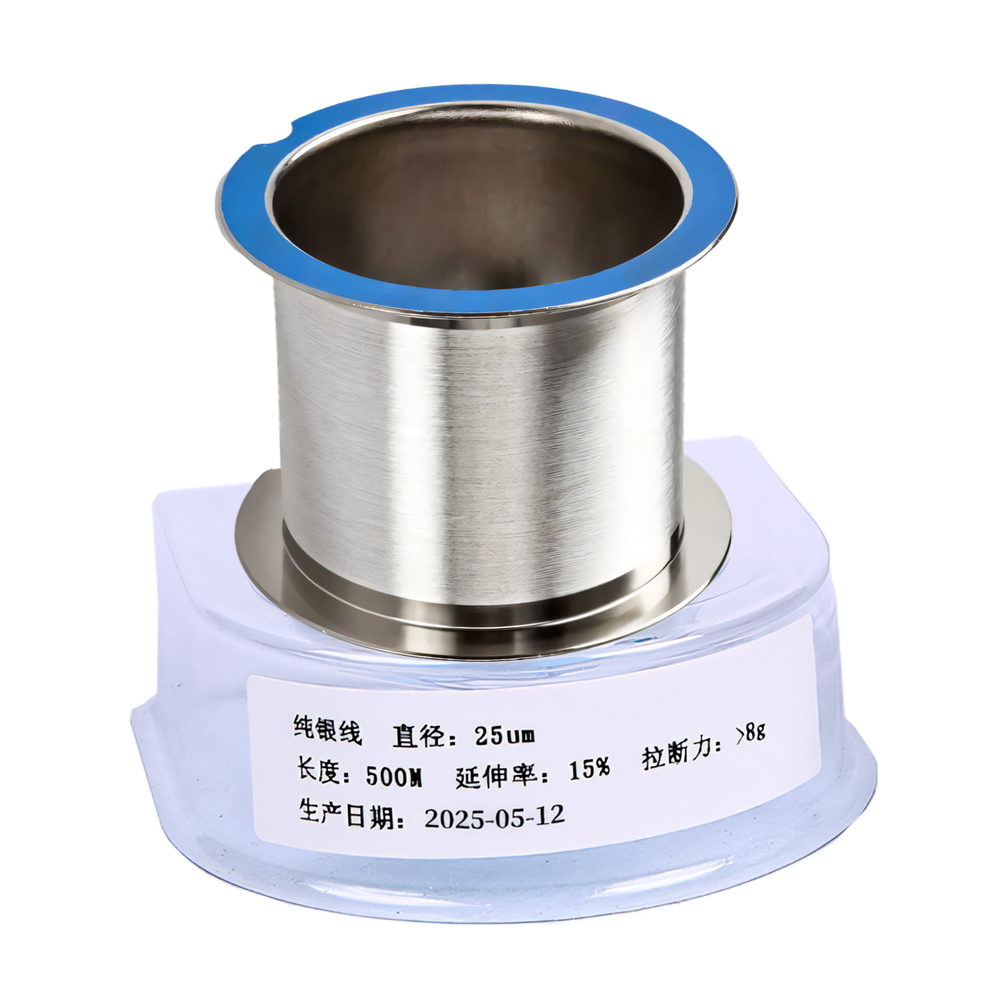
(3) AI optimization algorithm for line arc
control
The precise control of lead arc height
directly affects the package density and signal transmission quality. The
bonding machine integrates AI path planning and Newtonian iterative method to
build a predictable and correctable line arc control model, which controls the
arc accuracy to ±1μm to meet the requirements of fine-pitch (<20μm)
packaging. The machine learning arc height prediction model realizes
intelligent matching of process parameters. By analyzing 100,000+ sets of
historical bonding data, the system establishes a nonlinear relationship model
of ultrasonic power, pressure, wire feed speed and arc height, and can
automatically recommend the optimal parameter combination according to the lead
diameter (15-50μm) and bond spacing (20-500μm), with a prediction accuracy of
more than 95%. An ASM Pacific Apollo series of bonders showed that the model
reduced process commissioning time for new wire gauge products from 8 hours to
1 hour and improved arc height consistency by 40%. The real-time correction mechanism
of Newtonian iterative method eliminates the cumulative error. For every 100
bond points, the system samples the actual arc height (accuracy ±0.5μm) and
uses Newtonian iteration to correct the path parameters so that the arc height
deviation of subsequent bonds is always controlled within ±1μm. In the
production of 5G RF modules, this correction mechanism ensures an arc height
limit of <3μm and a signal transmission delay deviation of <5ps for the
same batch of products.
3D path planning adapts to complex
packaging structures. For stereobonding requirements in 3D stacked packages,
the system can plan complex paths with X/Y/Z axes to create "S" arcs
that smoothly transition between pads at different heights, with a minimum bend
radius of up to 5 times the wire diameter (15μm wire diameter corresponds to
75μm radius). The stacked packaging of a memory chip shows that this 3D arc
height control achieves a yield rate of 99.8% for interlayer bonding, which is
2.5 percentage points higher than the traditional 2D path.
2. Collaborative control of visual
positioning and process parameters
In the micron-scale bonding space, the
vision system is like the "eye" of the bonding machine, and the
multi-parameter collaborative control is its "brain", and the perfect
combination of the two ensures precise positioning and reliable connection of
the bonding point.
(1) Microscopic recognition capability of
4K resolution imaging units
The combination of narrowband filtering and
high-frame rate imaging technology gives the bonder the ability to "see
the smallest details". The 4K camera with 2568×1920 resolution, combined
with a 650nm narrowband filter, effectively eliminates ambient light
interference and improves the recognition accuracy of the chip pad to ±0.5μm.
The measured data of the M3VT series cameras shows that it can still maintain a
pad recognition accuracy of 99.99% at a frame rate of 60FPS, meeting the
high-speed bonding requirements of 3 leads per second. Dynamic switching of
multiple light sources adapts to different material pads. The system is
equipped with a ring LED light source (brightness 1000-5000cd/m²) and a coaxial
light source (wavelength 450-650nm) that can be automatically switched
according to the pad material: the aluminum pad uses a high-angle ring light
(60°) to enhance edge contrast, while the gold pad uses coaxial light to reduce
reflection interference. One test showed that this adaptive light source control
kept the recognition success rate of different materials above 99.9%, and the
false recognition rate was < 0.01%. Image enhancement algorithm improves
recognition ability under harsh conditions. The median filtering algorithm can
eliminate the image noise caused by solder joint burrs, and the edge detection
accuracy is up to 0.1μm. Perspective transformation correction compensates for
the visual deviation caused by chip tilt (<5°), so that the actual
positioning error < 0.5μm. In wafer-level packaging, these algorithms ensure
that bond point positioning accuracy is met even in the presence of wafer
warpage of ±3μm.
(2) Closed-loop control system with
multi-parameter collaboration
The precise coordination of ultrasonic
power, bonding pressure and time is the "three elements" for reliable
bonding. The bonding machine realizes real-time adjustment and optimization of
these parameters through the combination of multi-channel sensors and PID
controllers. Vector control technology for ultrasonic power ensures stable
energy. The ultrasonic generator with digital synthesis technology can output
50-200W of power, with a frequency stability of ±0.1kHz and an energy control
accuracy of ±1mJ. When bond strength fluctuations of more than 5% are detected,
the system adjusts the power output within 20ms – 5% more power at low strength
and 3% lower at high, a fine adjustment that increases the CPK value of bond
strength from 1.3 to 1.6. In the production of automotive-grade MCUs, the
system reduces the standard deviation of bond strength from 10g to 3g, meeting
the reliability requirements of 1500 temperature cycles. The
pressure-controlled grading mechanism protects the fragile structure. The bonding
pressure can be adjusted in 0.01N steps in the range of 0.5-3N, and adopts a
three-stage control of "pre-pressure-main pressure-holding pressure":
the initial preload (0.5N) ensures good contact, the main pressure (1-3N)
promotes atomic diffusion, and the holding pressure (0.8N) consolidates the
bonding effect. For thin chips < 50 μm thick, the system automatically
reduces the pressure by 30% to avoid chip cracking. An application from a MEMS
sensor manufacturer showed that this graded pressure control increased the bond
yield of thin chips from 85% to 99%. Dynamic matching of time parameters
optimizes energy input. Bond time can be precisely controlled from 1-200ms in
1ms steps and linked to ultrasonic power – high power for short times (e.g.,
200W/10ms) and longer times for low power (e.g., 50W/50ms) to ensure consistent
total energy input. In high-frequency device packaging, this match keeps the
heat-affected zone (HAZ) of the bond point within 5 μm, avoiding the impact on
device performance.
(3) Intelligent adjustment strategy of
material adaptability
The physical characteristics of different
metal leads require the bonding machine to have flexible parameter adjustment
capabilities. The system realizes seamless switching from gold wire to silver
alloy wire through material recognition and parameter library matching. The
high-temperature and high-frequency scheme of copper wire bonding breaks
through the oxidation barrier. In view of the easy oxidation of copper wires
(5nm oxide layer formed in air for 1 hour), the system automatically increases
the bonding temperature from 150°C to 250°C and enables high-frequency
ultrasound at 120kHz to increase the vibration energy by 50% compared to goldwire bonding, ensuring that the oxide layer is effectively broken. Combined
with nitrogen protection (oxygen concentration < 10ppm), this solution
achieves 90% of the copper wire bond strength as gold wire while reducing the
cost by 80%. Tests by a new energy vehicle power module manufacturer show that
after 1,000 hours of aging at 150°C/85% RH for copper wire bonding using this
technology, the contact resistance increases by <10%. The low stress
parameters of silver alloy wires protect brittle materials. For silver alloy
wires (e.g., Ag88/Pd12) with a hardness (HV 80) lower than copper wire but
higher than gold wire, the system adopts a gentle parameter of "medium
temperature (180°C) + medium power (100W)" and reduces the tension by 20%
to avoid brittle wire breakage. In LED packaging, this strategy results in a
bond yield of 99.5% for silver alloy wires and Поток,
which is a 40% reduction in cost compared to gold wire solutions. Adaptive
adjustment of lead diameter covers a full range of requirements. When switching
from 50μm to 15μm, the system will adjust 12 parameters: 50% reduction in wire
feed speed, 60% reduction in tension, 40% reduction in ultrasonic power, 30%
reduction in pressure, etc., to ensure the consistency of bond quality across
different wire diameters. A multi-mix production by an RF front-end vendor
showed that this adaptive adjustment reduced the changeover time from 30
minutes to 5 minutes and increased equipment utilization by 15%.
3. Compliance system of SEMI standard
certification
The strict requirements of the
semiconductor production environment make the bonding machine must pass a
series of standard certifications, from safety and environmental protection to
data communication, to ensure the stability and compatibility of the production
line in all aspects.
(1) All-round certification of safety and
environmental protection
SEMI S2 safety certification provides
multiple layers of protection for operators. The height of the emergency stop
button of the equipment is strictly controlled at 1100-1300mm, ensuring that
the operator can reach it within 1 second; The shield is made of polycarbonate
material (3mm thick) with a light transmission of > 70%, which not only
guarantees the view of the operation, but also resists spatter from wire
breakage (impact strength > 20J). The built-in infrared sensor detects the
proximity of the human body within 10cm and automatically reduces the movement
speed by 50% to avoid mechanical injury. A safety assessment of a semiconductor
factory showed that the accident rate of a bonder that meets the SEMI S2
standard is 90% lower than that of ordinary equipment. Voltage sag immunity
ensures production continuity. The device meets SEMI F47 standards and
maintains normal operation without data loss even when the voltage drops to 70%
of its rating for 2 seconds; Even when the voltage drops to 0%, a safe shutdown
procedure is performed to avoid chip obsolescence due to interruptions in the
bonding process. In areas with unstable power grids, this feature reduces
production downtime by 80% and reduces losses of approximately 50,000 yuan per
unit per year. Eco-friendly design is in line with the trend of green
manufacturing. The equipment uses lead-free grease (RoHS 2.0 compliant) and low
VOC (volatile organic compound) coatings with noise control below 70dB
(A-weighted) and exhaust emissions (e.g., Поток volatiles) < concentration of
50mg/m³. With the Energy Management System (EMS), power consumption can be
automatically reduced by 30% during standby, saving approximately 2,000 kWh of
power per year for a single device.
(2) Standardized interface between
communication and data
The SEMI SMT-ELS standard enables device
interconnection. The bonder is equipped with an EtherCAT industrial Ethernet
interface with a data transmission rate of 100Mbps, which can upload bonding
parameters (temperature, pressure, power, etc.) and quality data (strength, arc
height, position deviation, etc.) in real time, supporting seamless docking
with MES systems. A smart factory has shown that the adoption of this standard
reduces data acquisition latency from 1 second to 10 ms, and increases production
abnormal response speed by 5 times. SECS/GEM protocols build a unified
communication framework. Through this protocol, the factory control system can
remotely set bonding parameters (such as wire diameter, material type), query
equipment status (such as utilization rate, fault code), and download
production data, realizing "machine-cloud" collaboration. Statistics
from an IDM vendor show that after adopting the SECS/GEM protocol, the accuracy
of remote setting of equipment parameters reaches 100%, which reduces the error
rate by 90% compared to manual operation. Data encryption and traceability meet
quality control requirements. All bond data (including timestamps, device IDs,
and operator information) is stored in AES-256 encryption for a retention
period of > 3 years, and can be traced throughout the process with a unique
batch number. In PPAP certification for automotive electronics, this data
traceability reduces audit time from 3 days to 1 day to meet IATF 16949 system
requirements.
4. Application scenarios and equipment
selection strategies by field
There are significant differences in the
performance requirements of bonding machines in different industries, from the
high speed of consumer electronics to the high reliability of automotive
electronics, which requires targeted equipment selection and process
optimization.
(1) Efficiency priority scheme for consumer
electronics precision sealing
The packaging of mobile phone camera
modules and OLED driver chips places high demands on bonding speed and
fine-pitch capability. It is recommended to choose a device that supports 15μm
gold wire, bonding speed > 3 threads per second (such as ASM Pacific
Apollo), and its 4K vision system can recognize pads as small as 30μm, and with
AI arc height control, it meets the packaging needs of 12 million pixel
cameras. The production data of a mobile phone ODM manufacturer shows that
after adopting this solution, the bonding yield rate of camera modules reaches
99.8%, and the daily production capacity increases to 50,000 pieces.
Low-temperature bonding technology is suitable for flexible display driver
chips. For organic substrates with low glass transition temperatures (Tg), such
as PI films, the equipment needs to support a low-temperature bonding process
of < 200°C, and the bond strength is > 150g by increasing the ultrasonic
power (180W) to compensate for the temperature deficiency. The application of a
flexible screen manufacturer shows that this technology makes the warpage of
the driver chip after bonding < 50μm, which meets the reliability
requirements of folding screens (100,000 bends).
The quick-changeover design adapts to
multi-variety production. The multi-model, small-batch characteristics of
consumer electronics require a device changeover time of < 10 minutes, and
the modular guidewire system and parameter memory function can quickly switch
between different wire diameters (15-50μm) and materials. The practice of an
electronics foundry shows that this flexibility can increase the effective
utilization of equipment.
 Безопасность сети 32058300438