


Замечания:1 创始人: Site Editor Publish Time: 2026-04-24 Origin: Веб - сайт


Semiconductor Wire Bonding: The Art of
Precision and the Evolution of Microelectronic Joining
When a 7nm chip runs smoothly in a mobile
phone, the signal transmission of billions of transistors inside it relies on
wire wires with a diameter of only 18 microns to build circuit connections like
"tiny bridges" – a microscopic marvel created by semiconductor wire
bonding technology. As the most widely used interconnect technology in the
field of semiconductor packaging, wire bonding undertakes the key mission of
communicating with the outside world, and builds a stable current and signal channel
between the chip soldering area and the lead frame through metal wires such as
gold, aluminum, and copper. From the tiny sensors of smartwatches to the
computing power core of supercomputers, this seemingly traditional technology
has always been an indispensable "last mile" in microelectronics
manufacturing, with precision control reaching the sub-micron level and
reliability verification to withstand extreme environments ranging from -55°C
to 125°C.
1. The essence of technology: the
philosophy of connection in the microscopic world
The core principle of semiconductor wire
bonding is to precisely apply energy (heat, ultrasonic vibration, or a
combination of both) to form an atomic-level tight bond between the metal wire
and the chip pad and lead frame. This connection is not a simple physical
contact, but a conductive path with a resistance as low as 10⁻⁶Ω through the
diffusion and bonding of metal atoms, and its reliability needs to meet the
service life requirements of automotive electronics for 15 years / 300,000
kilometers. The ultimate pursuit of connection accuracy is reflected in three
dimensions. In terms of wire diameter control, the diameter of the mainstream
bond wire has been reduced from the traditional 50μm to 18μm, and even 15μm
ultra-fine wires are used in the most advanced microelectronic packages, which
is equivalent to 1/5 of the diameter of a human hair. In terms of position
accuracy, the positioning error of the bonding point needs to be controlled
within ±1μm, otherwise it may lead to a short circuit in adjacent leads (the
spacing is usually only 20-50μm). The consistency of the arc height is more
demanding, and the arc height deviation of thousands of leads on the same chip
needs to be < 5μm to avoid cross-interference between the line arcs.
Statistics from a chip packaging factory show that for every 0.5μm improvement
in bonding accuracy, the finished product yield can be improved by 2.3
percentage points.
Signal transmission integrity assurance is key for high-frequency applications. In 5G chip packaging, wire bonding needs to handle signal transmission above 10GHz, which requires an impedance matching error of <5% of the lead and a signal delay controlled within 10ps. By optimizing the radius of curvature of the wire arc (typically designed to be 100-300μm) and the dielectric constant of the lead material, signal reflection and crosstalk can be effectively reduced. The test data shows that after using copper alloy leads instead of traditional gold wires, the signal transmission efficiency of 5G base station chips is increased by 12% and the power consumption is reduced by 8%. Multiple verifications of mechanical strength ensure long-term reliability. The shear strength of the bond point must be more than 15g (for 25μm wire diameter) and the tensile strength should be > 5g to withstand vibration and shock during chip installation, transportation, and operation. After temperature cycling testing (-55°C to 125°C for 1000 cycles), the strength decay rate needs to be < 10%. Tests of an automotive-grade MCU showed that after 3,000 thermal cycles, the resistance of the lead connection with ultrasonically bonded wires increased by only 7%, well below the industry standard of 15%.
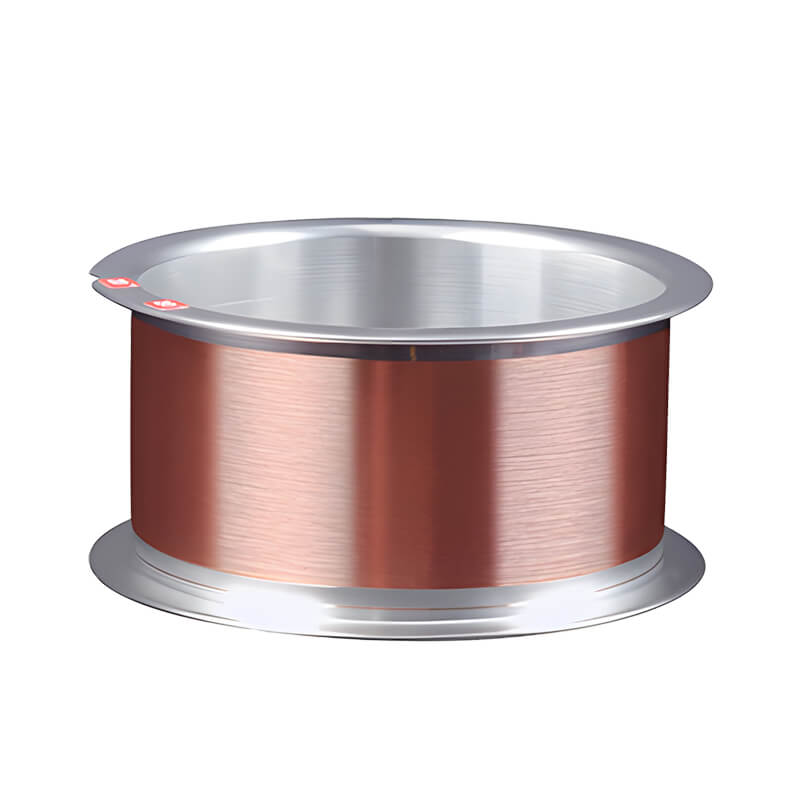
2. Metal wire: accurate matching of
material properties
Wire-bonded metal wires are like
"special cables" connected by microelectronics, and their material
selection requires a delicate balance between conductivity, plasticity,
oxidation resistance and cost. The technical dominance of gold wire bonding
stems from its unique advantages. The 99.99% pure gold wire has an ultra-low resistivity of 0.02Ω·mm²/m and stable chemical
inertness below 200°C, making it the preferred choice for high-frequency,
high-reliability chips such as aerospace ICs. By adding 0.05% palladium, the
sulfur resistance of gold wire can be increased by 3 times, and its life in
humid environments can be extended to more than 10 years. Tests of a satellite
communication chip showed that the use of palladium alloy leads improved
bonding reliability by 50% in space radiation environments, but the material
cost also increased by 20%. The disadvantage of gold wire is its high price
(about 400 yuan/gram), which accounts for more than 60% of the cost of the
entire bonding process, which drives the research and development of
alternative materials.
The cost-effective revolution in copper
wire bonding is reshaping the market landscape. The resistivity of 99.95% pure
copper wire (0.017Ω・mm²/m) is slightly lower
than that of gold wire, but the cost is only 1/5 of that and the thermal
conductivity (401W/m・) is K) higher and suitable for high-power device packaging. However, the
oxidation problem of copper wire requires special treatment - the oxide layer
thickness can be controlled to within 5nm by bonding in an inert gas (nitrogen
purity >99.999%). An LED packaging plant has shown that using silver-plated
copper wire instead of gold wire can reduce product costs by 35%, improve heat
dissipation by 20%, and extend service life to 50,000 hours.
The process adaptability of aluminum wirebonding is irreplaceable in specific scenarios. The 99.5% pure aluminum wire
has good ultrasonic response characteristics and is particularly suitable for
forming homogeneous connections with aluminum pads (which make up more than 70%
of the chip pads) with bond strengths up to 20g (25μm wire diameter). By adding
1% silicon, the fatigue resistance of aluminum wire is increased by 40%,
significantly enhancing its reliability in vibration environments. In power device
packages, aluminum wires can be up to 500μm in diameter to meet high current
transmission requirements (>10A). Tests on an IGBT module showed that the
current density increased from 5A/mm² to 8A/mm² while maintaining a low
temperature rise (<2°C/A) when bonded with a large diameter aluminum wire.
The performance breakthrough of new alloy
wires expands the application boundaries. The silver-copper alloy (Ag92/Cu8)
wire combines the high conductivity of silver with the high strength of copper,
with a resistivity of 0.016Ω·mm²/m, and a 30% increase
in strength compared to pure copper, which is suitable for power chip packaging
of new energy vehicles. Gold-nickel alloys (Au90/Ni10) remain stable in
high-temperature environments (>200°C) and are used in high-temperature sensor
chips for oil exploration. The emergence of these new materials has made the
performance indicators of wire bonding continue to break through the
traditional limits.
3. Bonding method: the art of energy
application
The process of wire bonding is like the
"art of welding" in the microscopic world, where the choice of
different energy application methods is essentially based on material
properties and product needs to find the most effective atomic diffusion
conditions to achieve both strong and precise connections.
Temperature-pressure synergy for
thermocompression bonding is suitable for high-temperature resistant materials.
In a heated environment of 150-300°C, a pressure of 10-50cN is applied through
the splitting knife to produce plastic deformation between the metal leads and
the surface of the pad, and the atomic spacing at the contact interface is
reduced to 0.3-0.5nm, forming a metal bond connection. The advantage of this
method is that the bond strength is high (>25g), but high temperatures can
cause thermal damage to the chip (especially for CMOS devices). The thermal
damage rate of the chip can be reduced from 5% to 0.5% by employing stepwise
heating (from 100°C to 250°C) and pressure gradient control (30cN initially,
down to 15cN after stabilization). In sensor chip packaging, thermocompression
bonding accounts for about 30% of the application, mainly used in scenarios
with extremely high reliability requirements.
The vibration energy conversion of
ultrasonic bonding enables low-temperature connection. At room temperature (or
<150°C), the ultrasonic generator generates a mechanical vibration of
15-60kHz, which is transmitted to the lead by a splitting knife to generate
high-frequency friction (amplitude 1-5μm) at the contact interface, and the
local temperature rises to the recrystallization temperature of the metal
(about 0.6Tm), completing the bonding at a pressure of 10-30cN. This method has
minimal thermal damage (chip temperature rise < 20°C) and is suitable for
temperature-sensitive RF chips. By optimizing the ultrasonic power (typically
50-200mW) and acting time (10-50ms), resistance fluctuations at the bond point
can be controlled to less than 3%. Tests on an RF front-end chip showed that
ultrasonic bonding reduced signal insertion loss by 0.2dB, which is much better
than the 0.5dB of thermocompression bonding.
The energy combination strategy of
thermoacoustic bonding takes into account both efficiency and quality.
Combining heating at 150-200°C with ultrasonic vibration at 20-40kHz increases
bonding efficiency (speeds up to 3 wires/second) while reducing the intensity
of a single energy. This mixing method is particularly suitable for copper wire
bonding – temperature reduces the risk of oxidation, and ultrasound promotes
the diffusion of copper atoms, resulting in a bond strength of 20g and a 50%
increase in productivity. Thermoacoustic bonding accounts for more than 60% of
smartphone processor packages, and its balanced performance makes it the
preferred solution for high-density bonding (> 1000 leads). The precision
design of the bonding tool affects the final quality. The material of the
splitter (usually ceramic or carbide), the aperture (5-10% larger than the wire
diameter), and the front end curvature (R0.5-R2.0μm) should be exactly matched
to the lead diameter. A study by a bonding equipment manufacturer showed that
when the difference between the splitter aperture and the wire diameter was
reduced from 10% to 5%, the positioning accuracy of the lead was improved by
40%. The new nano-coated splitting knife (e.g., diamond-like coating) has a
service life of up to 1 million cycles, which is 3 times faster than
conventional products, significantly reducing tool change downtime.
4. Technological challenges and innovative
breakthroughs
With the improvement of chip integration
(3D stacking, chiplet technology) and the expansion of application scenarios
(high temperature, high frequency, high power), wire bonding technology is
facing unprecedented challenges, and these challenges have also given rise to
continuous technological innovation.
The accuracy limits of ultra-fine pitch
bonding are constantly being pushed. When the lead spacing is reduced from 50μm
to 25μm or even 15μm, traditional optical positioning systems are no longer
able to meet the demand, requiring laser interferometric positioning (accuracy
±0.1μm) and machine learning visual recognition (99.99% recognition accuracy).
By developing non-contact lead tension control technology with an accuracy of
±0.1cN, it is possible to avoid breakage of ultra-fine leads (15μm) during bonding,
maintaining yields of over 99%. An advanced packaging fab has shown that the
lead density of its chiplet products has increased from 1000 to 2500 per mm²,
which is close to the level of flip chips.
Reliability improvement in high-temperature
and high-humidity environments is achieved through material innovation. In
harsh environments such as automobile engine compartments (temperature >
150°C, humidity >85%), traditional bonding is prone to interface oxidation
and fatigue failure. By forming a diffusion barrier layer by nickel plating
(thickness 50-100nm) on the surface of the copper wire, the oxidation
resistance of the bonding point can be increased by 5 times; The nanocomposite
pad (Cu/Ni/Au three-layer structure) reduces the resistance change rate from
20% to 5% after thermal cycling. Testing of an automotive-grade power chip
showed that after 2,000 hours of reliability testing at 150°C/85% RH, the
failure probability of the improved bond was only 0.1%, which was far lower
than the industry standard of 1%. The lead design for high-current transmission
adapts to the needs of power devices. IGBT modules in new energy vehicles need
to transmit hundreds of amperes of current, which requires multiple parallel
leads (typically 50-100) or large-diameter leads (200-500μm). By optimizing the
arrangement of the leads (using a staggered layout), the uniformity of current
distribution can be improved by 30% and local overheating can be avoided;
Developing highly conductive silver alloy leads (98% IACS) reduces lead
resistance by 15%. Tests of the motor controller of an electric vehicle showed
that the module's power density was increased by 25% and the cooling
requirements were reduced by 20% after using these technologies. The
synergistic development with emerging packaging technologies demonstrates
technical resilience. In the face of competition from emerging technologies
such as flip chips and through-silicon vias (TSVs), wire bonding finds new
living space through the integration of these technologies. In 3D stacked
packaging, a hybrid scheme of "flip + bonding" can be adopted - the
bottom chip is flipped to achieve high-density interconnect, and the top chip
is connected through wire bonding, taking into account cost and performance. In
a chiplet package, wire bonding can be used as a low-cost connection solution
for bridge dies, reducing the cost of TSV technology by up to 40%. The
packaging solution for an AI chip shows that this hybrid technology can achieve
an interconnect density of 10⁴/mm² while
keeping packaging costs within acceptable limits.
5. Application scenarios: from consumer
electronics to aerospace
The vitality of wire bonding technology is
reflected in its wide adaptability to different application scenarios – whether
it is consumer electronics pursuing the ultimate cost or aerospace that
requires absolute reliability, there is a suitable bonding solution to be
found. The balance between cost and efficiency in consumer electronics drives
technology adoption. In smartphone processor packaging, copper wire
thermoacoustic bonding dominates, with a cost of only 1/5 of gold wire per lead
and a bonding speed of up to 4 wires per second to meet mass production needs
(a single production line > 100,000 pieces per day). By adopting 18μm
ultra-fine copper wire and 30μm pitch design, more than 2000 lead connections
can be achieved on 10mm×10mm chips to meet the I/O needs of 5G chips. The chip
packaging data of an Android flagship machine shows that after using copper
wire bonding, the packaging cost of a single chip is reduced by $2.5, and the
performance indicators are the same as the gold wire solution. Reliability-oriented
selection of high-end solutions for automotive electronics. Automotive-grade
MCUs and power devices generally use palladium alloy wire or nickel-plated
copper wire with a high-temperature bonding process (200°C) to ensure a 15-year
service life. In ADAS (Advanced Driver Assistance Systems) chips, wire bonding
is AEC-Q100 Grade 0 qualified (-40°C to 150°C operating temperature), which
requires the bond point to maintain more than 80% initial strength after 1000
temperature cycles. The test of an autonomous driving chip showed that the
palladium alloy lead bonding used in the simulated crash test (1000G
acceleration) remained on all leads without any mechanical damage.
Extreme environmental adaptation in
aerospace relies on specialized technologies. The chip packaging of satellites
and spacecraft uses a combination of gold-plated leads and ceramic substrates,
which are thermocompression bonded in a vacuum environment to resist cosmic
radiation and extreme temperature differences (-196°C to 120°C). By using a
large wire diameter (50μm) gold wire and a redundant design (with double leads
for critical signals), the probability of a single point of failure can be
reduced to less than 10⁻⁹/hour. Data from a communication chip from a low-orbit
satellite shows that after five years of operation in space, its lead-bonded
connection degraded < 3%, well below the expected 10%.
The need for miniaturization of IoT devices
has led to fine processes. In the sensor chip of the smartwatch, the wire
diameter of the wire bonding has been reduced to 15μm with a spacing of 25μm,
enabling more than 2 leads on 2mm×2mm chips to achieve more than 100mm lead
connections. By using a low-stress bonding process (pressure < 10 cN),
cracking of the microchip (typically < 100 μm thick) can be avoided. Tests
of a heart rate sensor showed that ultra-fine wire bonding reduced chip size by
30% and power consumption by 15%, while maintaining measurement accuracy of
±2bpm.
Conclusion: The continuous evolution of
traditional technology
The development of wire bonding technology
confirms the truth that "there is no outdated technology, only stagnant
innovation" in the field of microelectronics manufacturing. The technology
has been around for more than 60 years since the first gold wire bonding was
created in 1957, but still occupies more than 70% of the market share in
advanced packaging, and the secret lies in continuous technology iterations -
from copper instead of gold in materials, to ultrasonic instead of heat
pressing in processes, to sub-micron control in precision.
In the future, with the integration of AI
visual positioning (positioning speed <1ms), adaptive energy control
(real-time adjustment of ultrasonic power) and other technologies, wire bonding
will develop in the direction of higher density (spacing < 10μm), higher
reliability (lifespan > 20 years), and lower cost (copper-silver alloy). It
will not be completely replaced by new technologies such as flip chips, but
will complement these technologies to jointly build a multi-level
microelectronic interconnection system.
In today's trend of chiplets and 3D
packaging, wire bonding technology is playing a new role in heterogeneous
integration with its unique flexibility and cost advantages. Perhaps in the
near future, we will see 10⁶ roots/mm² interconnect density for
nanowires with a diameter of 1 μm, or self-healing bonding
technology to solve long-term reliability problems - but no matter how it
evolves, lead bonding as the "fundamental" of microelectronic
connections will continue to occupy an irreplaceable position in the
semiconductor industry.
 Безопасность сети 32058300438