


Ý kiến:1 创始人: Site Editor Publish Time: 2026-03-19 Origin: Trang chủ


The four major bonding technologies for
chip packaging: the evolution from tradition to the future
In the precision manufacturing chain of the
semiconductor industry, chip packaging plays a dual role as a
"protector" and a "connector" – it not only provides a
physical barrier for fragile bare chips, insulating external moisture, dust,
and mechanical shocks, but also plays a key role in electrical signal
transmission and heat dissipation. As the core process of the packaging
process, bonding technology is like building a "bridge" for chips to
communicate with the outside world, which directly determines the performance,
reliability and miniaturization level of integrated circuits. At present, there
are four main types of bonding technologies that are maturely applied in the
industry: wire bonding that has been tested for more than half a century, flip
chip bonding that promotes high-density packaging, automatic carrier tape
bonding that realizes automated mass production, and hybrid bonding that leads
3D integration. These technologies have their own focuses and together support
the full range of applications from consumer electronics to aerospace and
military industry.
1. Wire bonding: the "evergreen"
of the encapsulated world
Since its birth in the 50s of the 20th
century, wire bonding technology is still the most widely used bonding method
due to its mature process and cost-controllable advantages. The core principle
is to connect the pads on the chip surface to the corresponding pads on the
substrate (lead frame or PCB) using metal leads (typically 15-50 μm in
diameter) to achieve a reliable connection between metals using heat, pressure,
or ultrasonic energy. This technology is like using "nanowires" to
build external circuits for chips, and although it may seem traditional, it can
adapt to a variety of chip types and packaging formats.
1. Process characteristics and limitations
Wire bonding has clear requirements for
chip design: pads must be distributed along the edges around the chip to form a
"peripheral routing" structure. The presence of metal leads requires
a certain amount of space in the package, which is gradually becoming a
bottleneck in today's pursuit of miniaturization - in the case of mobile phone
processors, the package area with wire bonding is usually more than 30% larger
than the flip chip solution. At the same time, the wrapping structure of the lead
and the plastic body can hinder heat conduction, causing the chip operating
temperature to increase by 5-10°C, affecting high-frequency performance.
Despite its limitations, wire bonding still dominates the low-to-mid-end chip segment. According to data from a research institution, 70% of the world's integrated circuit packages in 2024 will still use wire bonding technology, especially in power management chips, RF devices and other fields.
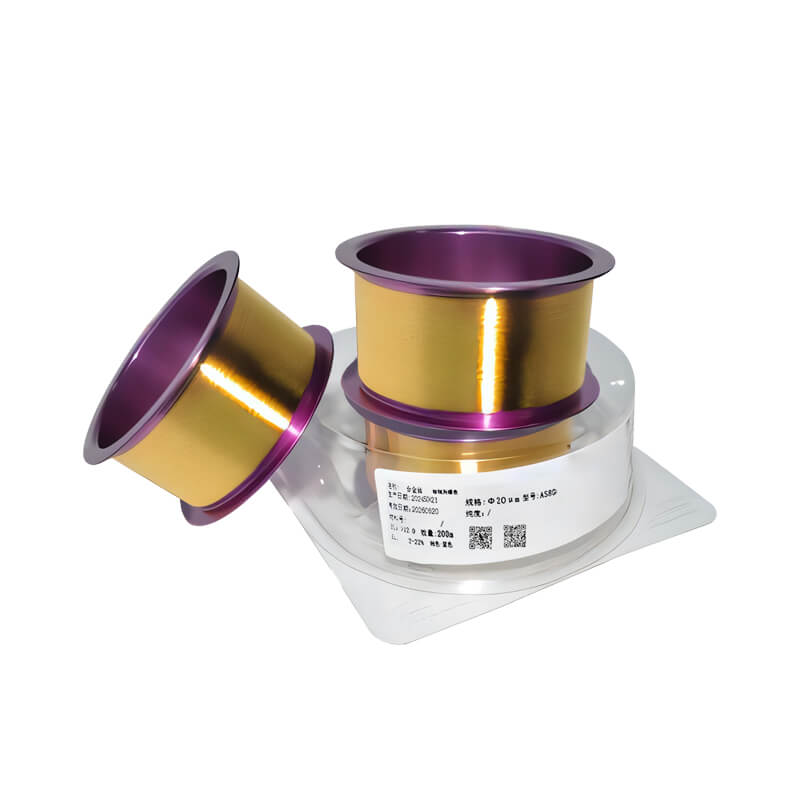
2. Technical branches and application
scenarios
Depending on the bonding morphology and
energy source, wire bonding can be divided into several technical branches:
Spherical bonding and wedge bonding:
Spherical bonding (ball welding) melts the top of the wire into a ball through
electrical sparks, and then press-welds it to the chip pad, which is suitable
for materials with good ductility such as gold wire; Wedge bonding (wedge
welding) is directly press-welded with metal wire, which is more suitable for
wires with higher hardness such as aluminum wire. The solder joint strength of
ball welding can reach 15-20g, while wedge welding can reach 20-30g, adapting
to different mechanical reliability requirements.
Thermocompression Bonding (TCB): Connecting
at 150-300°C and 10-200MPa pressure, the TCB process jointly developed by Intel
and ASMPT reduces the I/O pitch to 10μm, and has become the mainstream solution
for high-end wire bonding since mass production in 2014. The innovation is to
only heat the chip side to avoid the warping problem caused by the overall
heating of the substrate, and data from a fab shows that the warpage of the
substrate is reduced from 50μm to less than 10μm after using TCB technology.
Ultrasonic and thermal ultrasonic bonding:
Ultrasonic bonding uses ultrasonic vibration at 20-60kHz to generate frictional
heat, which can be operated at room temperature, especially suitable for
temperature-sensitive chips; Thermal ultrasonic bonding combines temperature,
pressure and ultrasonic energy, and the bond strength is 40% higher than that
of thermocompression bonding alone, and is widely used in automotive
electronics and other fields with high reliability requirements.
It is worth noting that with the trend of
copper leads replacing gold wires, bonding technology is also continuing to
innovate. Kulifax's flux-free bonding technology, introduced in 2023, enables
copper-copper bonding in nitrogen or argon environments, solving the problem
that traditional fluxes are difficult to clear at fine pitches (<10μm),
increasing bond yield from 85% to 99%.
2. Flip chip bonding: the "main
force" of high-density packaging
Flip chip bonding technology, pioneered by
IBM in the 1960s, revolutionized the way chips are connected to the substrate -
it directly connects the chip to the substrate pad through an array of metal
bumps (Bumps) with the chip facing down, just like "upside down" on
the substrate, so it is also known as flip bonding. This area array
interconnect method breaks the peripheral wiring limitations of wire bonding
and becomes the core technology of high-performance chip packaging.
1. Performance advantages and process
characteristics
The advantages of flip chip bonding are
reflected in multiple dimensions: Density and speed: With rerouting (RDL)
technology, the number of I/O per unit area is 5-10 times that of wire bonding,
and millions of I/O can be achieved on 300mm wafers. The signal transmission
path is shortened to 100-500μm, which is more than 80% less than wire bonding,
and the signal integrity is significantly improved, making it suitable for
high-frequency scenarios such as 5G base stations and AI chips. The back of the
chip can be directly in contact with the heatsink, and the thermal resistance
is reduced to 0.5-1°C/W, which is 60% lower than the plastic wire bonding
solution, and the full load temperature of the chip is reduced from 95°C to
75°C after a GPU vendor uses flip chips. The reflow soldering process can
process hundreds of chips at the same time, and the 28nm chip production line
of a packaging factory has a single-furnace flip bonding capacity of 500
pieces/hour, which is more than 10 times that of wire bonding.
2. Technical challenges and solutions
The main problem of flip chips lies in
thermal mismatch and solder joint reliability: the difference in the thermal
expansion coefficient of the chip (silicon, CTE 2.6ppm/°C), substrate (organic
material, CTE 15-20ppm/°C) and solder ball (tin-lead alloy, CTE 25ppm/°C) will
generate stress during the temperature cycle, resulting in cracking of the
solder joint. The solution includes: Underfill technology: injecting epoxy
resin into the gap between the chip and the substrate, filling around all
solder joints through capillary action, forming an elastic buffer layer after
curing, reducing solder joint stress by 70%, and after 1000 cycles of -55°C to
125°C, the solder joint integrity rate of an automotive-grade chip was
increased from 60% to 98% after 1000 cycles of -55°C to 125°C.
Bump structure optimization: The use of
copper pillar bumps (Cu Pillar) instead of traditional weld balls, the height
is increased from 50μm to 150μm, which can absorb more thermal stress; A nickel
barrier layer (Ni UBM) is added to prevent metal cross-diffusion and extend
solder joint life by more than 3 times.
At present, flip chip bonding has become
the standard configuration of high-end processors, FPGAs and other products,
and advanced packaging platforms such as TSMC's CoWoS and Intel's EMIB are
based on flip technology to support the continuous improvement of chip
performance.
3. Automatic bonding of carrier tapes:
"experts" in flexible connections
Carrier Tape Auto-Bonding (TAB) technology
combines chips with flexible carrier tapes, pioneering a new
"chip-carrier-substrate" connection model. This bonding method with
polyimide (PI) carrier as the carrier is especially suitable for scenarios with
a large number of leads and small spacing, and occupies an almost monopoly
position in the field of display driver chips.
1. Technical architecture and process
innovation
At the heart of TAB technology is a
prefabricated carrier tape – copper foil is applied to the PI film,
photo-etched to form fine wires (line width/spacing up to 20/20 μm), and
positioning holes and lead windows are reserved. The process includes: Internal
Lead Bonding (ILB): Connecting chip pads to in-carrier leads in batches by
thermocompression or thermoultrasonic can complete the bonding of hundreds of
wires at a time, which is 5-8 times more efficient than wire bonding. Outer
Lead Bonding (OLB): Connect the outer lead of the carrier tape to the PCB or
display panel, often using hot-press soldering to create a stable electrical
path. If only the internal lead bonding is performed, it forms a TCP (Tape
Carrier Package) or COF (Chip On Film) package, which is widely used in driver
chips for LCD/OLED panels. According to data from a display module factory, the
number of pins in the COF package can reach more than 2,000, which is 20 times
that of traditional wire bonding, which perfectly meets the signal transmission
needs of ultra-high-resolution screens.
2. Advantages and disadvantages and
application boundaries
The advantages of TAB technology are
significant: high automation (yield up to 99.5%), excellent electrical
performance (lead inductor < 1nH), and suitable for high-volume production.
However, there are also obvious limitations: cost and flexibility: the
lithography mask cost of customized carrier tapes is as high as hundreds of
thousands of yuan, and the replacement product needs to redesign the carrier
tape, which is only suitable for products with an annual production capacity of
more than one million. Reliability Challenge: CTE mismatch between the PI
carrier tape and the chip can lead to fatigue breakage, which is 3-5 times
higher than that of flip chips in temperature cycling tests. It is difficult to
rework after bonding, and the repair rate data of a mobile phone screen factory
shows that the repair cost of TAB packaging is more than 10 times that of wire
bonding.
Therefore, TAB technology is mainly
concentrated in specific fields such as display drivers and printer control
chips, and the global market size will be about $12 billion in 2024, accounting
for about 8% of the total chip packaging.
4. Hybrid bonding: the "future
engine" of 3D integration
When the bump spacing of flip chips
struggles to exceed 1μm, hybrid bonding technology comes into play. This
innovative solution that combines metal bonding (Cu-Cu direct bonding) with dielectric
bonding (SiO₂-SiO₂
bonding) eliminates the need for traditional bump structures and enables
sub-micron interconnects, becoming the core technology for 3D IC integration
with chiplets.
1. Technical principles and breakthroughs
The hybrid bonding process exemplifies the
ultimate in precision manufacturing: Surface pretreatment: Chemical-mechanical
polishing (CMP) controls the wafer surface roughness below 0.1nm, and then
plasma activates it to form a hydrophilic surface, laying the foundation for
bonding.
Room temperature pre-bonding: The two
wafers are bonded at room temperature, and the hydrogen bonding between SiO₂
molecules makes them initially bond, at which point there is a small gap
between the copper contacts. Heated at 300-400°C, copper atoms form
metallurgical bonds through diffusion, while SiO₂ further reacts to
achieve permanent bonding, and the final bond strength
can reach more than 200MPa. The technology's incredible interconnect density –
Samsung HBM4 uses hybrid bonding to reduce the I/O pitch to 0.4μm, enabling 1
million interconnect points per square millimeter, which is 1,000 times faster
than traditional microbump technology.
2. Performance advantages and
industrialization challenges
The benefits of hybrid bonding are
reflected in multiple dimensions: Electrical performance: Copper direct bonding
reduces resistance by 50% and inductance by 80% compared to sold-ball
interconnects, and an AI chip uses hybrid bonding to increase data transfer
rates from 28Gbps to 112Gbps.
Heat dissipation and strength: The thermal
conductivity of metal-dielectric composite structure reaches 150W/(m・K), which is 3 times higher than that of flip chips. Mechanical
strength is strong enough to support wafer stacks over 12 layers, laying the
foundation for 3D storage. Process simplification: 40% reduction in process
flow compared to microbump technology, data from one fab shows a 25% reduction
in HBM packaging costs. However, industrialization still faces multiple
challenges: strict surface flatness requirements (global flatness < 50nm),
bond alignment accuracy needs to be controlled within 0.1μm, and equipment
investment is 5-8 times higher than traditional bonding. At present, major
manufacturers such as TSMC and Samsung have achieved initial mass production,
and it is expected that the penetration rate of hybrid bonding in high-end
packaging will exceed 20% in 2026.
5. Technological evolution and scenario
adaptation
The development paths of the four bonding
technologies show obvious complementarity:
Wire bonding: Maintain cost advantages in
low and medium I/O density scenarios, and continue to upgrade technologies such
as copper wire replacement and flux-free, and are expected to occupy more than
50% of the market share in the next 5 years. Flip chip: As the mainstream
solution of high-performance packaging, it is irreplaceable in mobile
processors and server chips, and will continue to support the increase in I/O
density as the number of RDL layers increases (reaching 8 layers).
TAB technology: Maintaining a monopoly in
segments such as display drives, innovations in flexible carrier materials such
as PI / metal composite tapes will further enhance their reliability. Hybrid
bonding: Becoming the core engine of 3D integration, applications such as HBM4
and Chiplet will drive its rapid maturity and are expected to dominate the
high-end packaging market by 2030.
Choosing the right bonding technology
requires a combination of chip type, number of I/O, performance requirements,
and cost budget – not only a technical decision, but also a business strategy.
In today's semiconductor industry's pursuit of "More than Moore", the
innovation of bonding technology will continue to break through the physical
limits and provide solid support for the performance leap of integrated
circuits.
 An ninh mạng Tô Công 3205830204438